Contents:
The 1901 issue is a common date within the series. How much is a 1901 nickel worth? Most examples are affordable in circulated grades.
Download our free coin identifier app for Android and iPhone and know all details about numismatic specimens!
1901 Liberty Head Nickel Overview
By the start of the 20th century, the design had been in circulation for nearly two decades and was a familiar part of everyday transactions. These coins saw heavy use, which explains why most surviving examples show clear wear today.
Nothing unusual occurred in 1901 regarding production or design changes. For collectors, the date is considered common.
Denomination | Five cents |
Series | Liberty Head (V) Nickel |
Year | 1901 |
Designer | Charles E. Barber |
Mint | Philadelphia |
Mint mark | None |
Composition | 75% Cu, 25% Ni |
Weight | 5.00 grams |
Diameter | 21.21 mm |
Edge | Plain |
Identifying the 1901 V Nickel
The 1901 nickel with a V on the back means the coin’s value. It is the Roman numeral for five, meaning five cents.
When the coin first appeared in 1883, the reverse showed only the V inside a wreath. The word CENTS was missing. Because the coin was close in size and color to a five-dollar gold piece, some people gold-plated the coin and tried to pass it as gold.
The problem became public almost immediately. To stop the confusion, the design was changed later in the same year. The word CENTS was added under the V. That version remained in use for the rest of the series, including coins dated 1901.
Design Features and Metal Composition of the 1901 Nickel
Obverse
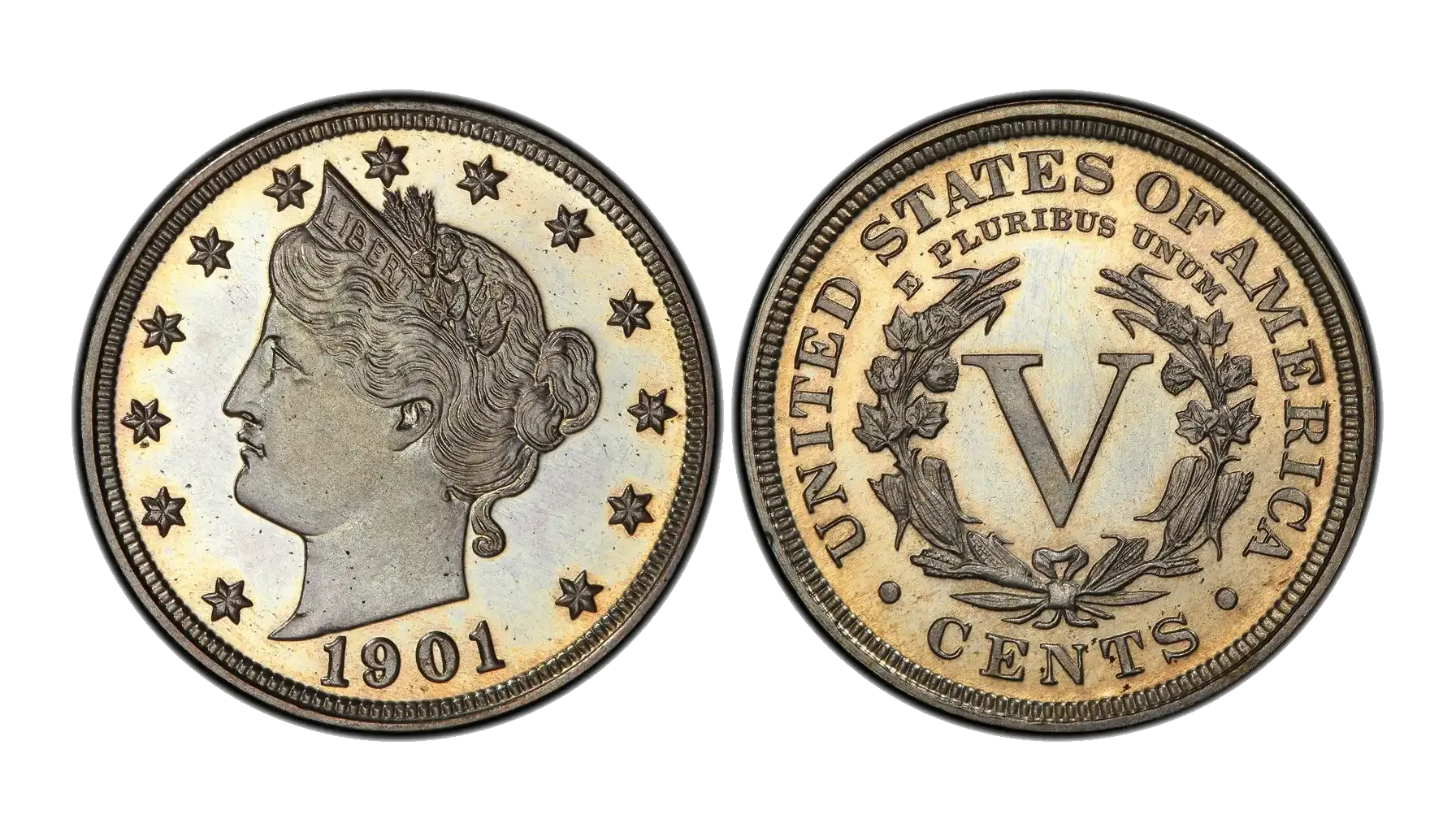
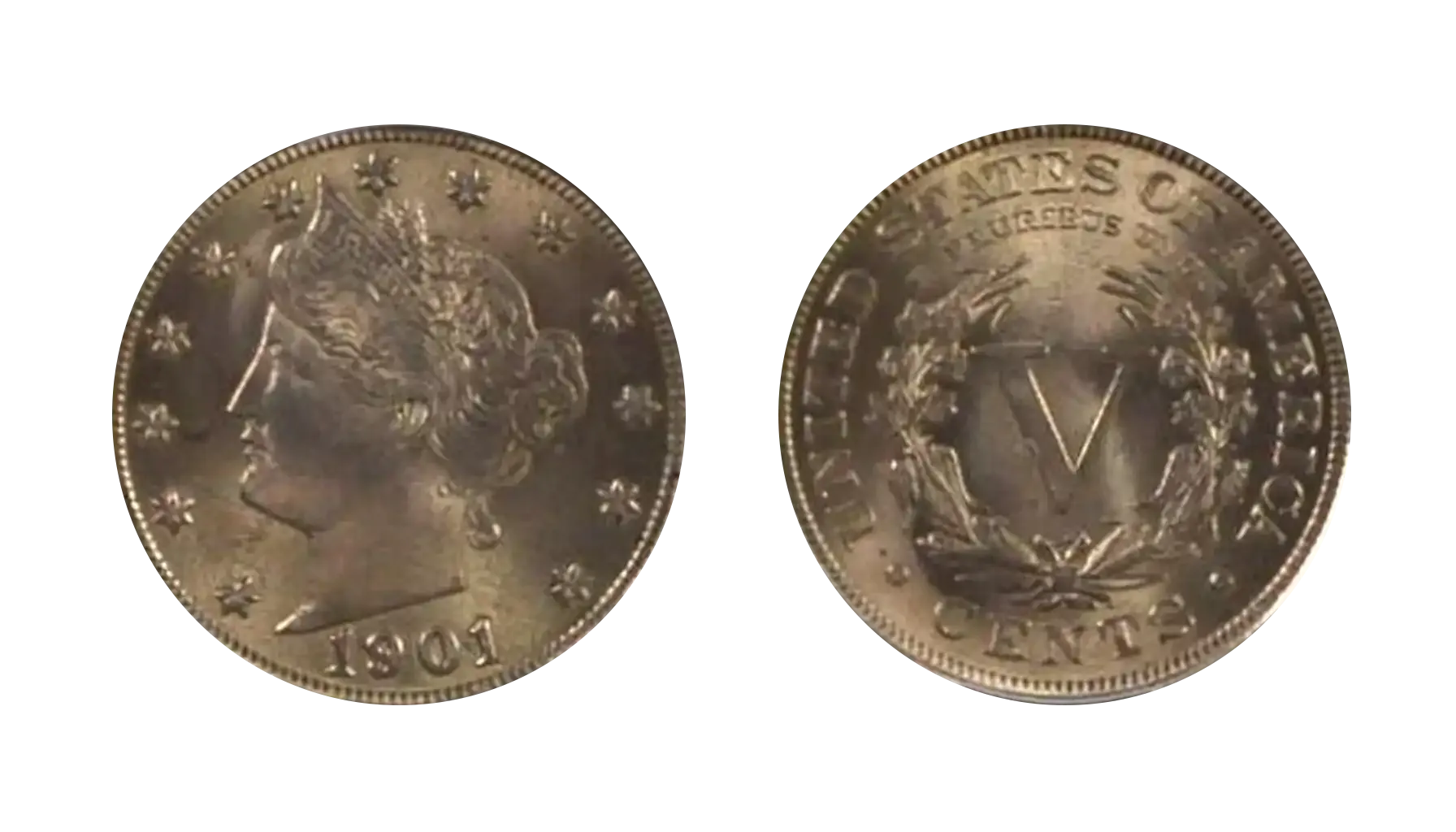
The front of the coin shows a left-facing portrait of Liberty wearing a coronet. The word LIBERTY appears on the headband, with stars arranged around the rim and the date 1901 at the bottom.
Reverse
The reverse features a large Roman numeral V, indicating the five-cent denomination. That is why the coin is called the 1901 Liberty V nickel. The numeral sits inside a wreath made of corn, cotton, and wheat, representing American agriculture. Below the V is the word CENTS, added after early confusion with the first 1883 issues.
There are no mint marks on the coin. All 1901 Liberty Head specimens were struck at the Philadelphia mint.
Metal Composition
The issue is made from:
75% copper
25% nickel
NO 1901 nickel silver content
This composition gives the coin its light silver-gray color and makes it harder than silver coins of the same era.
“These coins have not been recalled and are still current, although they do not circulate any more - most having been worn out, lost or hoarded by collectors.”
— Unknown author
Online Coin Club
1901 Liberty Head Nickel Value by Condition
So, how much is a 1901 V nickel worth? The issue is a common-date example. The 1901 nickel value today is driven by condition and eye appeal, not rarity. Most survivors are worn; sharply struck, problem-free examples bring the premiums.
Grade | 1901 Liberty Head Nickel Value |
Good (G4) | $3–4 |
Very Good (VG8) | $5–8 |
Fine (F12) | $9–15 |
Very Fine (VF20–VF30) | $15–30 |
Extremely Fine (EF40–EF45) | $30–55 |
About Uncirculated (AU50–AU58) | $55–100 |
Mint State (MS60–MS62) | $110–150 |
Mint State (MS63) | $200–250 |
Mint State (MS64) | $285–350 |
Mint State (MS65) | $450-550 |
Mint State (MS67) | $7,000 (7/27/13 - PCGS $28,200) |
Factors That Affect the Value of a 1901 Nickel
Condition: The amount of wear has the greatest impact. Coins with sharp detail are worth much more than worn examples.
Strike: Well-defined hair on Liberty and a clear wreath on the reverse make a noticeable difference.
Surface state: Original, untouched surfaces are preferred. Cleaning or damage lowers the 1901 V nickel value.
Appearance: Even color and remaining luster increase interest, especially on higher-grade coins.
Certification: Coins graded by major services are easier to price and sell. This is especially important if you suspect you have a 1901 V nickel error example.
Collector interest: Demand is strongest for attractive, problem-free pieces, particularly in higher grades, which increases the 1901 Liberty nickel value.
Tips for Collectors and Investors
For Beginning Collectors
Choose problem-free coins rather than chasing high grades immediately. A clean, evenly worn example with clear details is a better foundation than a damaged coin labeled at a higher grade. Learn the look of original surfaces before buying.
For Collectors
Value rises quickly with condition for the 1901 Liberty Head nickel. If budget allows, target Extremely Fine or About Uncirculated examples with natural color. Avoid cleaned coins, even if the price seems attractive.
For Investors
Investment potential appears only in high Mint State grades where condition matters. Certified examples from major grading services are preferred for resale and long-term holding.
Buying Strategy
Examine coins in good light and compare multiple examples. Prioritize:
Sharp strike
Undisturbed surfaces
Consistent color
Online coin photos can hide problems, so caution is a must.
Selling Strategy
Sell higher-grade or certified coins through:
Reputable dealers
Major auction platforms
Coin shows with active collector traffic
Lower-grade examples are best sold locally or as part of a group.

 Facebook
  X (Twitter)
  Pinterest
  LinkedIn