Contents:
The 1893 Columbian Half Dollar is a really big deal, and you probably already know why. It was America’s first commemorative issue, a celebration of the 400th anniversary of Columbus’s voyage and a fundraiser for the World’s Columbian Exposition in Chicago.
The coin was produced entirely at the Philadelphia Mint; if you have San Francisco or Denver issues, you may want to check it with a coin scanner online, because it’s, well, impossible.
The Historical Background of the 1893 Columbian Half Dollar
Congress authorized the Columbian half in 1892 and 1893. It was done just to help fund the exposition of Columbus’s arrival in the Americas. What else is important about this piece? Well, it was also the first official U.S. coin to depict a real historical person and not the allegorical Liberty.
“James W. Ellsworth of the World's Fair Commission represented [the Company] ... Over 2,000 of the souvenirs were struck today, and the work will continue until all of the 5,000,000 donated by Congress are completed ... Unfortunately, the first attempt was a failure—a little flaw caused the coin's rejection ... “
— The Chicago Tribune, an unknown author
from the Commemorative Coins of the United States: A Complete Encyclopedia
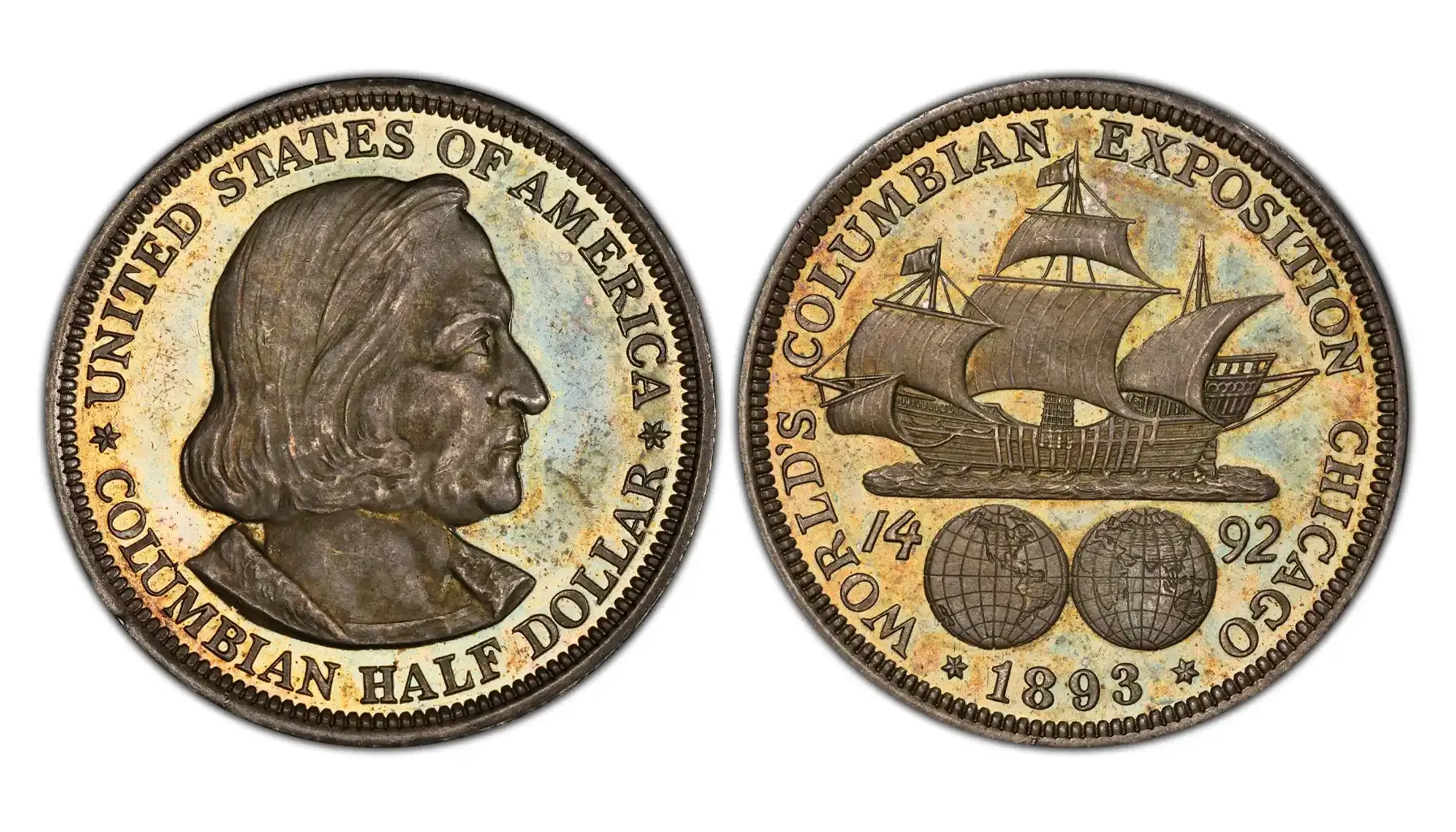
On the obverse, there is Columbus himself. The picture was based on a 16th-century portrait, probably painted by Lorenzo Lotto. What’s on the reverse? There is a flagship, the Santa Maria, his ship sailing above the two hemispheres.
1893 Columbian Half Dollar Silver Content
Columbian Half Dollar 1893 has the standard silver composition of that time (90% silver and 10% copper). More details:
Specification | Detail |
Designer | Charles E. Barber / George T. Morgan |
Composition | 90% Silver – 10% Copper |
Weight | 12.50 grams |
Diameter | 30.6 mm |
Edge | Reeded |
Mintage | 1,550,405 |
Melt Value (2025) | ≈ $17.75 |
The actual silver weight of this piece is 0.3617 troy ounces. It’s not much in melt value, but it helps the coin not to lose its price. Coins made of precious metals always sell for more. Check Best Silver Mining Stocks if you have silver in your collection.
1893 Columbian Half Dollar Value Today
Millions went unsold, so the 1893 Columbian Half Dollar value today is pretty big for such a small coin, but it all depends on the grading. Average circulated pieces are $20-30; they cost somewhere around their silver melt value.
More than 5 million were minted in two years, but sales were weak. Could you imagine that?! They sold only like 400,000 pieces at the fair’s intended $1 premium price. The rest ended up in circulation or were melted down. The 1893 issue, with a mintage of roughly 1.55 million, is scarcer today and better preserved than 1892.
Mid-grade uncirculated ones are between $60 and $150. High-grade certified coins (MS66-MS67) can exceed $1,000. The finest known of the type, the pieces with deep luster and clean fields, cost over $20,000 at auction.
Factors affecting price:
Condition: prooflike surfaces and minimal marks raise demand
Original luster: coins stored since 1893 often tone attractively
Errors: a few 1893 Columbian Half Dollar error pieces show off-center strikes or doubled legends, adding premium interest
Historical appeal: it was America’s first commemorative coin
Design and Symbolism
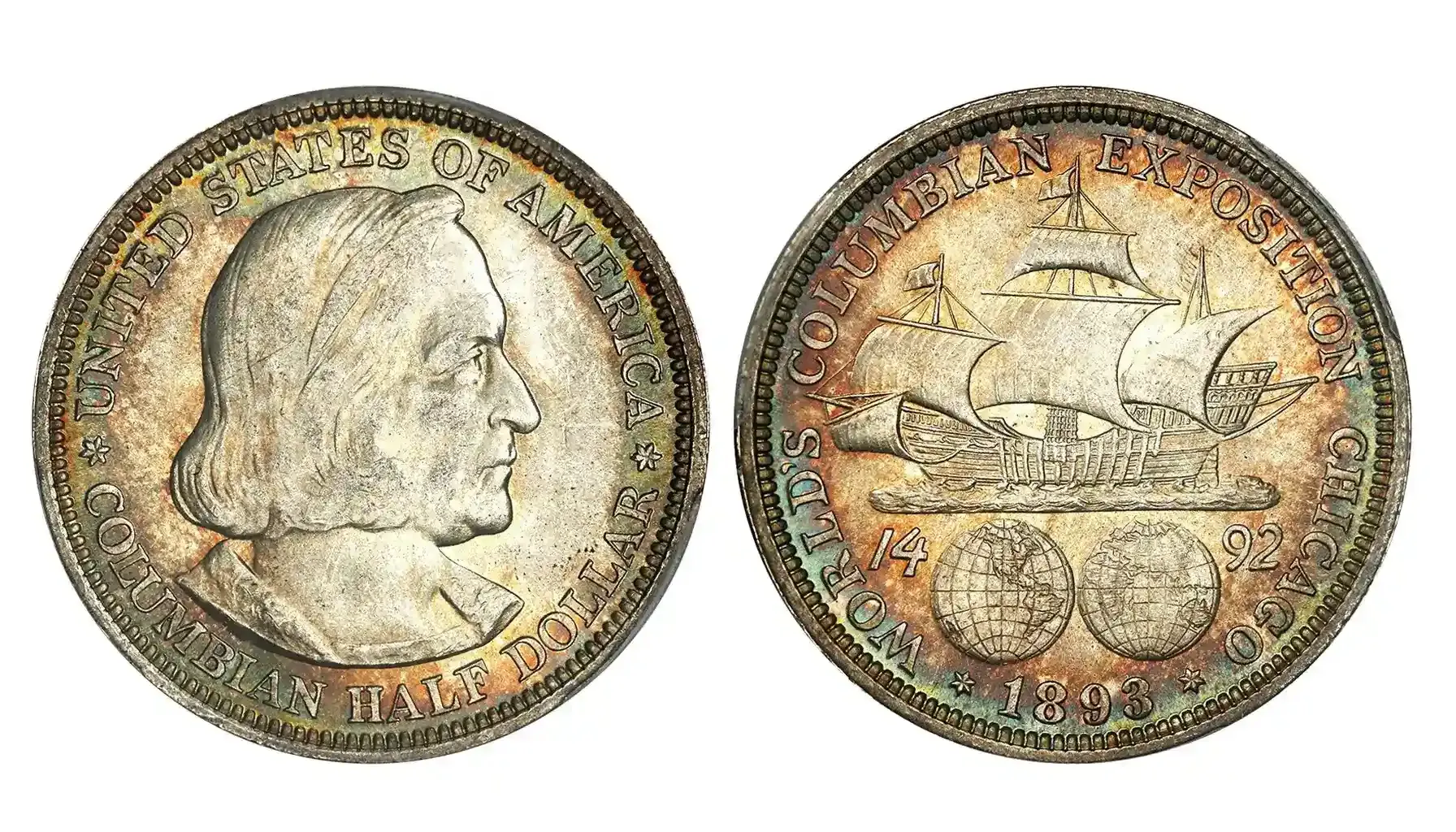
Columbus’s portrait was taken from the original and modified a bit by Barber and Morgan. On the reverse, the Santa Maria sails between hemispheres; the symbolism here is pretty obvious: the connection of Old and New Worlds.
The twin globes are also meant to show the people global progress. Together, the two sides were 19th-century optimism. Americans were convinced that invention would lead the next century, and they were right.
Of course, you cannot hide from the criticism of the artwork. But later on, the design became iconic and has influenced later U.S. commemoratives. Collectors view the Columbian Half Dollar 1893 value from the historical point of view, and you would pretty rarely see someone selling this coin.
Conclusion
Any old Half Dollar is still a relic. But the piece in particular showed the hope for innovation and renovation. And, well, because the coin is made of silver, of course, the silver prices are constantly rising. If you have it in worn or pristine condition, it still costs a lot and would be even more valuable in the future.

 Facebook
  X (Twitter)
  Pinterest
  LinkedIn