Contents:
After a brief run of the American Eagle series, the US Mint needed a new penny series to take the lead. Preferably, with an easier design to push the country through the incoming Civil War. That’s where the Indian Head Penny came from.
How much is a 1859 Indian Head penny worth? Let’s find out. This article will teach you about the 1859 penny history, today’s value, and key varieties.
AI Coin Identifiers are the new instruments for collectors and numismatists. Such Identifiers can recognize coins in seconds and provide you with the essential info.
1859 Indian Head Penny Overview
This series is one of the most significant in U.S. numismatics, and the 1859 release was significant in particular because it was the first year of mintage. While some other Indian cents are very desirable, like the 1890 penny, the 1859 cent will always be the first.
The designer of this penny, James Barton Longacre, aimed to blend classical beauty (Liberty) with American symbolism (the Native headdress).
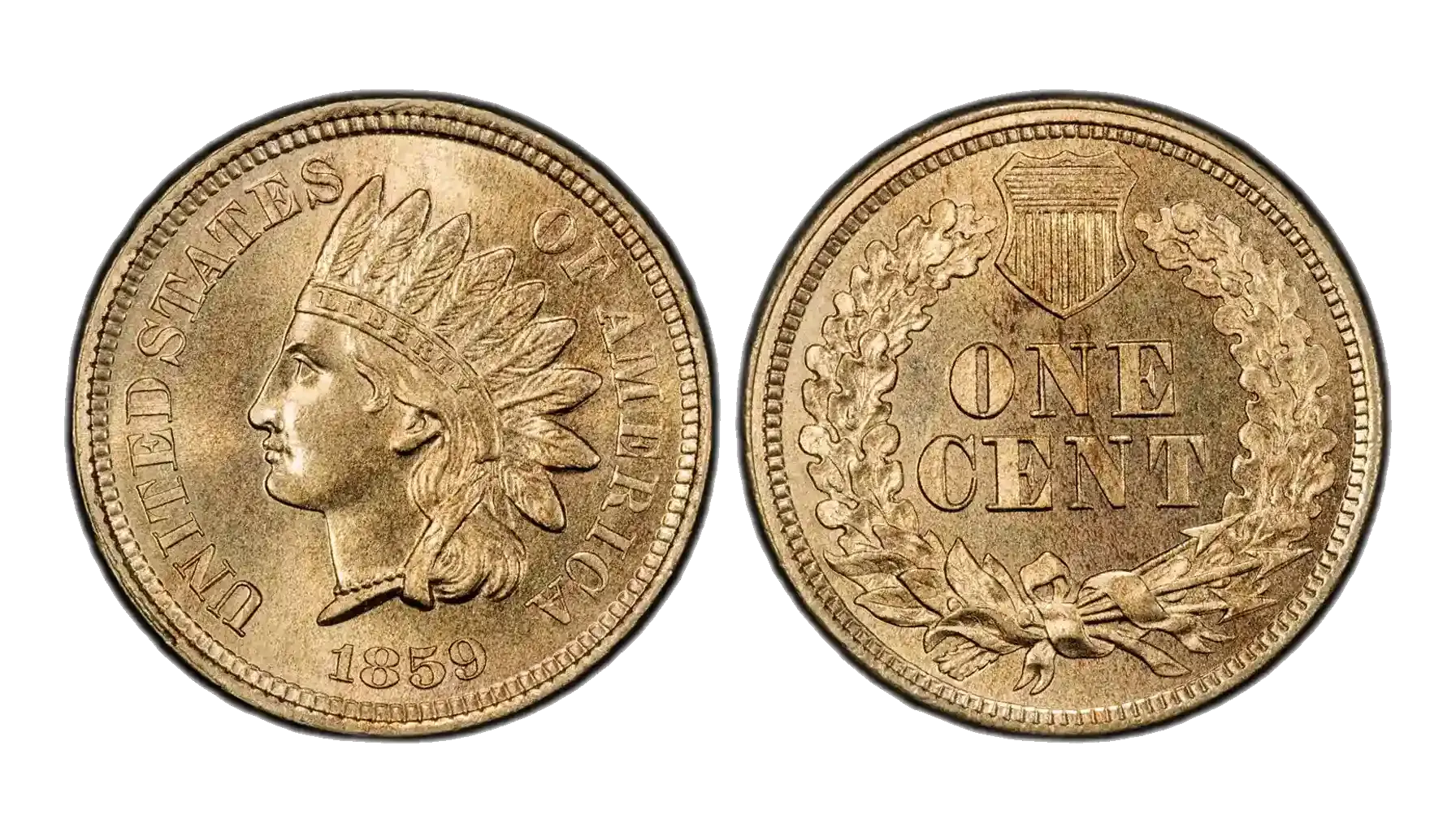
Obverse (front): Features Lady Liberty wearing a Native American headdress. The word “LIBERTY” appears on the headband. The inscription “UNITED STATES OF AMERICA” encircles the portrait. The date 1859 is at the bottom.
Reverse (back): Features a simple laurel wreath surrounding the denomination “ONE CENT”. Uniquely for that year, the design lacks an oak wreath and a shield design that would appear on later issues like the 1908 Indian Head Cent.
Because of this reverse difference, the 1859 Indian cent is a one-year type, making it particularly popular among collectors.
Indian Head Penny 1859 Overview | |
Country | United States of America |
Years of Minting | 1859–1909 |
Type: | Circulating |
Shape: | Round |
Composition and metal content | 88% Copper, 12% Nickel |
Diameter | 19.00 millimeters |
Weight | 4.67 grams |
Mint Facility | The Philadelphia US Mint |
Mint Marks and Other Varieties
According to the mint marks, this coin is not very diverse. It was minted in only one facility, the Philadelphia Mint, and had a mintage of 36,400,000 pieces produced in 1859.
The 1859 penny doesn’t have a mint mark, as most coins produced in Philadelphia at that time had no distinguishing letters.
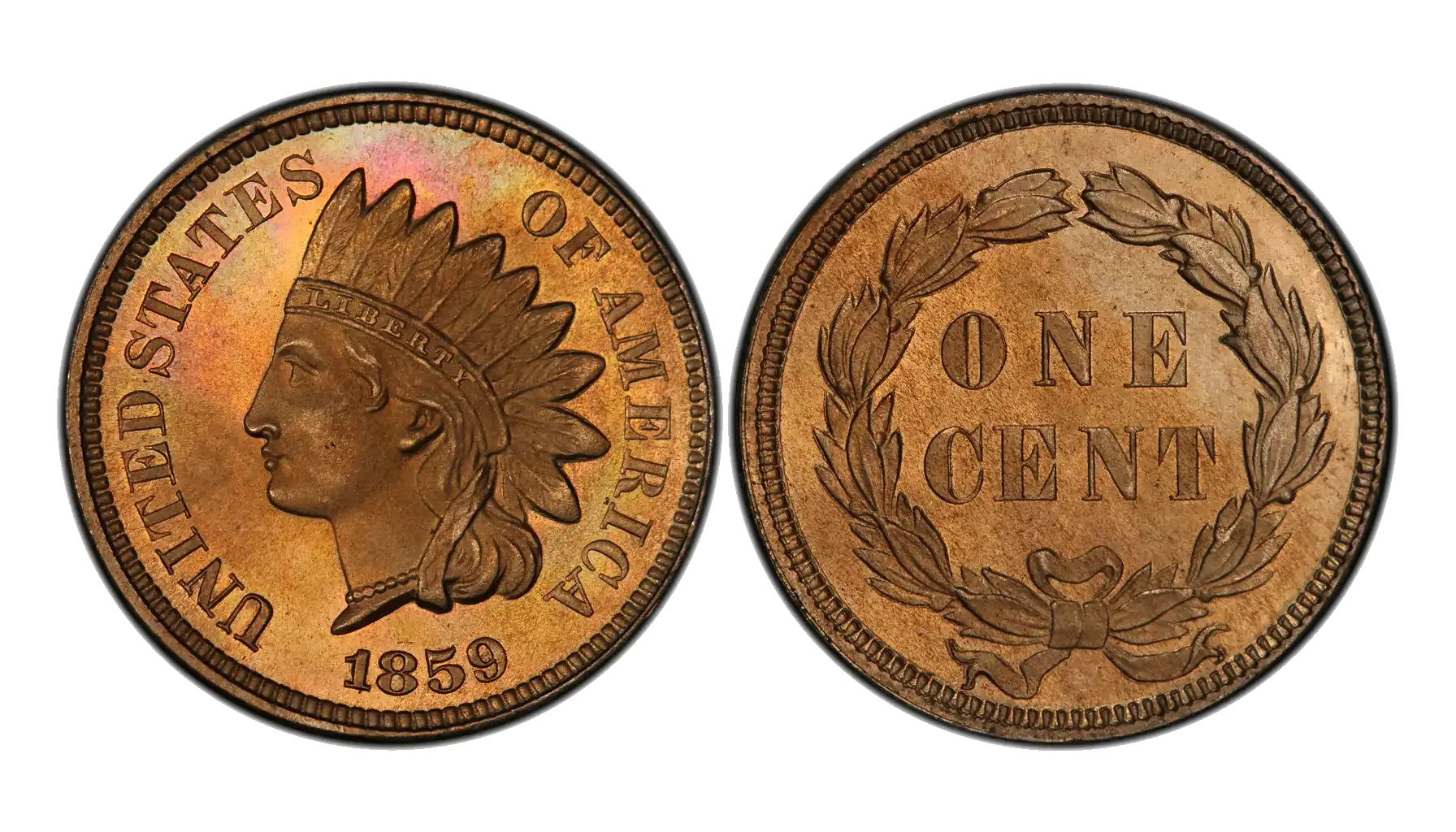
There is only one variety for this coin, the proof version. The Philadelphia Mint produced 800 proof pieces in 1859. Proofs are high-quality uncirculated releases, commonly identified by:
Mirror-like fields (especially in higher-grade examples)
Sharp, squared rims
Crisp strike details, particularly on the headdress feathers and wreath
Usually, proofs are more valuable than circulated coins.
1859 Indian Head Penny Value
Now it’s time to appreciate the 1859 penny value in its full glory. We will begin with the regular strike, made for circulation. You could find these coins as change back in 1859.
Grade / Condition | Approximate Value Range (USD) |
Good (G-4) | $15 – $25 |
Fine (F-12) | $30 – $60 |
Extremely Fine (EF-40) | $80 – $150 |
About Uncirculated (AU-50 to AU-58) | $150 – $400 |
Mint State (MS-60 to MS-63) | $450 – $800 |
Gem Mint State (MS-64 to MS-65) | $1,000 – $2,500+ |
Superb Gem (MS-66 and higher) | $3,000 – $15,000+ |
The values have a drastic change as the grade rises. The reason is that most old coins are heavily eroded, and while you can find circulated pieces relatively easily, everything in mint state and above is a true rarity.
Proof pieces are perhaps even rarer. They were stored away and never entered circulation.
Grade / Condition | Approximate Value Range (USD) |
Proof-60 | $2,000 – $3,000 |
Proof-63 | $3,500 – $5,000 |
Proof-65 | $6,000 – $9,000 |
Proof-66 and higher | $10,000 – $15,000+ |
Penny Errors
While you can have a piece in excellent condition, one more thing can greatly boost its value: errors. Some valuable error coins are worth over a thousand dollars even in low grades.
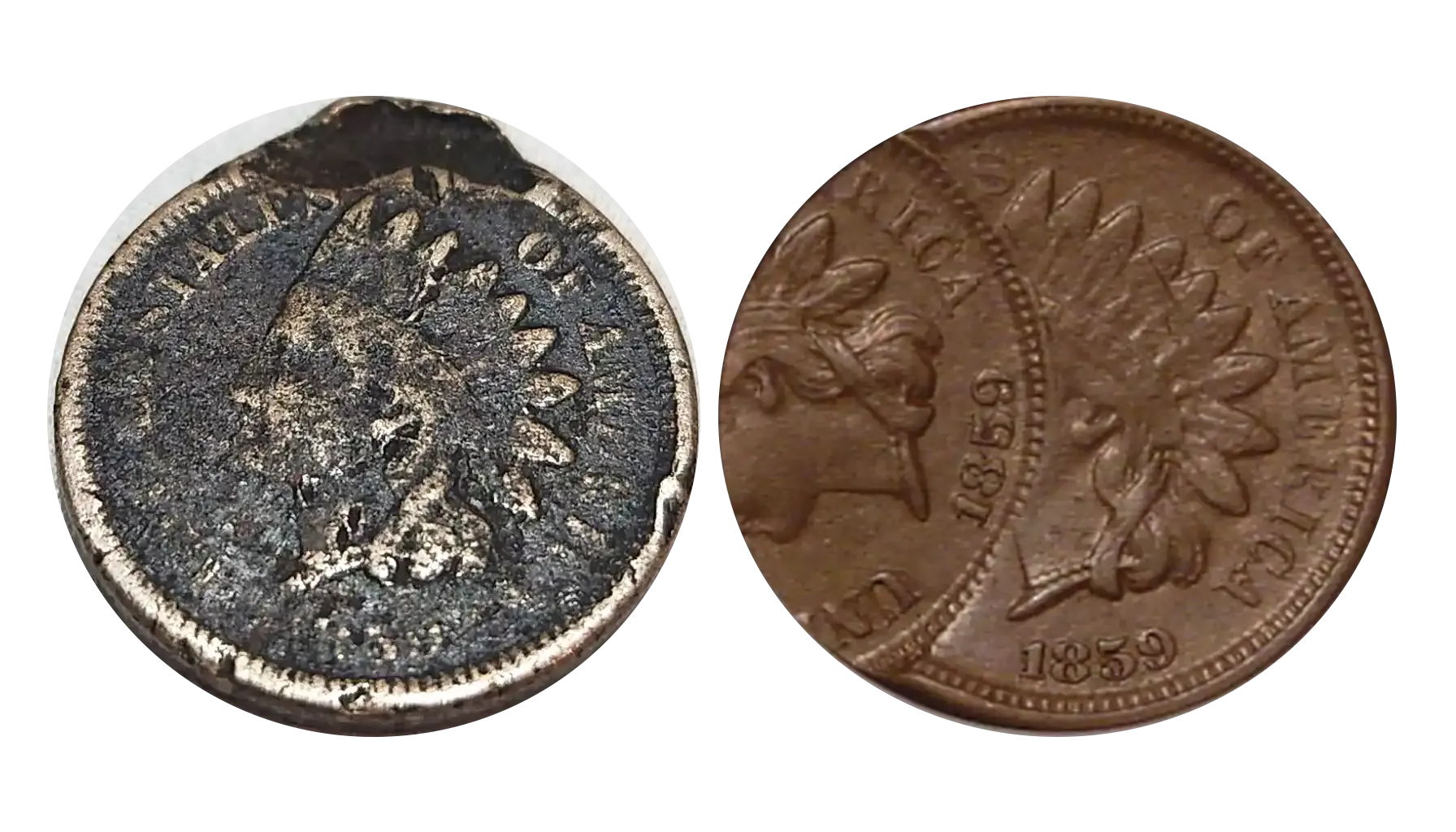
Indian Cents could come with errors like:
1. Repunched Dates (RPD)
Some coins show slight doubling or repunching of the date digits, usually the “1” or “5” in 1859.
These are subtle and often require magnification to detect.
2. Die Cracks / Die Breaks
Early strikes sometimes show small cracks in the die, especially near the rim or in the wreath.
These are not “mistakes” in the sense of devaluing the coin; some collectors find them desirable.
3. Off-Center Strikes
A few coins were struck slightly off-center, leaving parts of the design missing near the edge.
Minor off-center strikes are common, and extreme off-centers are highly collectible.
4. Cud or Die Chips
Tiny raised areas on the coin occur where pieces of the die broke off, called “cuds.”
These are minor but collectible varieties.
5. Weak Strikes / Feather Detail Loss
Due to the hard copper-nickel alloy, some coins show weak detail in the headdress feathers.
Not technically an error, but some collectors note “missing feathers” as a type variety.
Why Are People Collecting Indian Cents?
Collecting is all about diversity. We want to have different pieces in our collection, and we also have limited resources. Sometimes you have to check between two different coins.
Why should you dedicate your time and resources to Indian cents? Are they a good investment?
The answer is… Yes! 1859 cent is a great investment. People are collecting them all over the world, especially in the US, for these reasons:
First Year of the Series: The 1859 cent was the first Indian Head penny ever issued, marking the beginning of a new design era. First-year issues are generally prized by collectors for their historical significance. The 1909 penny, the first of the Lincoln series, is also highly praised.
Unique One-Year Reverse Design: The 1859 coin features a laurel wreath reverse. From 1860 onward, the design was changed to an oak wreath with a shield, making the 1859 version the only year with this reverse design.
Historical and Cultural Significance: The obverse shows Liberty wearing a Native American headdress, reflecting mid-19th-century American symbolism and culture. Collectors value it as a tangible piece of pre-Civil War history.
Rarity and Proof Coins: While millions of circulation strikes were made, proof coins from 1859 are extremely rare, with only about 700–800 known to exist.
Investment Potential: High-grade examples, especially proofs or coins with original red color, have historically increased in value. Many collectors see it as both a numismatic item and an investment.
Aesthetic Appeal: The design is elegant and unique. The feathers on the headdress and the laurel wreath look especially good on high grades.
Coin ID Scanner
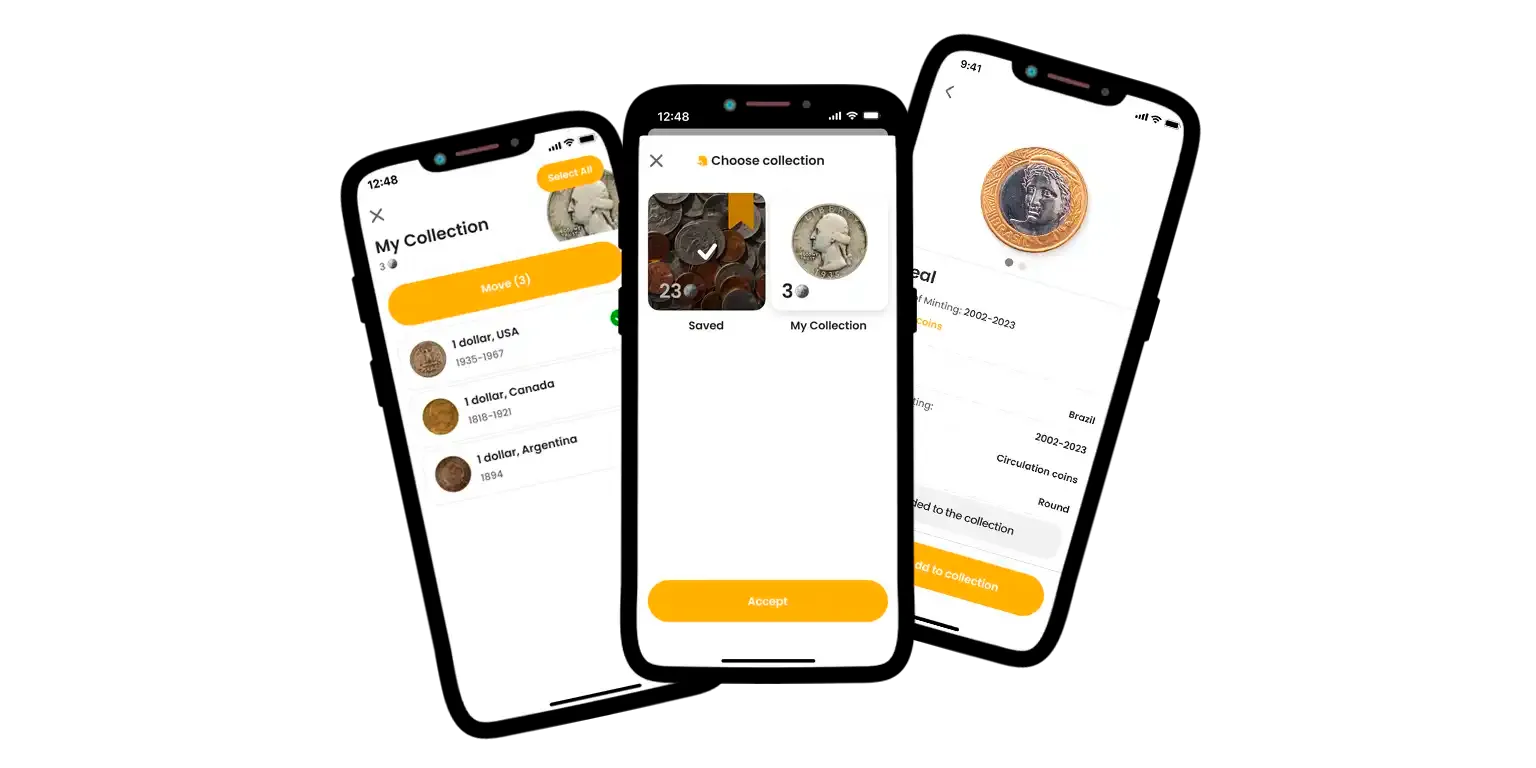
Coin ID Scanner is a free mobile app. It is designed to help users identify coins, assess their value, and manage their collections.
Core features of the app:
AI-Powered Coin Recognition: Quickly identify coins from around the world with a single photo.
Extensive Database: Access information on over 150,000 coins, including rare and foreign types.
Value Estimation: Receive current market value estimates based on condition and rarity.
Collection Management: Organize and track your coin collection within the app.
Educational Resources: Learn about coin history, errors, and grading through integrated blogs and news.
Coin ID Scanner is available for both iOS and Android devices.
FAQ
Where Can I Find a 1859 Indian Head Penny for Sale?
You can turn to multiple people and organizations. Many reputable coin dealers carry 1859 Indian Head pennies, especially in higher grades. Online Marketplaces often list these coins for sale. Coin Shows & Conventions is a good way to see coins in person and compare grades and prices.
Is There a 1859 Indian Head Penny with Shield?
No, the 1859 Indian Head cent does not have a shield on the reverse. The coin features a laurel wreath reverse for this single year. The shield design appeared only in 1860.
Is the Indian Head Penny 1859 Value High?
Compared to many other early U.S. pennies, the 1859 Indian Head cent can have a high value, especially in high grades and proof examples. You can expect $50+ for most examples.

 Facebook
  X (Twitter)
  Pinterest
  LinkedIn