Contents:
One pound is a relatively new British denomination. Yet in the short amount of time it had, it spawned billions of pieces. Some of them are rare and precious, and others serve little function other than circulating cash.
How much does a £1 coin weigh? Which series are rare, and what errors may 1 pound have? About that and much more, you can learn in the following article.
AI is as smart as ever before. An AI Coin Identifier can recognize all kinds of coins, their origin, and value.
Overview of One Pound Denomination
The original £1 coin was introduced in 1983 to replace the one-pound banknote. The bit has gone through several designs and material changes over the years. We will call this 1983-2017 version an old 1-pound coin, because a new version appeared in 2017.
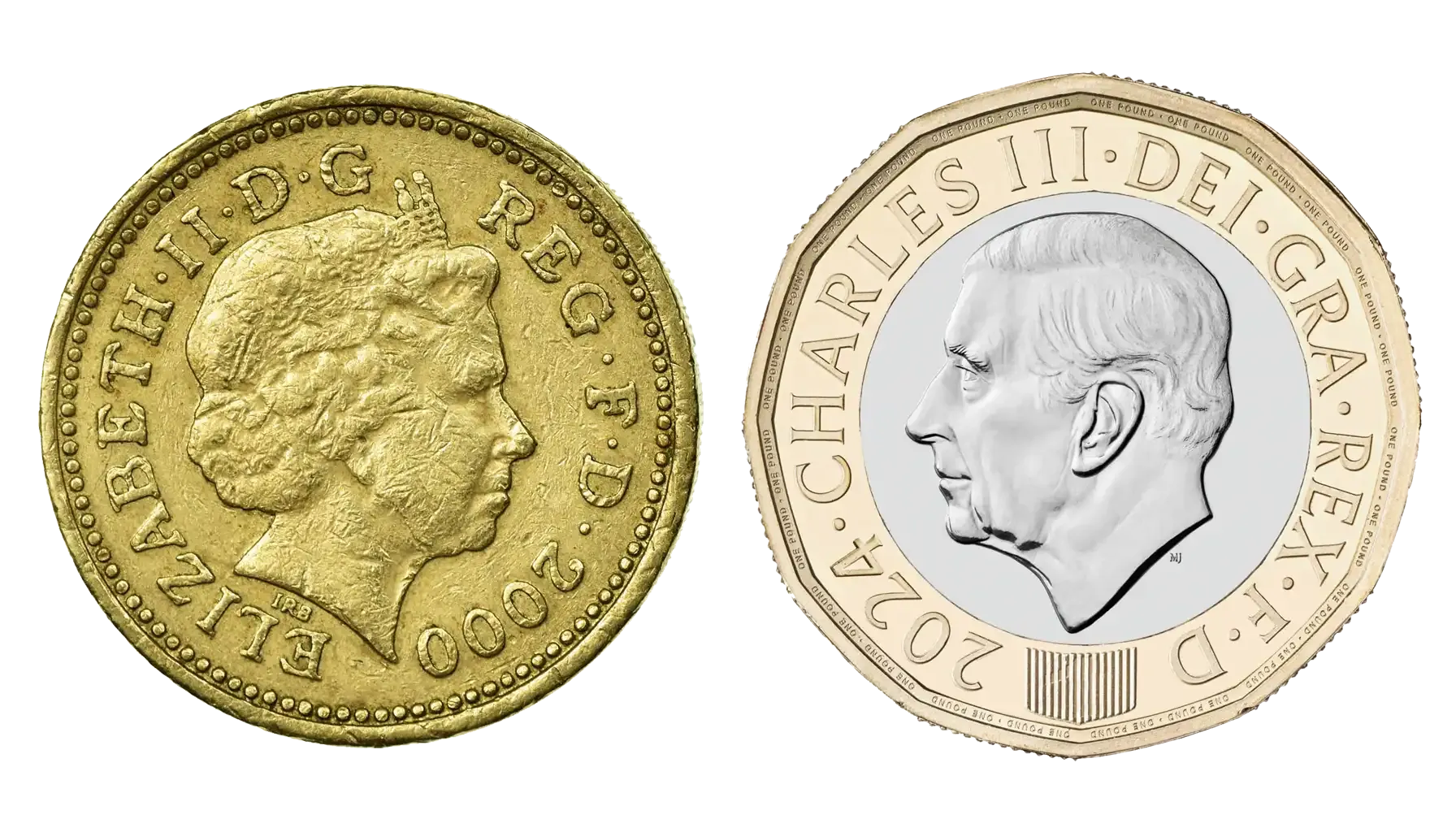
The Royal Mint started issuing a new £1 coin. The newer version has a more complex 12-sided (dodecagonal) shape, while the old pieces were round. The metal changed too, from nickel-brass (70% copper, 5.5% nickel, 24.5% zinc) to bimetallic, similar to the €1.
Today, you can find one pound anywhere if you're still using cash. You can easily get it as a change.
New 1 Pound Coin Overview | |
Country | United Kingdom |
Years of Minting | 1983-today |
Type: | Commemorative (collective) |
Shape: | Round |
Composition and metal content | Outer ring: Nickel-brass (76% Cu, 20% Zn, and 4% Ni) Inner planchet: Nickel-plated alloy |
Diameter | 23.03 mm. |
Weight | 8.75 g. |
Fun fact: Unlike the UK, the US hasn’t completely switched its denomination from paper to metal (or otherwise). In 2007, for example, you could find a Thomas Jefferson 1 Dollar Coin together with some common banknotes. Today, the situation is quite the same.
2025 Newest 1 Pound
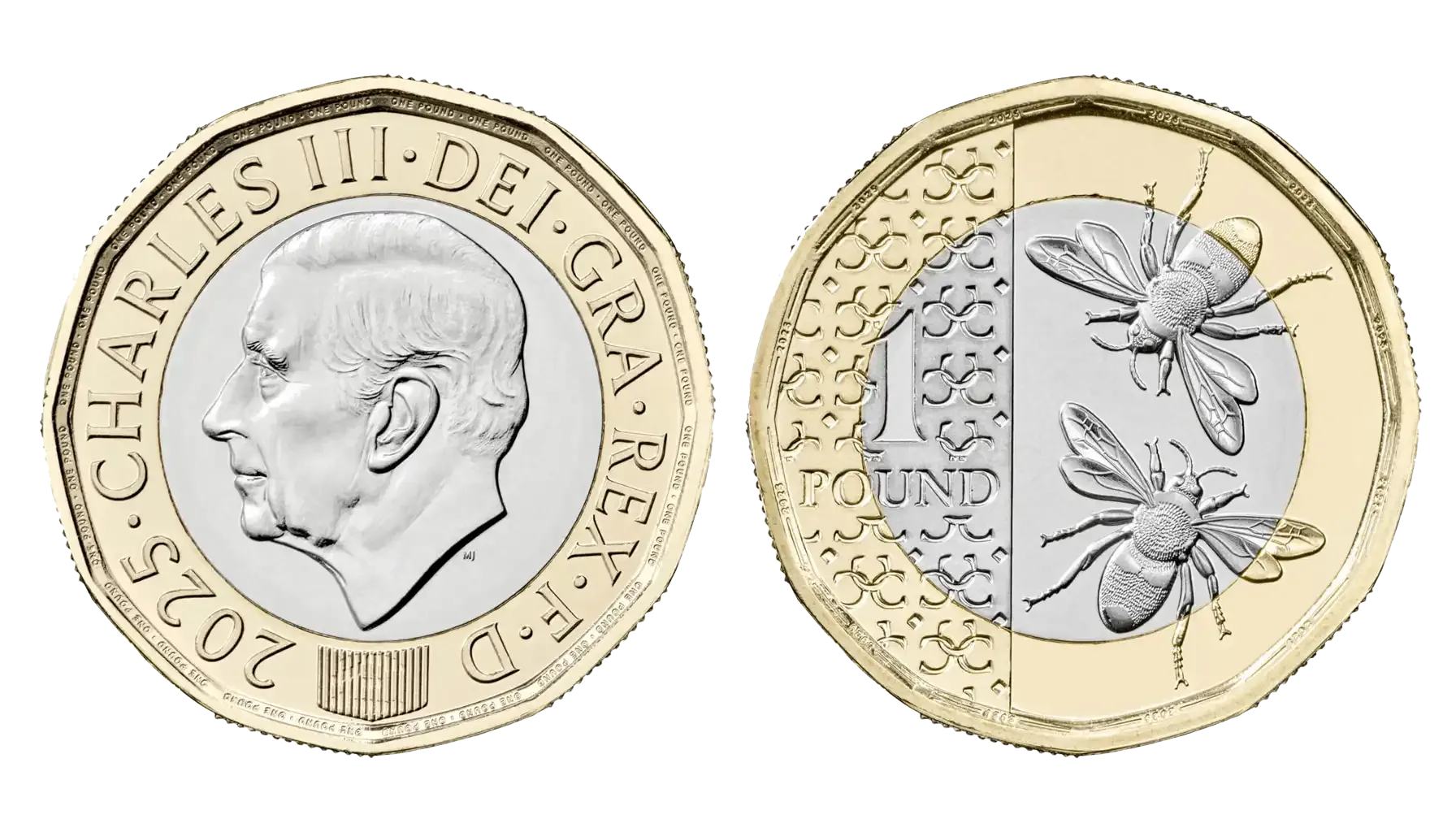
There is a new guy on the block. Well, not a guy… and probably not exactly new if you read this article post 2026.
Still, in 2025, the most recent one pound is the so-called Bee £1 coin, named so after its design.
Reverse: Depicts two bees, symbolizing the over 250 species of bees in the UK, including bumblebees, mason bees, and mining bees. These insects play a crucial role in pollinating many plants and fruiting trees across the country.
Obverse: Features the effigy of King Charles III, marking the first £1 coin to bear his portrait. Meanwhile, King Charles 50p coins are plentiful and have already gone through a few editions.
Today, the Bee pound is likely the most popular King Charles £1 coin. The exact mintage is unknown, as it is still ongoing (reportedly 170,000 issued so far).
Bee 1 Pound Coin Errors

Modern pieces rarely have many errors, at least in the UK. For example, a recent William Shakespeare £2 had only one error of note throughout its 3 versions.
Fortunately, the £1 coin with bees has an interesting error and a very valuable one. Let’s dive in.
Some encountered a rare error when the coin was entirely made of brass instead of the intended bimetallic composition of nickel-brass and nickel-plated brass alloy. This anomaly was likely due to a misstep during the minting process, possibly involving the use of an incorrect planchet or a malfunction in the striking equipment.
The error quickly made it into the news, and some enthusiasts started talking about how a King Charles III error £1 coin with bee motif could be worth £1,000.
How do you spot this error? The coin will have a uniform brass color, lacking the two-tone finish typical of the standard bimetallic £1 bits.
Unfortunately, there are no photos for this error now, only hoax and edited photos.
1 Pound Bee Coin Value
Currently, the value of the Bee pound is about £3,5, around its face value. This should be expected, as the mintage is still ongoing.
Even the most valuable 50p coins UK were worth their face value when they entered circulation, mingled with common cash.
The Royal Mint is planning a gold edition, which should be much more valuable. The price of a 1 oz gold coin price is unknown yet, but for most pieces it’s £1,500+.
As of now, the experts are positive that with some time, this new King Charles 1 pound coin will be among the most valuable and rarest in its denomination.
The Rarest 1 Pounds
While we wait for the Bee pound to become truly rare, we already have some scarce examples.
Generally, pounds are not known for their exceptional rarities, but a few pieces are scarcer than most. As of now, all rare pounds come from old £1 coins.
Design | Year | Mintage (approx.) | Notable Features | Values |
2011 Edinburgh City £1 | 2011 | 935,000 | Part of the 'Cities of the UK' series. The Royal Mint considers it one of the rarest 1 pounds. The mintage is not exactly low, but only a few pieces actually entered circulation. | £30.00+ A 1 oz gold coin was worth £2,000+ |
2011 Wales £1 | 2011 | 1,000,000 | Part of the 'Cities of the UK' series, featuring Cardiff's skyline. | £4+ |
2011 Northern Ireland £1 | 2011 | 1,000,000 | Part of the 'Cities of the UK' series, featuring Belfast's skyline. | £4+ |
Valuable 1 Pound Errors
Coins with errors are everywhere. You find them on pennies, dimes, new and old. Pounds are not an exception.
Even if your pound is not rare, it can become very valuable with the right errors. Now we suggest taking out your collectible, a magnifying glass, or a camera with a good zoom, and inspect the piece for errors like:
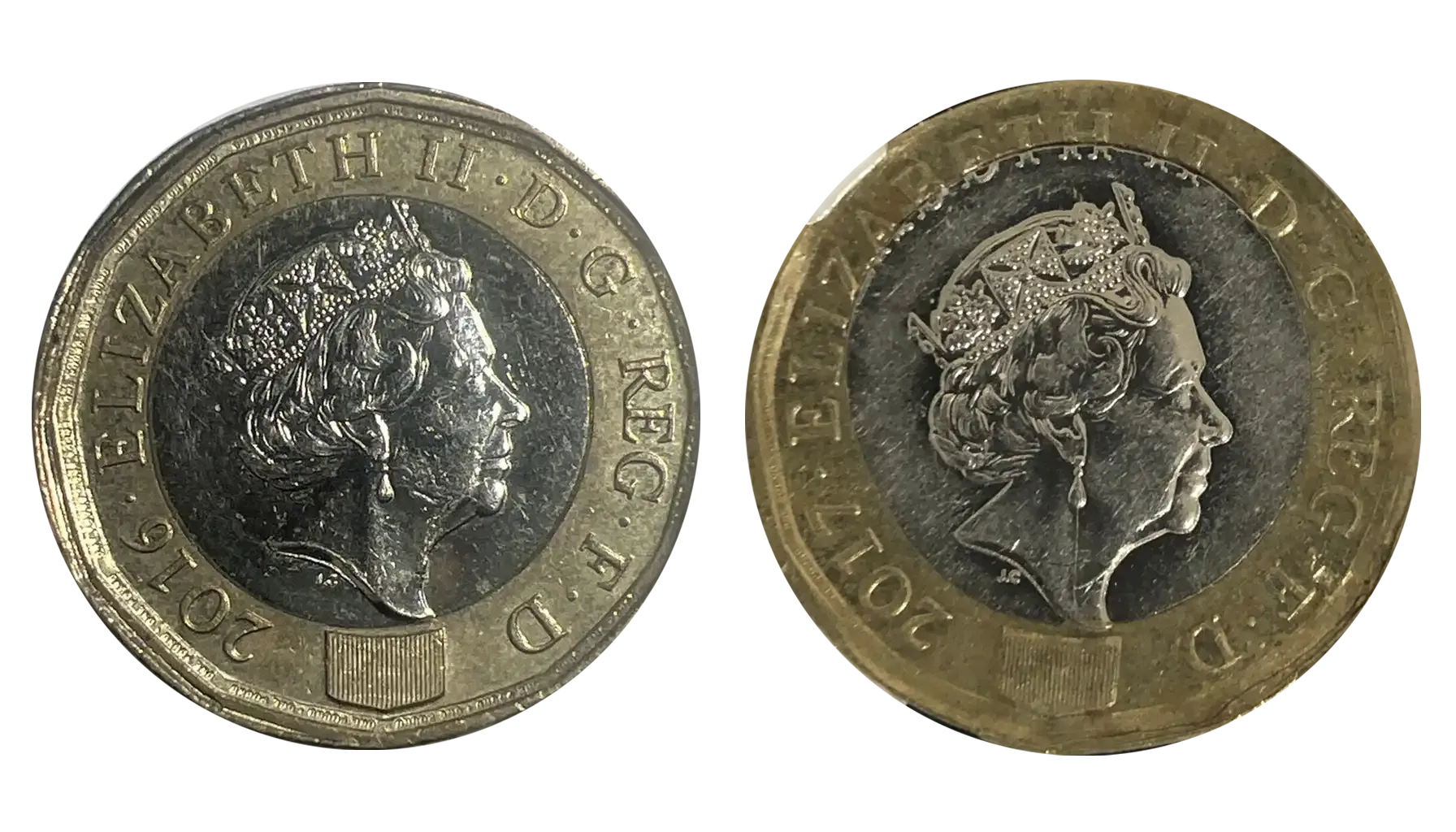
1. Wrong Metal / Composition Errors: Some pieces were accidentally struck with the wrong metal composition. A popular example today is the 2025 Bee £1 “all brass” error (instead of bimetallic).
2. Misaligned Dies / Off-Centre Strike: The design is struck off-centre, leaving part of the design missing or overlapping the edge. The value can range from slight to dramatic misstrikes.
3. Blank Planchet Errors: A piece is missing the design entirely or partially struck on one side. A fully blank £1 planchet is extremely rare.
4. Double Strike: The bit has been struck twice, so parts of the design appear doubled or ghosted. A very rare and valuable error.
5. Incorrect Obverse/Reverse Pairing (Mule): The obverse (front) and reverse (back) do not match the intended design. Exceptionally rare.
6. Edge Lettering Errors: The milling or lettering around the edge is missing, upside down, or incorrect.
7. Clipped Planchet: A small curved section is missing, as if “clipped out” of the bit, caused during blank production.
Coin ID Scanner
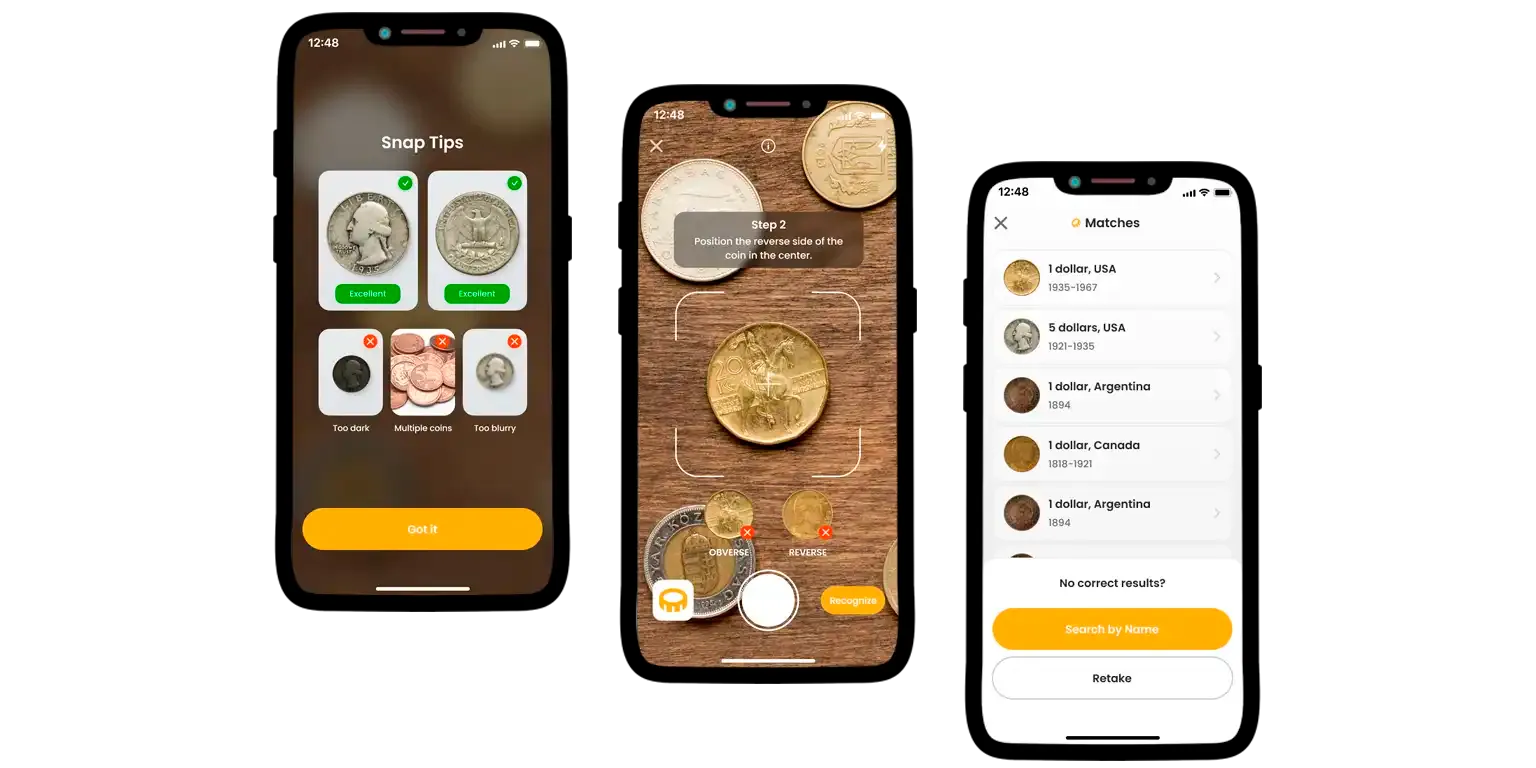
The main function of the Coin ID Scanner is coinage identification. You simply upload a photo of a piece, and the app identifies it using image recognition and AI. After a quick scan, you are provided with the info like country, denomination, year, metal, rarity, and historical details.
Coin ID Scanner is very convenient for quickly identifying unknown bits. It is especially useful for beginners to learn about pennies, pounds, and their background. If you want to deepen your knowledge, the app also comes with hundreds of blogs on numismatic news, overviews, and collecting guides.
How can you be sure that the identification is good? Look at the database. The app has a respectable database of over 150,000 coins. Such a large database increases the chances of finding a match.
Download Coin ID Scanner via App Store or Google Play. Identifying and categorizing coins has never been easier.
And what is the best part? The app is free.
FAQ
What Is the Value of a World War 1 2 Pound Coin?
The UK issued several £2 pieces to commemorate the First World War (1914–1918). Designs included: Lord Kitchener (2014), Navy (2015), Army (2016), Air Force (2017), War Memorial coin (2018). Most are worth £3,5.
How Much Does a 1 Pound Coin Weigh?
Since 2017, the weight of a £1 coin weight is 8.75 grams. The old 1 pound coin weight is 9.5 grams. Silver and Gold variations have different weight, but it vary from series to series.
When Did the £1 Coin Come Out?
The first £1 bit was introduced in 1983, replacing the £1 banknote. Originally round, made of nickel-brass, it had many designs representing different parts of the UK. In 2017, the new 12-sided bimetallic £1 bit was launched with advanced security features to combat counterfeiting.
What Is a 1/2 Sovereign Gold Coin Value?
A Half Sovereign is a British gold piece first issued in 1544 (modern issues began in 1817). Made of gold, it is exceptionally valuable, and most pieces today are priced at £250–£1,000+.

 Facebook
  X (Twitter)
  Pinterest
  LinkedIn