Contents:
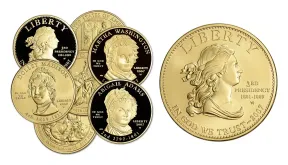
The U.S. Mint First Spouse Gold Coins program is a series of $10 gold coins issued between 2007 and 2016. Each coin honors the spouse of a U.S. President, released in the same sequence as the Presidential $1 Coin Program.
Specimens are struck in 24-karat gold (0.9999 fine) and weigh ½ troy ounce.
History of First Spouse Gold Coins
The series began with the Presidential $1 Coin Act of 2005, a law that paired each new Presidential $1 piece with a matching gold one with the president’s spouse. Congress wanted these coins to highlight a side of American history that rarely appears on U.S. currency — the personal stories and public roles of First Ladies.
"Behind every great man is a great woman".
— Unknown author
Some sources suggest early attributions to figures like Meryll Frost, Groucho Marx, or Eleanor Roosevelt
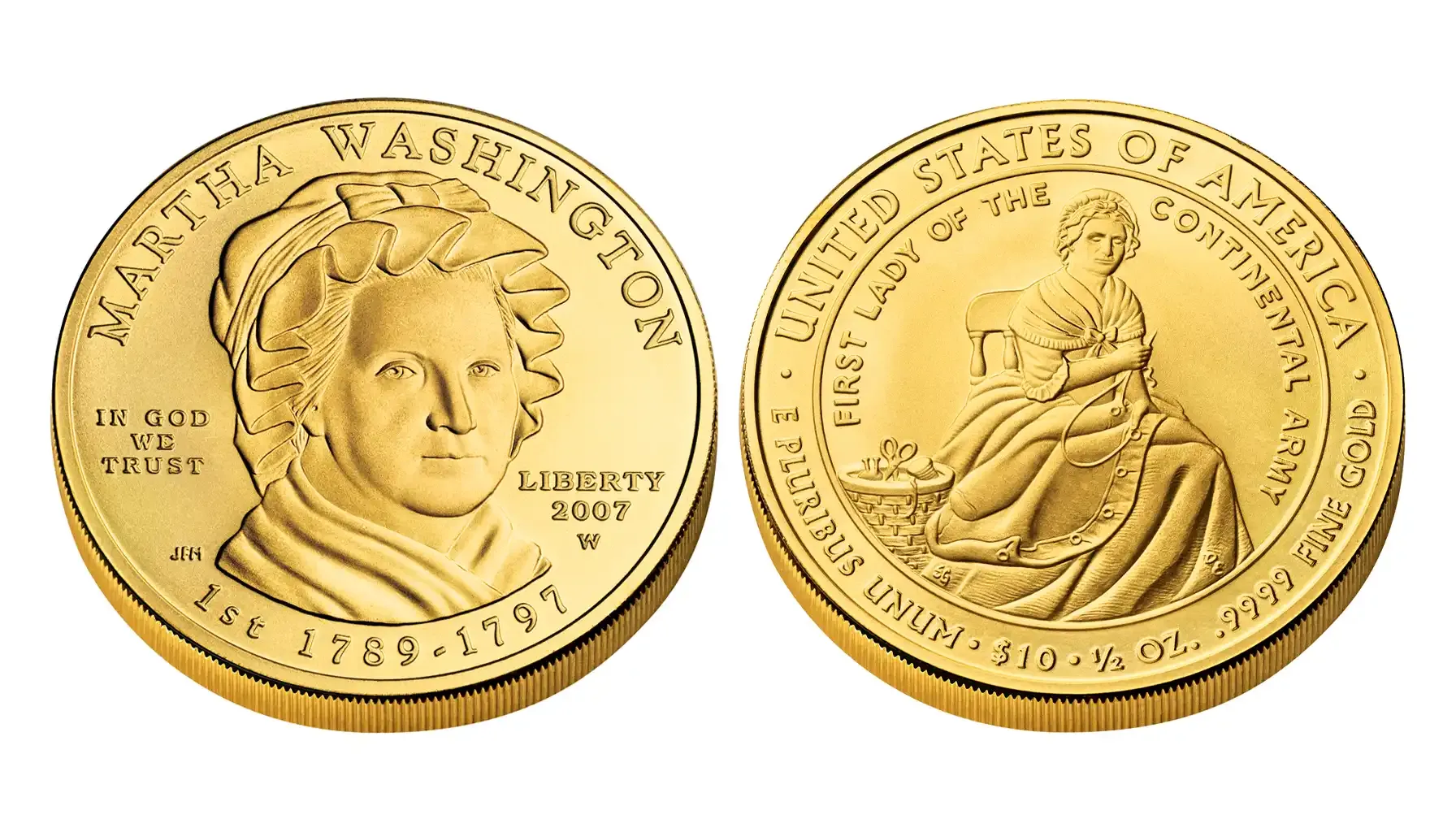
The first releases appeared in 2007 and showed Martha Washington.
Why First Ladies Became the Focus
Before this program, First Ladies were almost never shown on U.S. coins. Legislators saw an opportunity to present a more complete historical picture: presidents on the circulating dollars, and the women who lived and worked alongside them on the gold series.
How the Series Was Organized
Each one follows the release order of the Presidential $1 coins.
When a new President appeared on a dollar metal piece, his spouse’s gold coin followed immediately after.
Main details:
Denomination: $10
Metal: 24-karat gold
Weight: 1/2 troy ounce
Mint: West Point
Finishes: Proof and Uncirculated
This structure continued until the program ended with Nancy Reagan in 2016.

Coins for Presidents Without Spouses
Some presidents were unmarried or widowed. Rather than skip them, the law required the Mint to use a “Liberty” design from the president’s era.
Some examples:
Jefferson: Draped Bust Liberty
Jackson: Classic-style Liberty
Buchanan: Liberty seated with a child
Arthur: Alice Paul design, recognizing the women’s rights movement connected to his era
No coins were authorized for later administrations, so the series is complete and self-contained.
Collecting First Lady Gold Coins
The pieces were introduced during a period of high gold prices, and each piece contained half an ounce of pure gold. Many collectors struggled to keep up, and sales stayed low.
Those lower sales had an unexpected effect: most First Spouse coins have very small mintages compared to other modern gold issues. Later releases — especially those from 2014 to 2016 — are among the lowest-mintage modern U.S. gold coins ever produced.
Looking back, the First Lady coins serve several historical purposes:
They preserve women’s history in numismatics.
This is the only major U.S. gold series dedicated entirely to women.
They document changing roles across American history.
Full Chronological List
2007 Releases
Thomas Jefferson’s Liberty (Draped Bust Liberty)
Dolley Madison
2008 Releases
Elizabeth Monroe
Louisa Adams
Andrew Jackson’s Liberty (Classic Liberty)
Van Buren’s Liberty (Martin Van Buren was widowed)
Anna Harrison
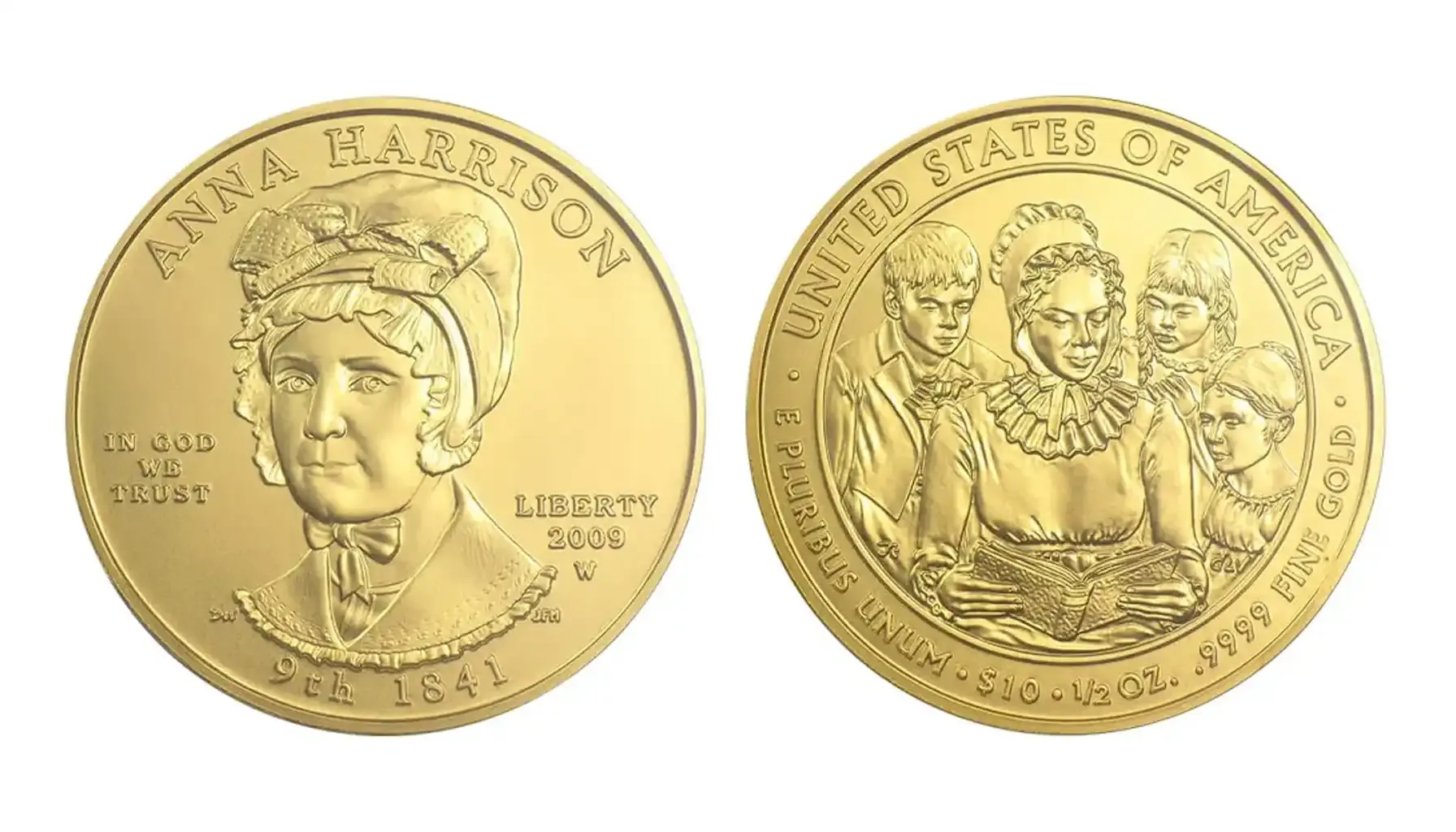
2009 Releases
Letitia Tyler
Julia Tyler
Sarah Polk
Margaret Taylor
2010 Releases
Abigail Fillmore
Jane Pierce
Buchanan’s Liberty (President James Buchanan was unmarried)
Mary Todd Lincoln
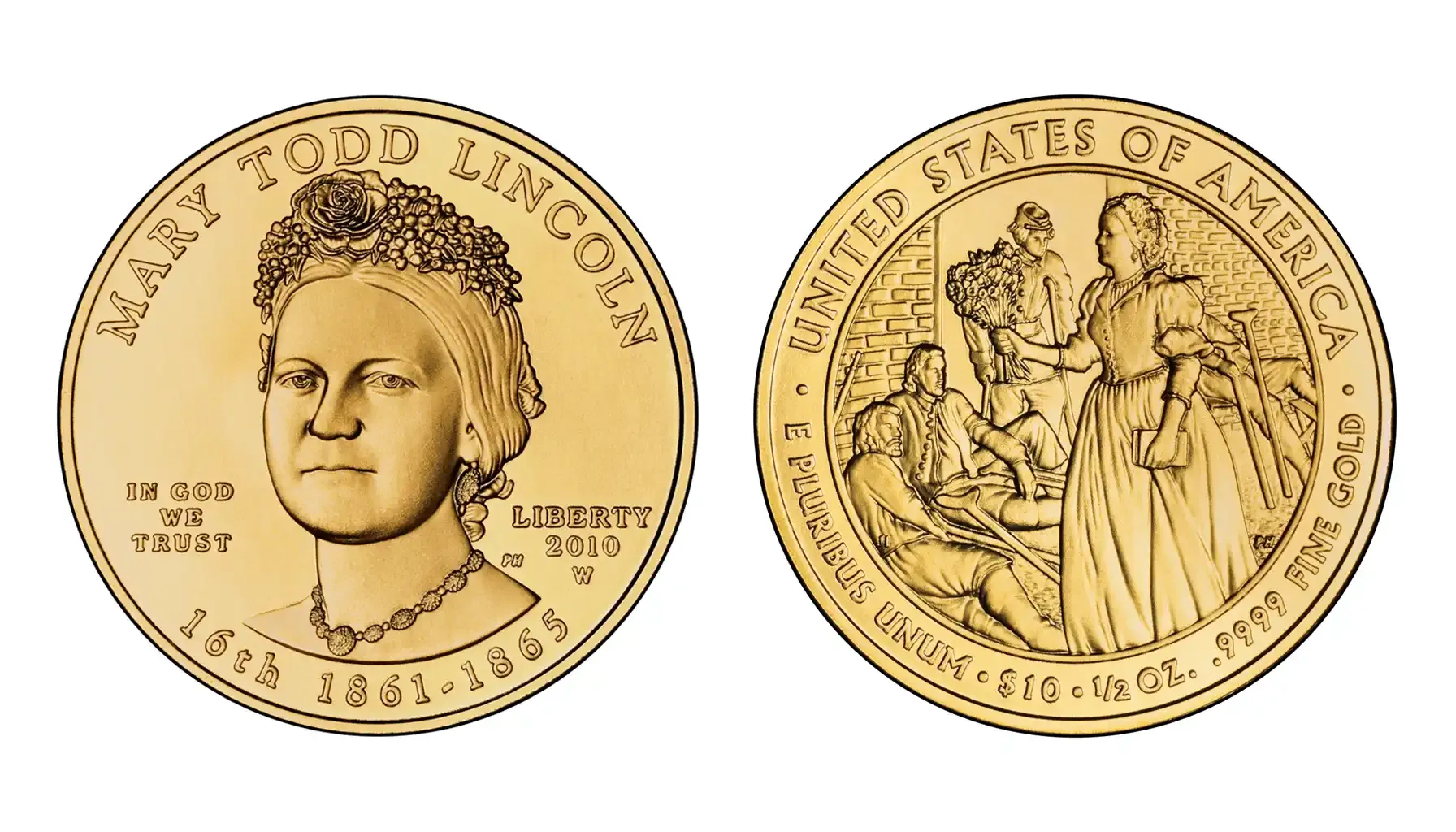
2011 Releases
Eliza Johnson
Julia Grant
Lucy Hayes
Lucretia Garfield
2012 Releases
Alice Paul – Suffragist (Issued for Chester Arthur; unique non–First Lady coin)
Frances Cleveland – First Term
Caroline Harrison
Frances Cleveland – Second Term
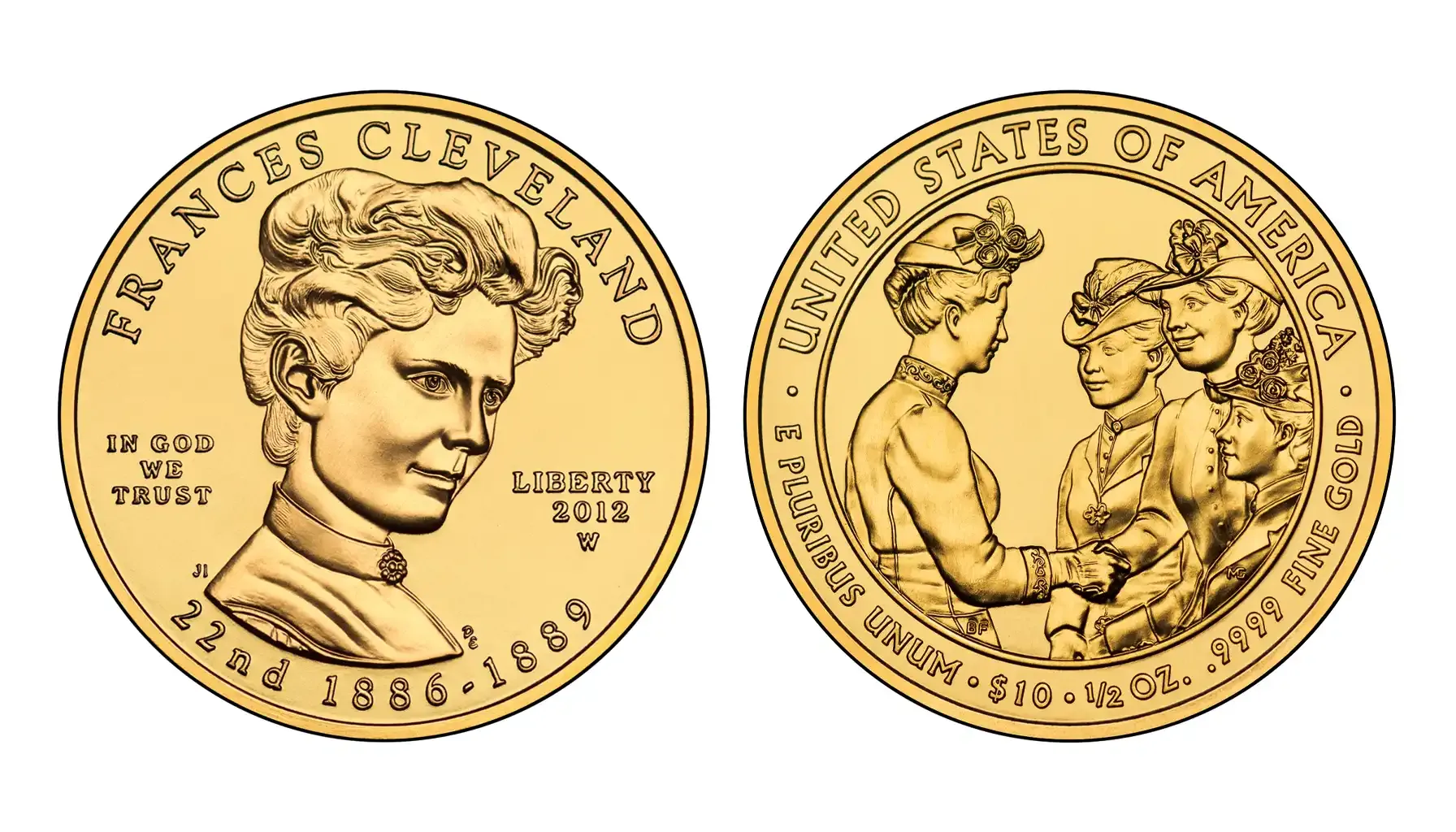
2013 Releases
Ida McKinley
Helen Taft
Ellen Wilson
Edith Wilson
2014 Releases
Florence Harding
Grace Coolidge
Lou Hoover
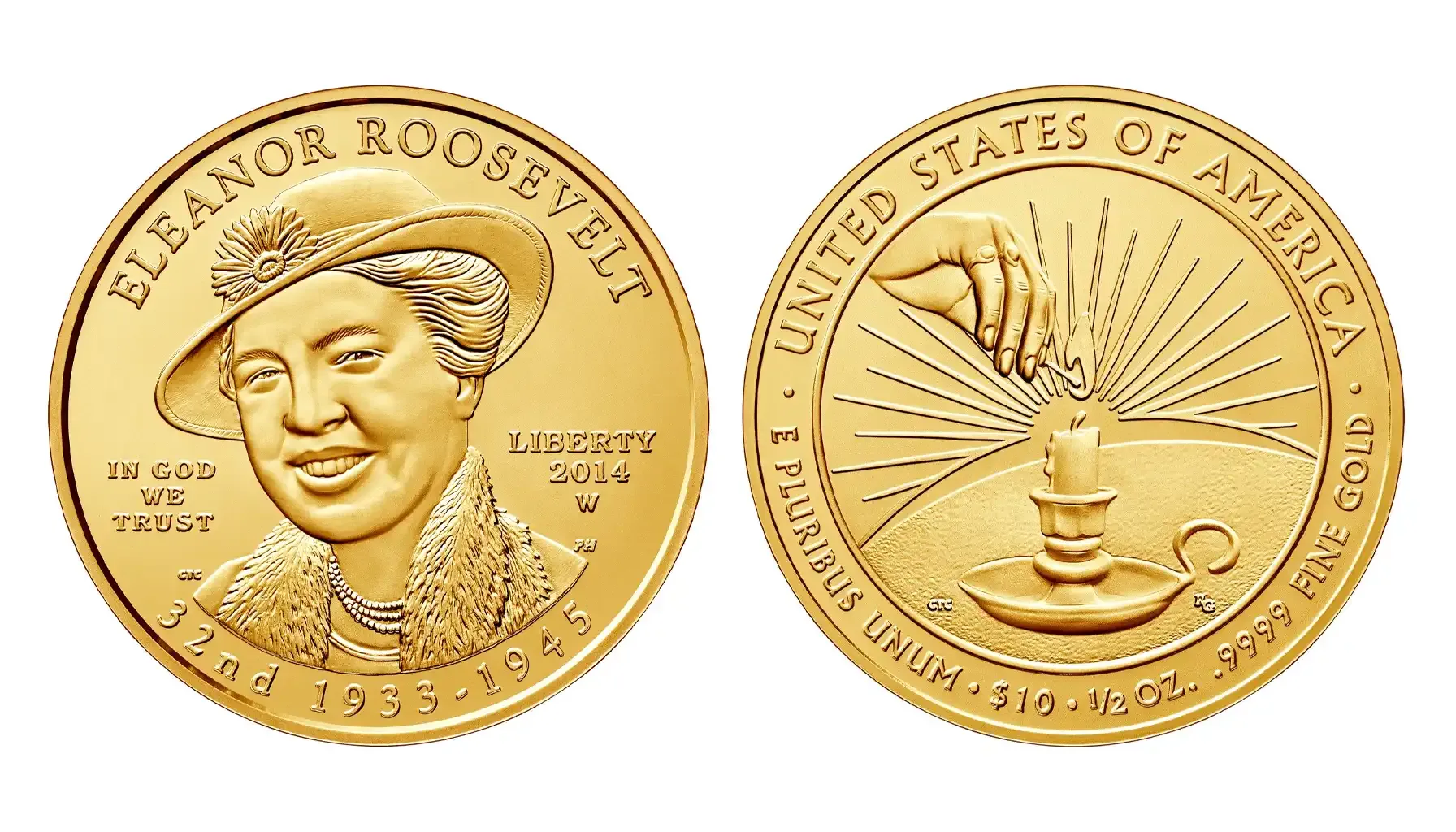
2015 Releases
Bess Truman
Jacqueline Kennedy
Lady Bird Johnson
2016 Releases
Pat Nixon
Betty Ford
Rosalynn Carter
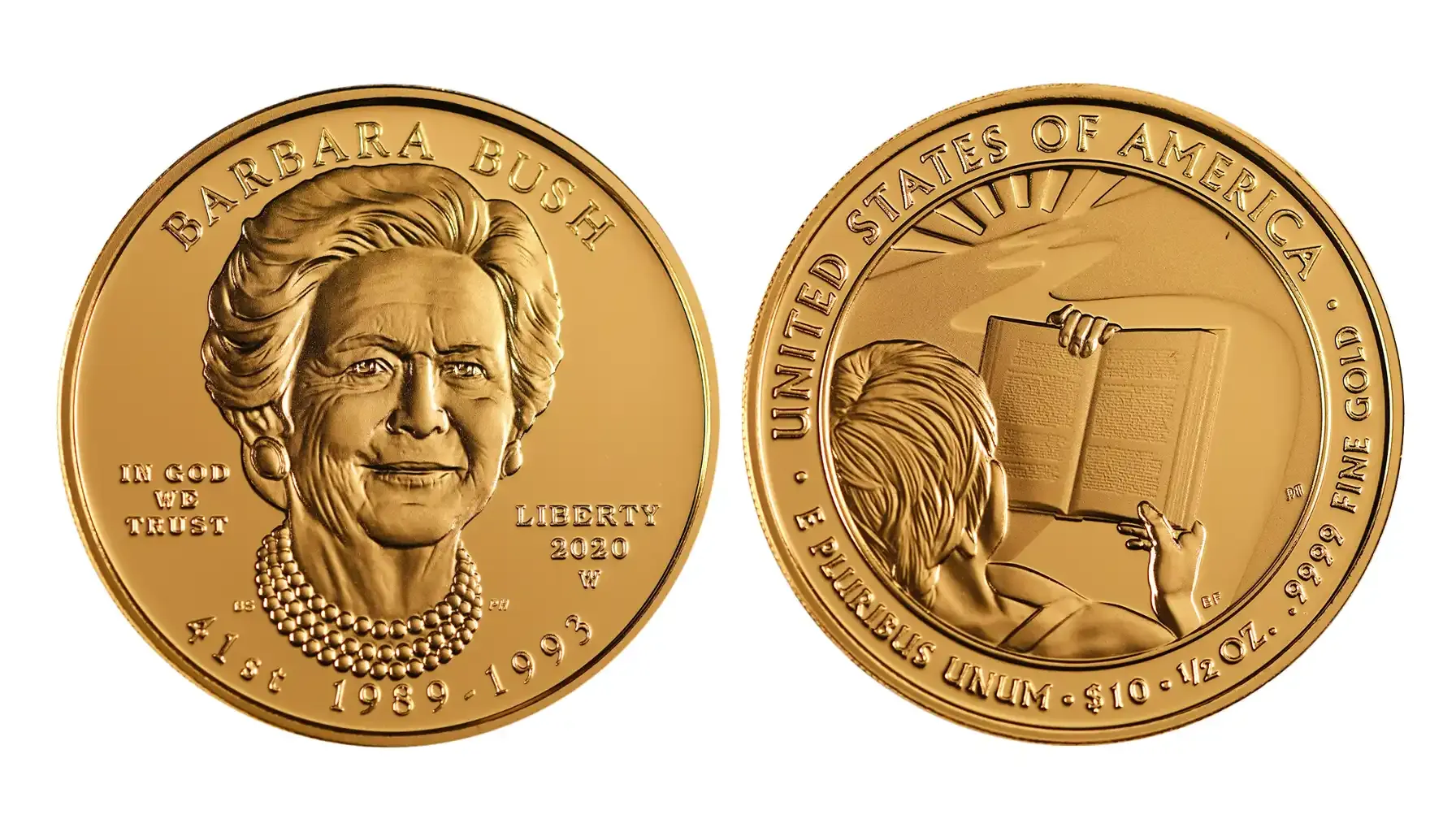
In 2020 the Mint issued a new First Spouse gold coin for Barbara Bush — the first such issue since the 2016 release honoring Nancy Reagan.
The 2020 issuance was authorized by a separate law — the President George H.W. Bush and First Spouse Barbara Bush Coin Act (Public Law 116-112).
Jimmy Carter was still living when the program ended, so Rosalynn Carter’s coin was issued before his presidency reached the presidential dollar program’s cutoff year.
First Spouse Gold Coins Value
Category | Market Value |
Gold melt value | ≈ $2,100 (November, 2025) |
Common-date First Spouse specimens | $2,300–$2,600 |
Early releases (2007–2009) | $2,400–$2,800 |
Mid-series coins (2010–2013) | $2,250–$2,600 |
Low-mintage late issues (2014–2016) | $2,700–$3,200+ |
Rarities in top grades | $3,500–$6,000+ |
Complete 39-coin set | $90,000–$110,000+ (depends on grades) |
Tips for Identifying First Spouse Coins
1. Start With the Portrait or Liberty Design
Each release shows either the First Lady herself or a Liberty image chosen for presidents who had no spouse. This single detail usually tells you which part of the series it belongs to.
2. Study the Scene on the Reverse
The reverse may show a specific event, a personal interest, or a public initiative associated with the woman being honored. These scenes are unique, so they help you pinpoint the exact issue.
3. Check the Basic Specifications
All First Spouse coins share the same core features:
$10 denomination
½ oz of 24k gold
West Point mint mark (W)
If the piece matches these three points, you’re already on the right track.

4. Note the Finish
Proofs have deep mirrors and sharp frosted details.
Uncirculated First Spouse Gold coins for sale have a soft, even texture.
Recognizing the finish helps confirm which version you’re holding.
5. Use a Photo-Based Identification Tool
If you want quick confirmation, take a clear photo and run it through Coin ID Scanner. The app identifies any coin and shows its basic specifications, which helps verify you’re dealing with a First Spouse issue.
6. Match the Design to the Release Timeline
Because the series follows presidential order, you can compare the portrait or theme to the program’s chronology to determine the exact year and position within the series.
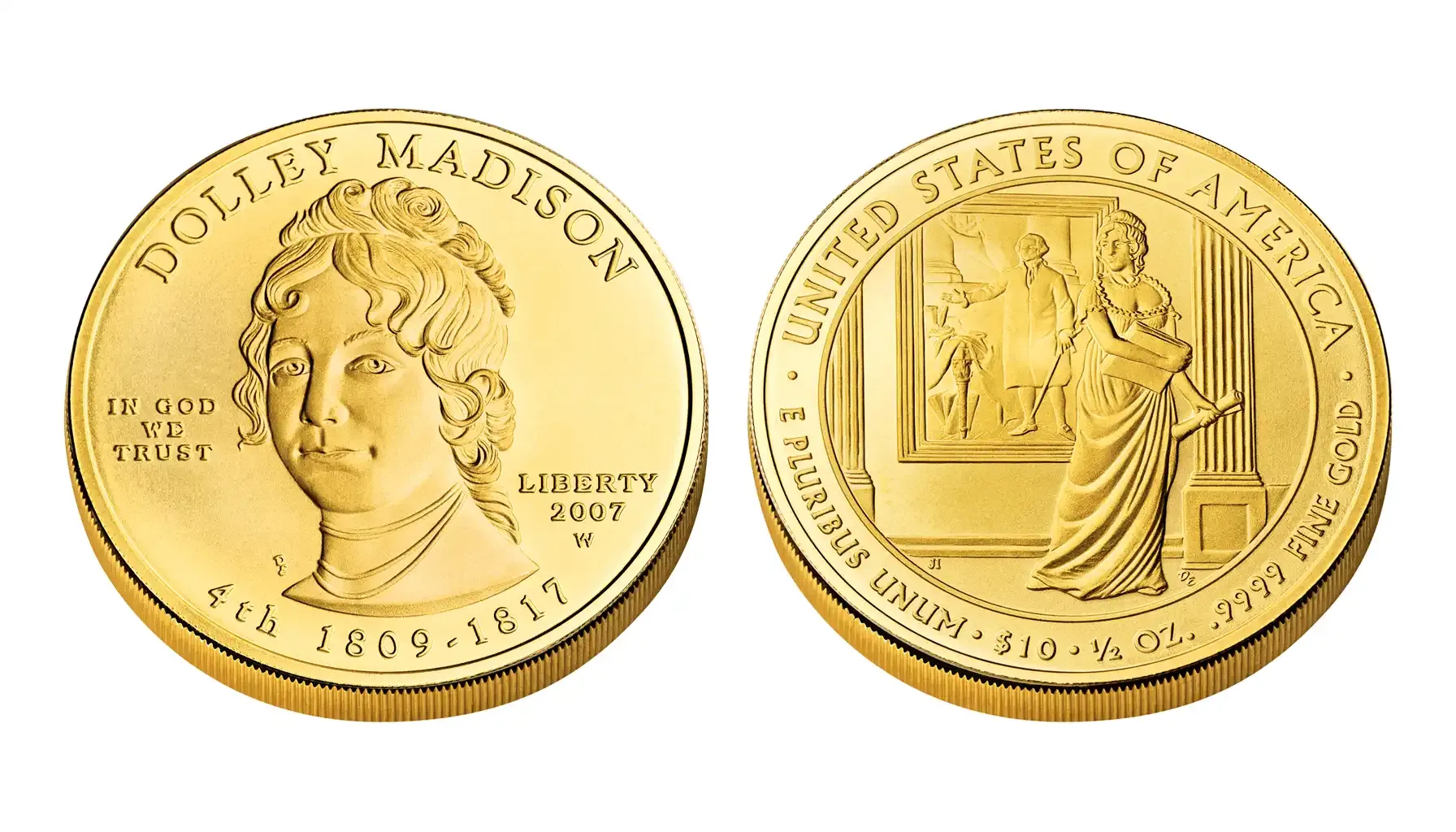
A quick look at the portraits, reverse themes, and basic gold specifications is usually enough to identify all President and First Lady series coins. The fixed timeline from 2007 to 2016 makes the series easy to place, and tools like Coin ID Scanner help confirm the exact type in seconds.

 Facebook
  X (Twitter)
  Pinterest
  LinkedIn