Contents:
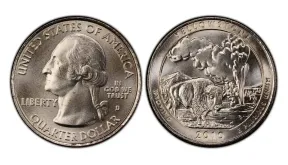
Before the family battles and ranch politics of Yellowstone ever reached television, the land at the center of the story had already appeared on a U.S. quarter.
The 2010 Yellowstone National Park Quarter is a part of the America the Beautiful series. It doesn’t tie into the show. But they are both connected to the same ground. One describes it through coinage, the other through characters, yet both can explain why Yellowstone remains one of the most recognized places in the country.
Overview — The 2010 Yellowstone Quarter
This coin is the second one issued in the America the Beautiful Quarters Program, which also includes the 2010 Grand Canyon quarter.
You’ll see on it:
Obverse: George Washington portrait (standard for all ATB quarters).
Reverse: A bison and Old Faithful.
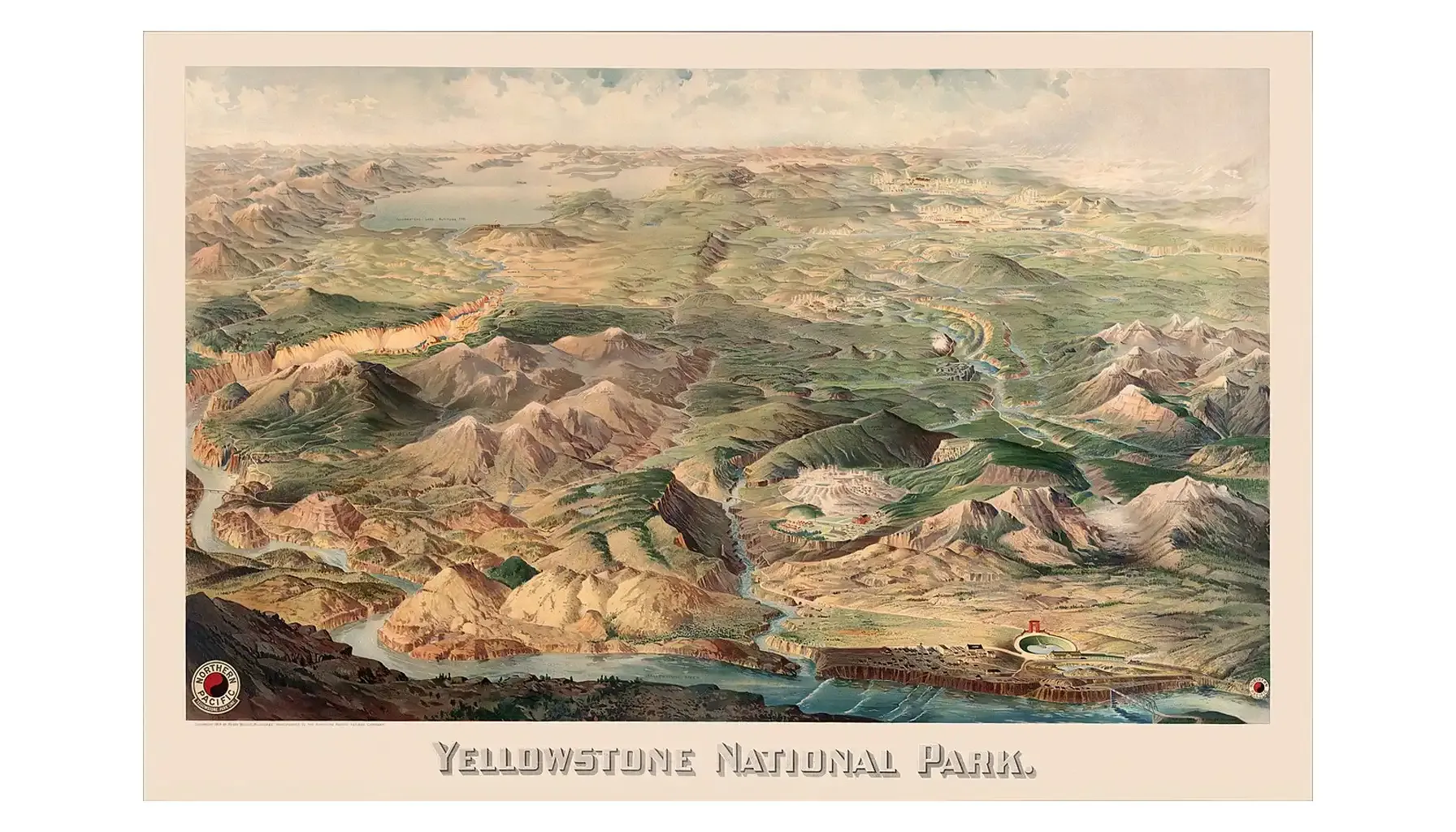
Yellowstone earned its place early in the program because it became the first national park in 1872. It set a model for all parks that followed.
The Mint worked with the National Park Service and chose two of the park’s most familiar sights: Old Faithful and the bison that often roam near the geyser basin.
“This place holds our past, and it holds our future. That’s why it matters.”
— Beth Dutton (played by Kelly Reilly)
TV drama “Yellowstone”
2010 Yellowstone Quarter Specifications
Year of Issue | 2010 |
Series | America the Beautiful Quarters |
Designer (Reverse) | Don Everhart |
Obverse Designer | John Flanagan (modified by William Cousins) |
Composition (Circulation) | 91.67% copper, 8.33% nickel (clad) |
Composition (Silver Proof) | 90% silver, 10% copper |
Weight (Clad) | 5.67 g |
Weight (Silver Proof) | 6.25 g |
Diameter | 24.26 mm |
Thickness | 1.75 mm |
Edge | Reeded |
Mintage (P) | ~33.6 million |
Mintage (D) | ~34.8 million |
Mintage (S Clad Proof) | ~1.8 million |
Mintage (S Silver Proof) | ~700,000 |
2010 Yellowstone Quarter Value Chart
Type | Grade | Value |
2010-P (Philadelphia) | Circulated (G–VF) | $0.25–$0.40 |
MS60 | $0.60–$1.00 | |
MS63 | $1.00–$3.00 | |
MS65 | $8.00–$15.00 | |
2010 D Yellowstone quarter value (Denver) | Circulated (G–VF) | $0.25–$0.40 |
MS60 | $0.60–$1.00 | |
MS63 | $1.00–$3.00 | |
MS65 | $7.00–$15.00 | |
2010-S Clad Proof | PR65–PR69 | $2.00–$5.00 |
2010-S Silver Proof | PR65–PR69 | $6.00–$12.00 |
2010 Satin Finish (Mint Set) | Uncirculated | $2.00–$8.00 |
Disclaimer: These values are estimates meant for general guidance, not guaranteed buying or selling prices. Try the Coin ID Scanner app for a quick identification.
The next in the series: 2010 Yosemite Quarter.
2010 Yellowstone Quarter Errors (With Pictures Guide)
Die Crack
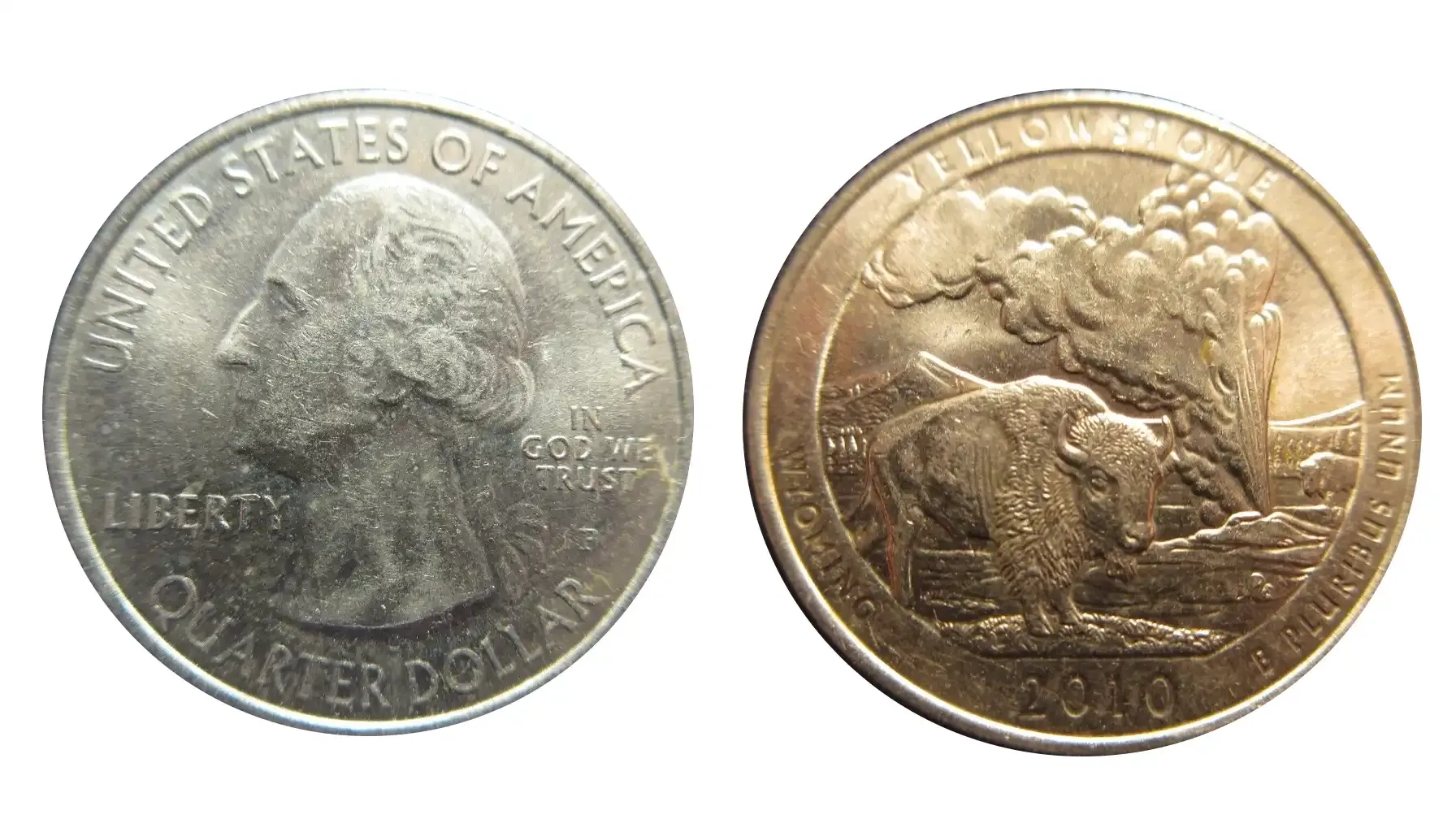
A fine raised line or ridge appears where the die has cracked under stress. On the Yellowstone quarter, these often appear around the bush of the bison or near the rim.
Off-Center Strike
Occurs when the coin blank (planchet) is not properly aligned in the collar. This causes a part of the inscription or design to be missing or shifted. Off-centers of several millimetres can be visually attractive for collectors and boost value.
Doubled Die / Die Deterioration Doubling
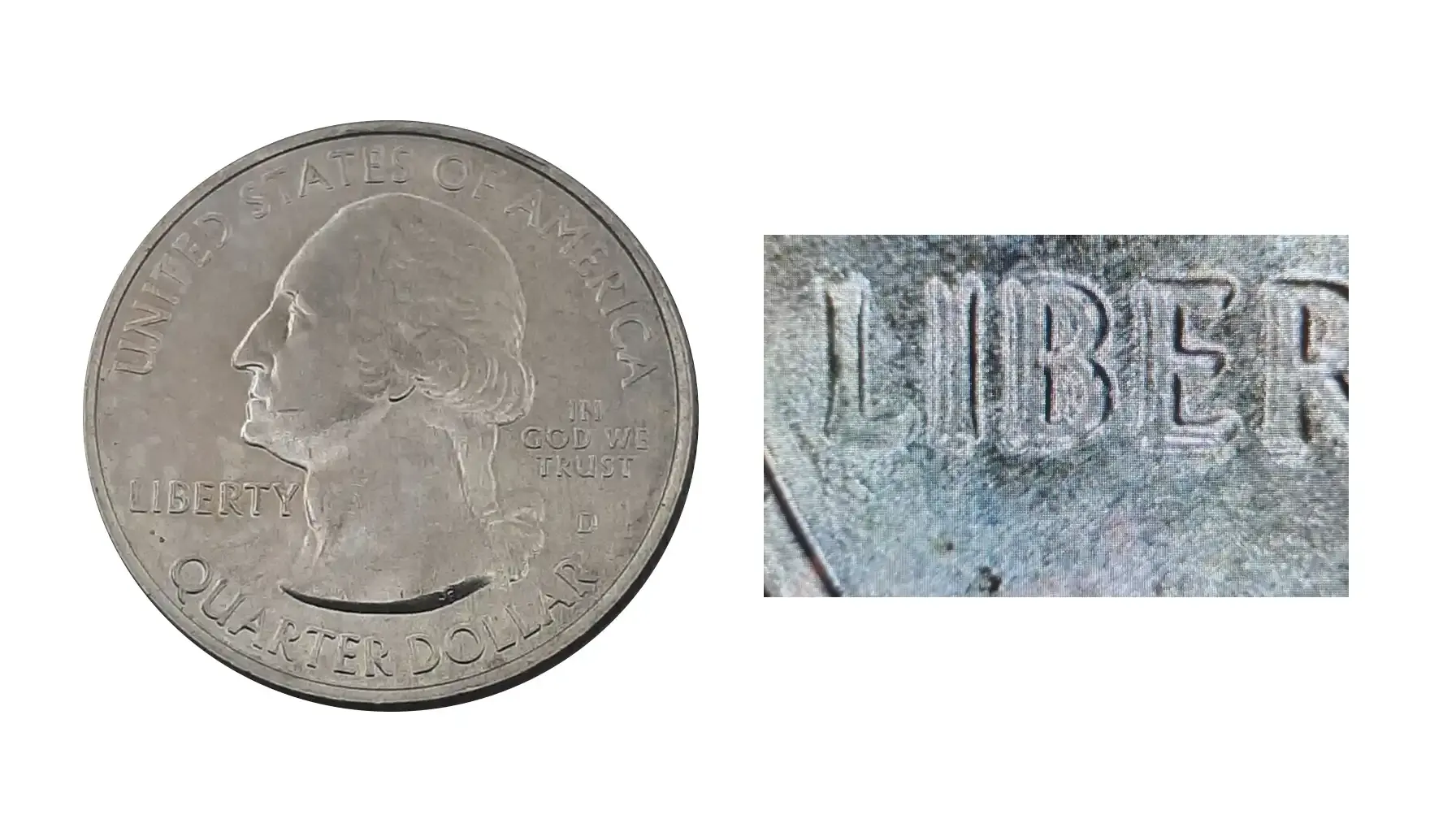
When the die image is slightly misaligned during hubbing, a second faint image appears. On this coin type you might spot doubling on the lettering of “YELLOWSTONE” or the date “2010”.
Clipped Planchet
The coin blank was improperly cut, resulting in a missing curved section around the rim. A clipped quarter is easily identified by the irregular edge which should normally be fully round.
Missing or Weak Features / Filled Mint Mark
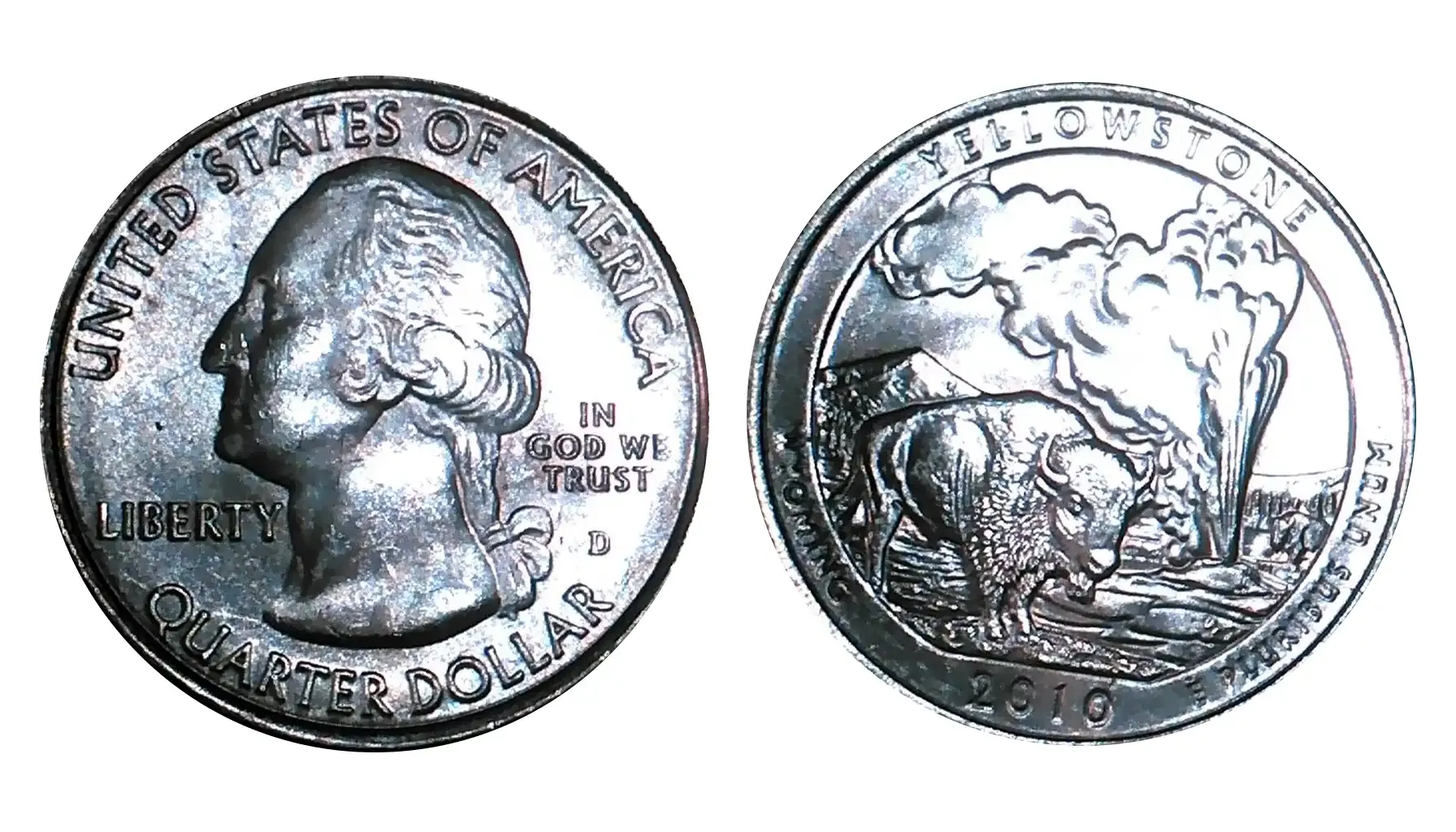
Here’s the last but not least piece from our 2010 Yellowstone quarter error list with pictures. The “P”, “D”, or “S” mintmark may appear faint, partially missing, or entirely filled with debris. Because the mintmark helps identify the minting location and issue, such anomalies attract interest.
Conclusion
The 2010 Yellowstone Quarter is common in everyday change, but certain versions carry stronger interest.
Regular Philadelphia and Denver coins stay near face Yellowstone 2010 quarter value unless they reach higher Mint State grades, where clean MS65 pieces can bring a small premium.
Clad proofs sit in the low single-digit range; silver proofs hold more weight thanks to both lower mintage and metal content.
Satin-finish coins from Mint Sets usually trade a bit higher than standard business strikes.
The most valuable are true mint errors—well-centered off-centers, clean clips, and missing clad layers—since these are the pieces that show real scarcity and attract the most attention from collectors.

 Facebook
  X (Twitter)
  Pinterest
  LinkedIn