Contents:
1913 was a year before a big tragedy that hit the world economically and politically. It makes you wonder if these changes ever hit the humble penny from the US that was produced during that year.
How much is a 1913 wheat penny worth? Here, we will discover the value of the 1913 wheat penny, including its mint mark varieties and possible errors.
Identify coins with the power of AI. Machines are fairly good at evaluating and estimating coinage, and they are definitely faster than people.
1913 Wheat Penny Design and Overview
Back in 1913, the Lincoln cent series was in circulation. It began with the 1909 Lincoln wheat penny, celebrating the 100th anniversary of President Abraham Lincoln's birth. Not many years after came the coin you’re seeing now.
Both obverse and reverse were designed by Victor David Brenner, and the obverse side will remain barely unchanged for a century to come.
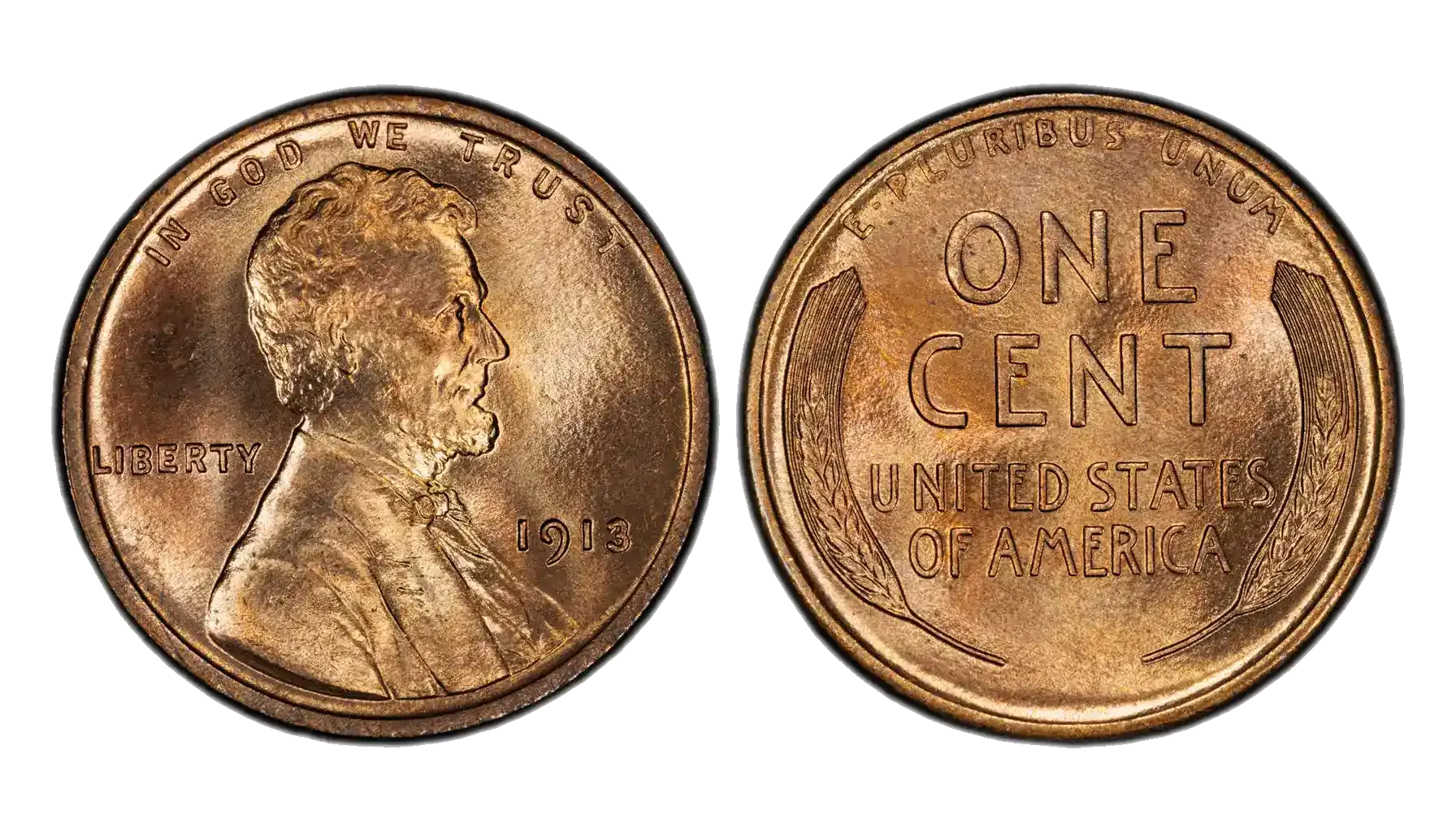
Obverse (front): Features a profile of Abraham Lincoln. The motto “IN GOD WE TRUST” appears above Lincoln’s head. The word “LIBERTY” appears to the left of Lincoln, and the year 1913 is to the right.
Reverse (back): Features two wheat ears framing “ONE CENT” and “UNITED STATES OF AMERICA.” An inscription “E PLURIBUS UNUM” appears at the top.
This wheat penny was a common circulating coin, quite typical compared to its predecessors.
1913 Penny Penny Overview | |
Country | United States |
Years of Minting | 1909–currently |
Type: | Circulating |
Shape: | Round |
Composition and metal content | 95% copper, 5% tin, and zinc |
Diameter | 19.05 mm. |
Weight | 3.11 g. |
Mint Facility | The Philadelphia US Mint, The Denver US Mint, The San Francisco US Mint |
Fun faсt: Did you know that Lincoln cents had a special commemorative edition with multiple designs? We are talking about the 2009 Lincoln penny that celebrated Lincoln’s 200th anniversary.
Mint Varieties
The 1913 Lincoln Wheat Cent was minted at three different mints, and the mint mark indicates where the coin was produced:
Philadelphia (No Mint Mark)
Denver (D Mint Mark)
San Francisco (S Mint Mark)
You can identify the exact mint variety by checking just below the year on the obverse. If it's a bank, then your coin is from Philadelphia. If it has a letter “D”, then it’s from Dnever, and “S” is from San Francisco.
1913 Wheat Penny No Mint Mark
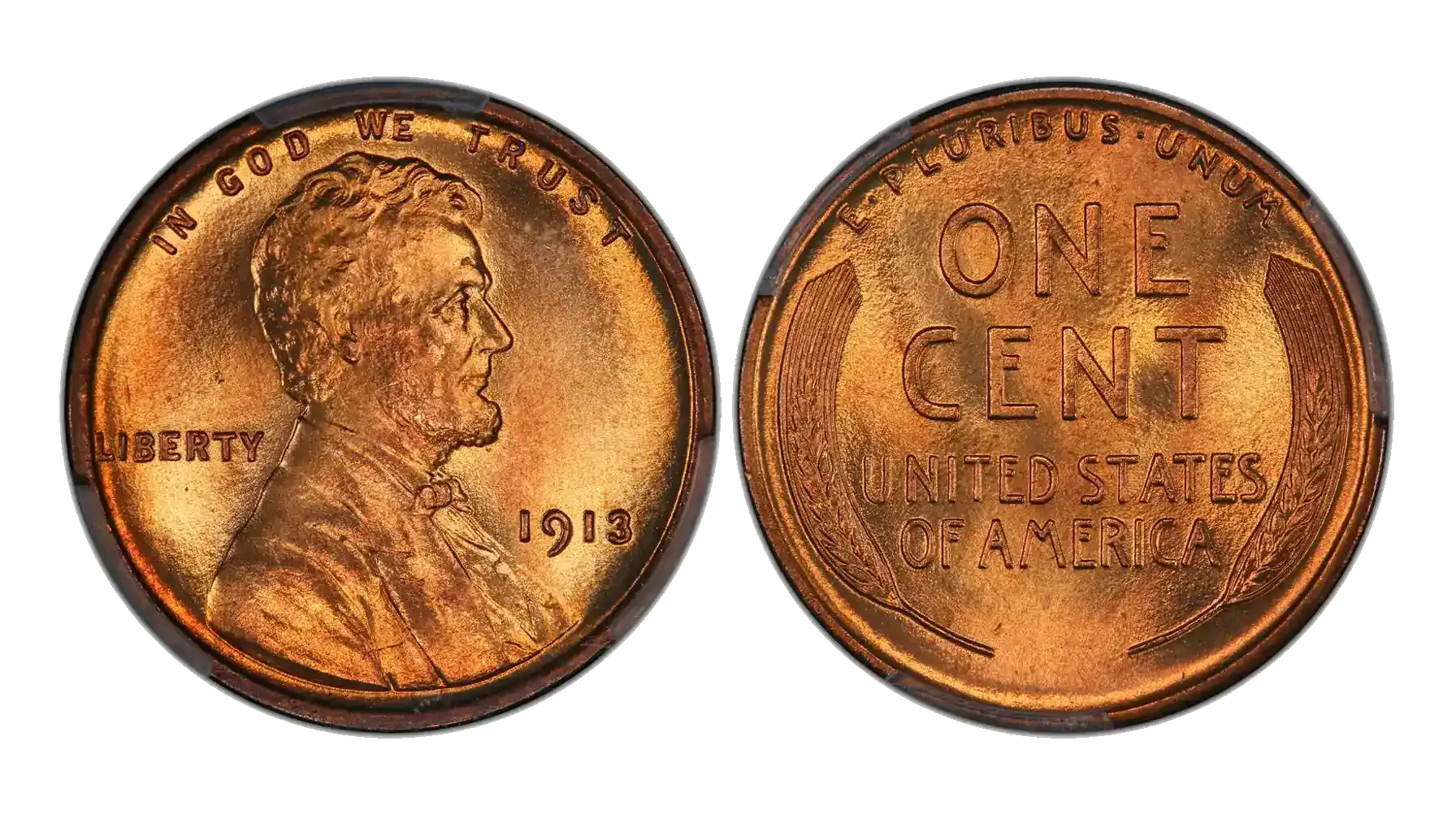
Mintage: 76,529,504.
Most 1913 pennies came from the Philadelphia Mint. These are the most common and generally the most affordable.
1913 D Penny Value
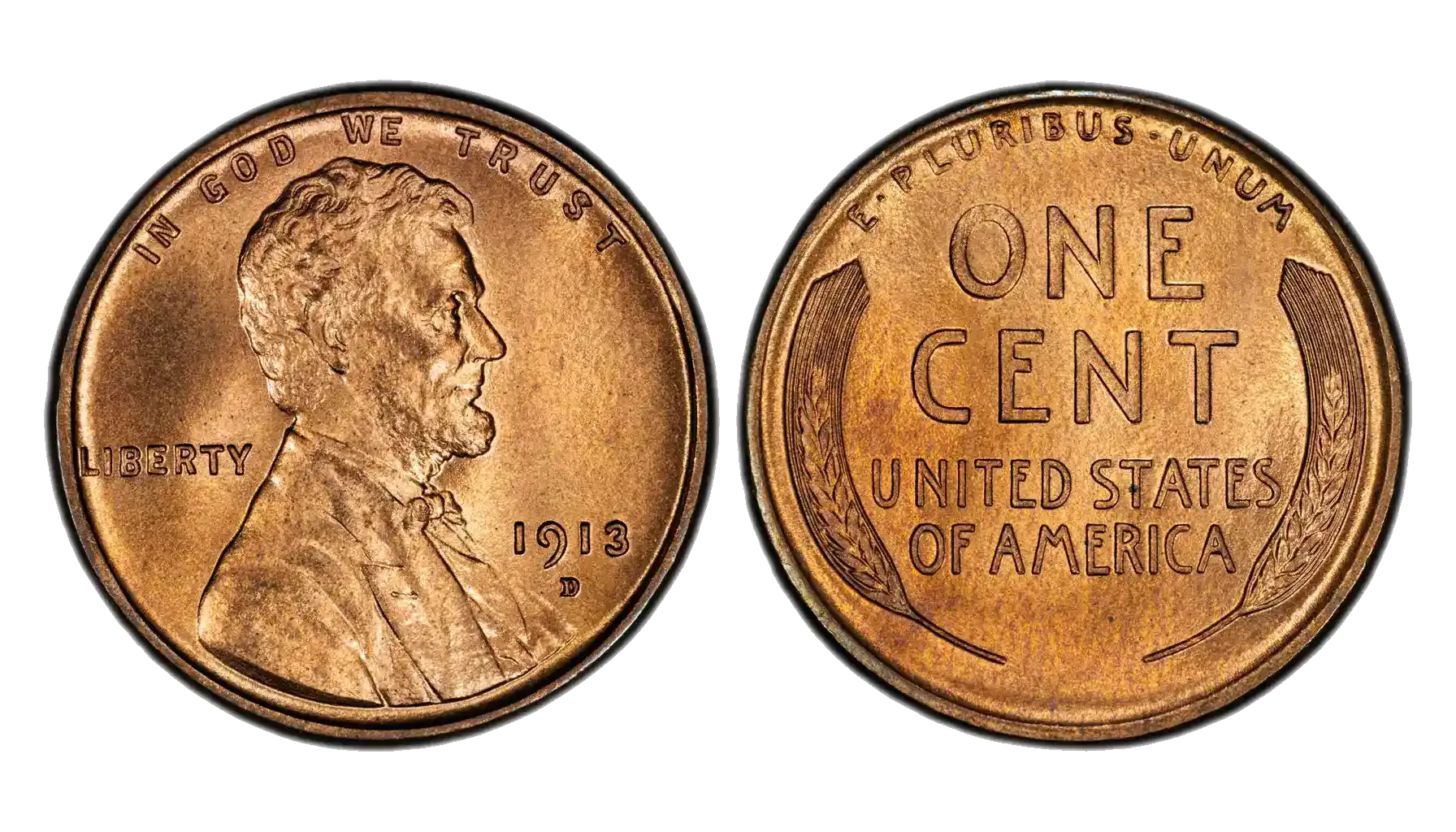
Mintage: 15,804,000.
Fewer bits were produced in Denver compared to Philadelphia, making them slightly rarer. Yet, mostly, they have somewhat similar prices because their qualities were similar, too.
1913 S Penny Value
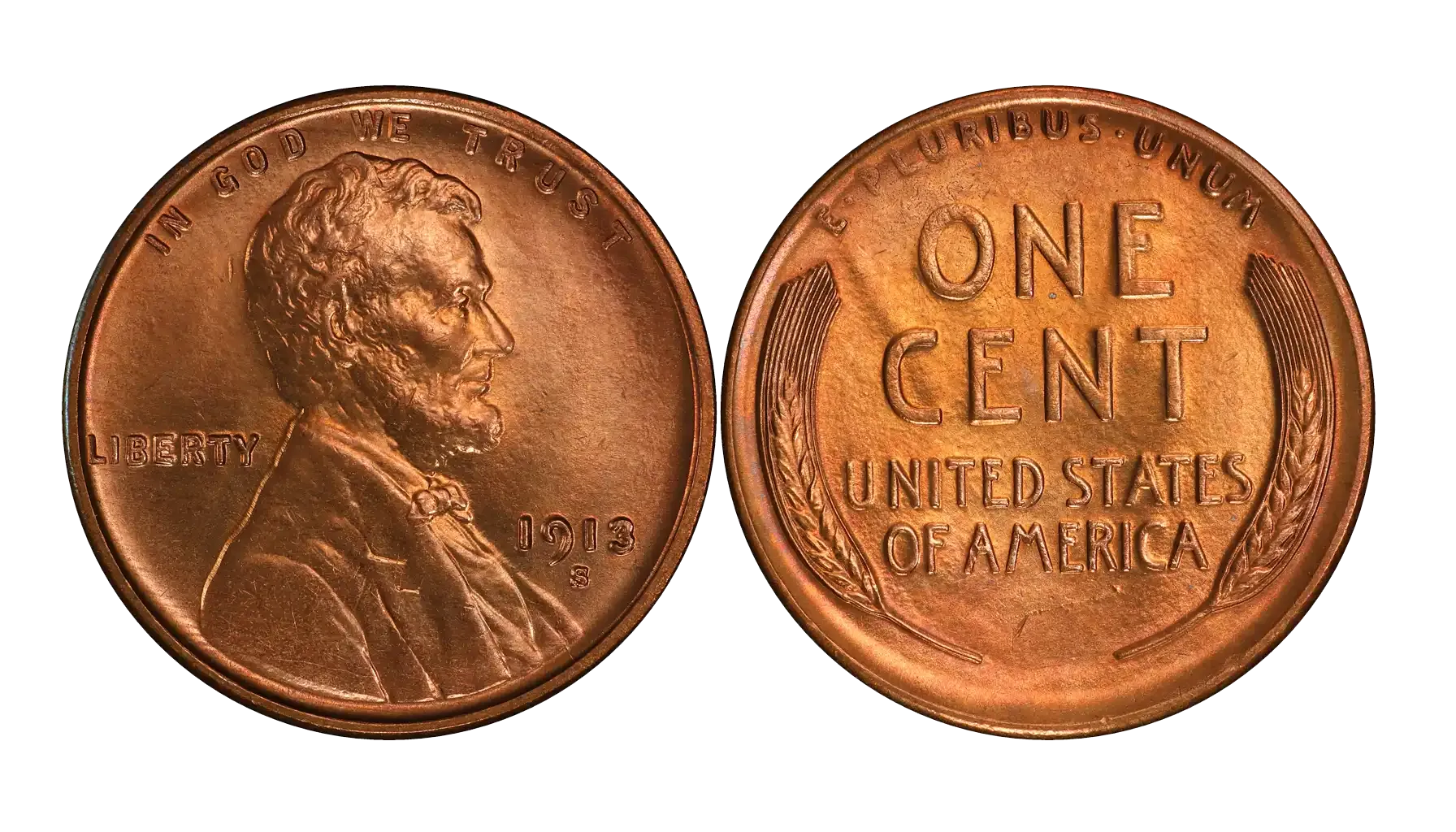
Mintage: 6,101,000.
In San Francisco, production numbers were slightly lower than in Denver. This fact is unprecedented because almost always the San Francisco Mint had a much bigger gap with other facilities. Most of coins are well-preserved examples and can command higher prices among collectors.
1913 Wheat Penny Value
We’ve seen different mint mark varieties for this piece, and now we should see how each of them fares price-wise.
Grade | Philadelphia (No Mint) | Denver (D) | San Francisco (S) |
Poor (P-1) | $0.50–$1 | $1–$2 | $1–$3 |
Fair (FR-2) | $1–$2 | $2–$5 | $2–$6 |
Good (G-4) | $2–$5 | $5–$10 | $5–$12 |
Very Good (VG-8) | $5–$10 | $10–$20 | $12–$25 |
Fine (F-12) | $10–$20 | $20–$30 | $25–$40 |
Very Fine (VF-20 to VF-35) | $20–$25 | $30–$55 | $50–$90 |
Extremely Fine (EF-40 to EF-45) | $25–$130 | $55–$70 | $120–$220 |
About Uncirculated (AU-50 to AU-58) | $30–$40 | $70–$125 | $220–$400 |
Mint State (MS-60 to MS-63) | $45–$80 | $170–$250 | $350–$600 |
Mint State (MS-64 to MS-65) | $250+ | $600+ | $600–$1,000+ |
As expected, S pennies are worth the most. They are scarce and often come in excellent condition, as they were made outside of circulation.
As for the other varieties from Denver and Philadelphia, they are worth more than the face value, but only slightly.
What can you do if your coin is presumably in low grade? You might start looking for something different, like errors.
1913 Penny Error
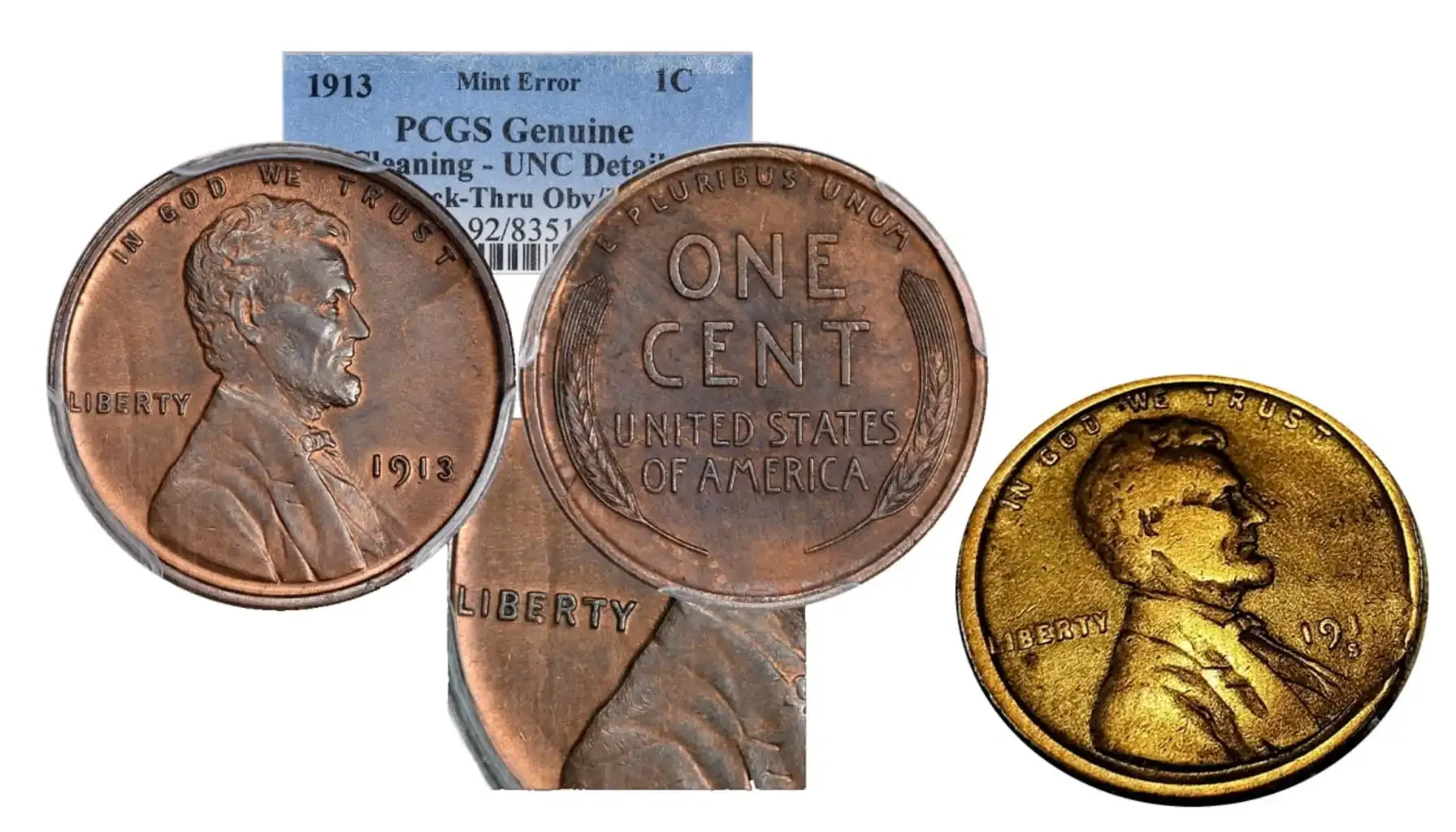
One thing can greatly increase how much a 1913 penny is worth. Coins with errors. 1913 cents had their fair share of mishaps, and each one is considered at least somewhat rare.
Some of the discovered 1913 errors include:
Off-Center Strikes
The coin is struck off-center, leaving part of the design missing.
Mild off-center coins may be moderately valuable. Extreme off-center strikes are rare and highly collectible.
Die Cracks & Cuds
Small cracks on the die can create raised lines on the coin.
“Cud” occurs when part of the die breaks and leaves a blob of metal on the coin.
Weak Strikes or Die Clashes
Sometimes parts of the design may appear faint due to weak striking.
The clashes may leave imprints of design elements from the opposite side.
Repunched Mint Marks (RPM)
Some Denver (D) or San Francisco (S) pennies were struck with the mint mark twice or partially misaligned.
Does not appear on the Philadelphia coins, as they had no mint marks to begin with.
Double Die Obverse (DDO)
The most famous error variety. Double die pennies are rare and precious.
The date, “LIBERTY,” or “IN GOD WE TRUST,” may appear doubled. Usually appears as a barely noticeable “shadow”, as if the press attempted to make a bold font. In more dramatic cases, though, you will clearly see a copy element.
Coin ID Scanner
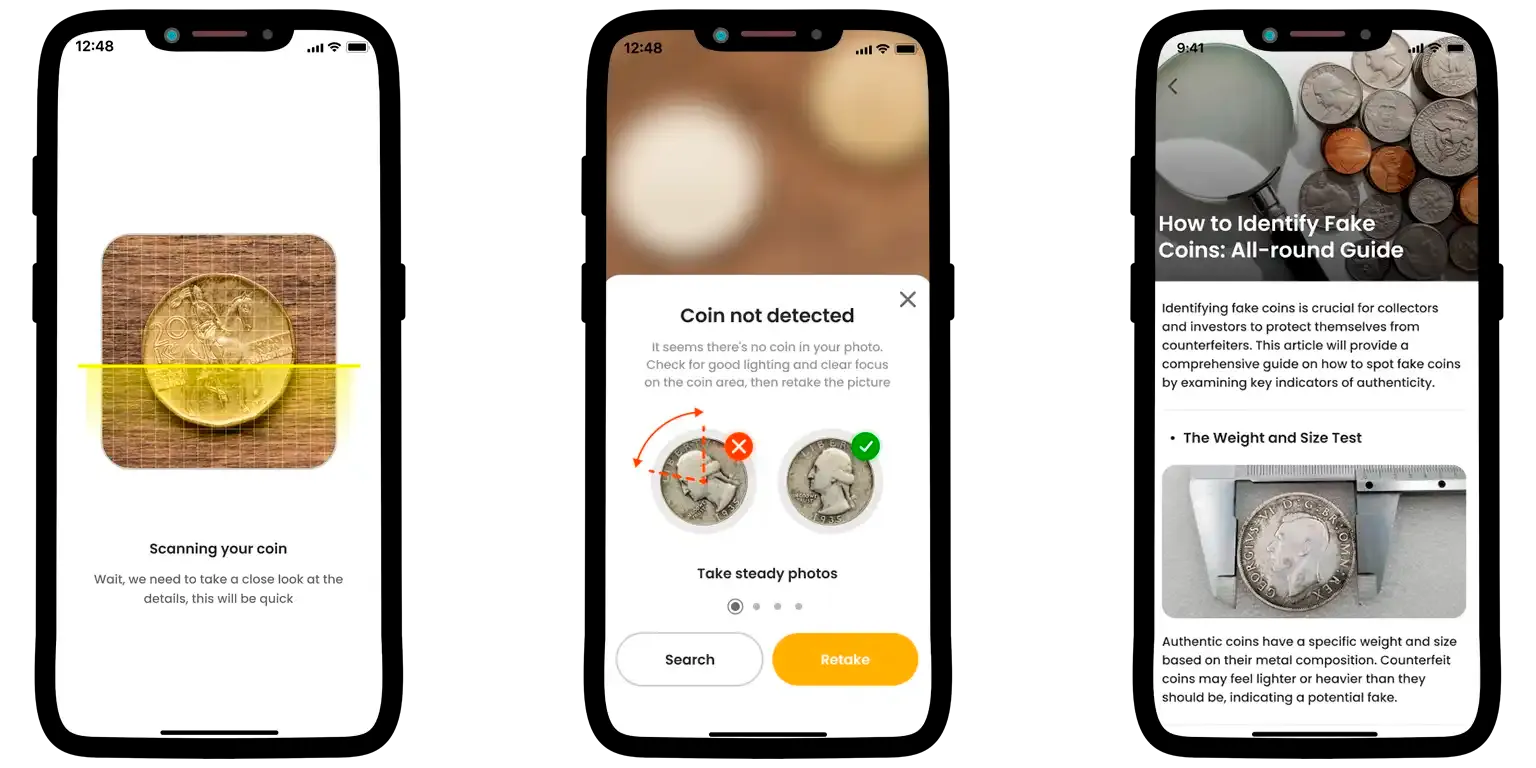
Coin ID Scanner is a new app that provides valuable insights into the world of coins. It can confidently identify a coinage and provide you with information like country of origin, denomination, year of minting, and more.
Here are the key features:
Instant Coin Identification: Use your smartphone's camera to snap a photo of the coin and upload it. The app uses advanced AI technology to quickly identify the coin.
Comprehensive Database: Access a vast database containing information on over 150,000+ coins from around the world, including rare and foreign coins.
Collection Management: Organize and manage your coin collection within the app. Save identified coins, track their condition, and monitor their estimated value over time.
Educational Resources: Stay informed with daily numismatic news, expert tips, and detailed coin overviews.
Ready to try the Coin ID Scanner? It’s free and available on iPhone and Android.
FAQ
What Is the Value of a 1913 Penny No Mint Mark?
Philadelphia variety is generally of low value, $0.50–$40 in circulated condition. With good grades and/or errors, they could be over $200.
Are 1913 Cents Rare?
Philadelphia (no mint mark) coins are not particularly rare, as millions were minted. Denver (D) and San Francisco (S) pieces are scarcer, especially in high grades, and more sought after by collectors.
What Makes 1913 Cents Collectible?
Several factors contribute to their collectibility: Historical Significance, Rare Mint Marks (D and S), Condition (Mint State), and finally Errors (especially Double Dies).

 Facebook
  X (Twitter)
  Pinterest
  LinkedIn