Contents:
The penny from 1912 was one of the first in a new, at that time, “Wheat Lincoln” series. Today, we all know how iconic the lineup of these pennies is, but back then, it was just a beginning, and no one knew what to really expect of it.
How much is a 1912 penny worth today? What varieties and errors can you find? All the answers are here, in this article.
Have you ever tried an AI Coin Identifier? It’s a great tool if you want to save time on recognizing coinage and instead want to spend this precious time on collecting.
1912 Wheat Penny Overview
The 1912 Wheat Penny (also called the 1912 Lincoln Wheat Cent) is a U.S. one-cent coin designed by Victor David Brenner. It belongs to the Lincoln Wheat Penny series (1909–1958). The 1909 penny was the first U.S. coin to feature a real person rather than a symbolic figure.
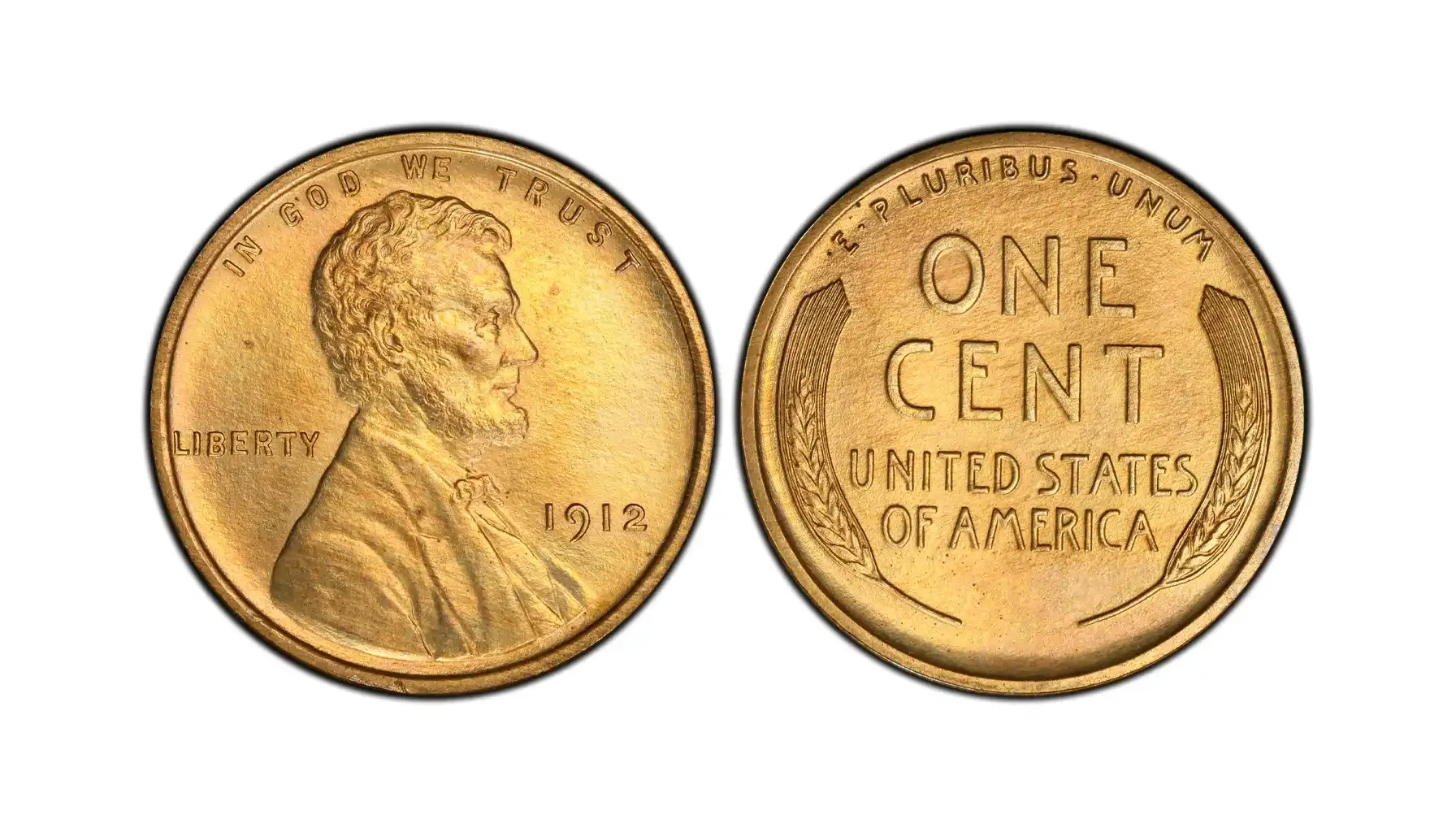
Obverse (Front): A right-facing bust of Abraham Lincoln, designed by Victor David Brenner. You should find inscriptions like "IN GOD WE TRUST" placed above Lincoln’s head in an arch, "LIBERTY" to the left of Lincoln, near the edge of the coin, and the date ("1912") to the right of Lincoln.
Reverse (Back): Two stylized wheat stalks curve upward along the left and right rim, framing the central text, hence the nickname “Wheat Penny.” You will find inscriptions "ONE CENT" in the center., "UNITED STATES OF AMERICA" just below it, and "E PLURIBUS UNUM", Latin for “Out of many, one,” at the top.
1912 Wheat Penny Overview | |
Country | United States |
Years of Minting | 1909-1958 |
Type | Circulating |
Shape | Round |
Composition and metal content | 95% copper, 5% tin, and zinc (bronze) |
Diameter | 19 mm. |
Weight | 3.11 g. |
Mint Facility | The Philadelphia US Mint |
Mint Mark Varieties
Around the beginning of the 20th century, three mint facilities started minting most coins, and the 1912 penny was no exception. The 1912 wheat penny was minted in three locations:
Philadelphia (no mint mark).
Denver ("D" mint mark).
San Francisco ("S" mint mark).
An enthusiast/beginner may ask: What is a mint mark? It's a special letter found on the coin's design, signifying its minting location.
Three facilities had different mintage numbers, so let’s look at each of them.
1912 Wheat Penny No Mint Mark Value
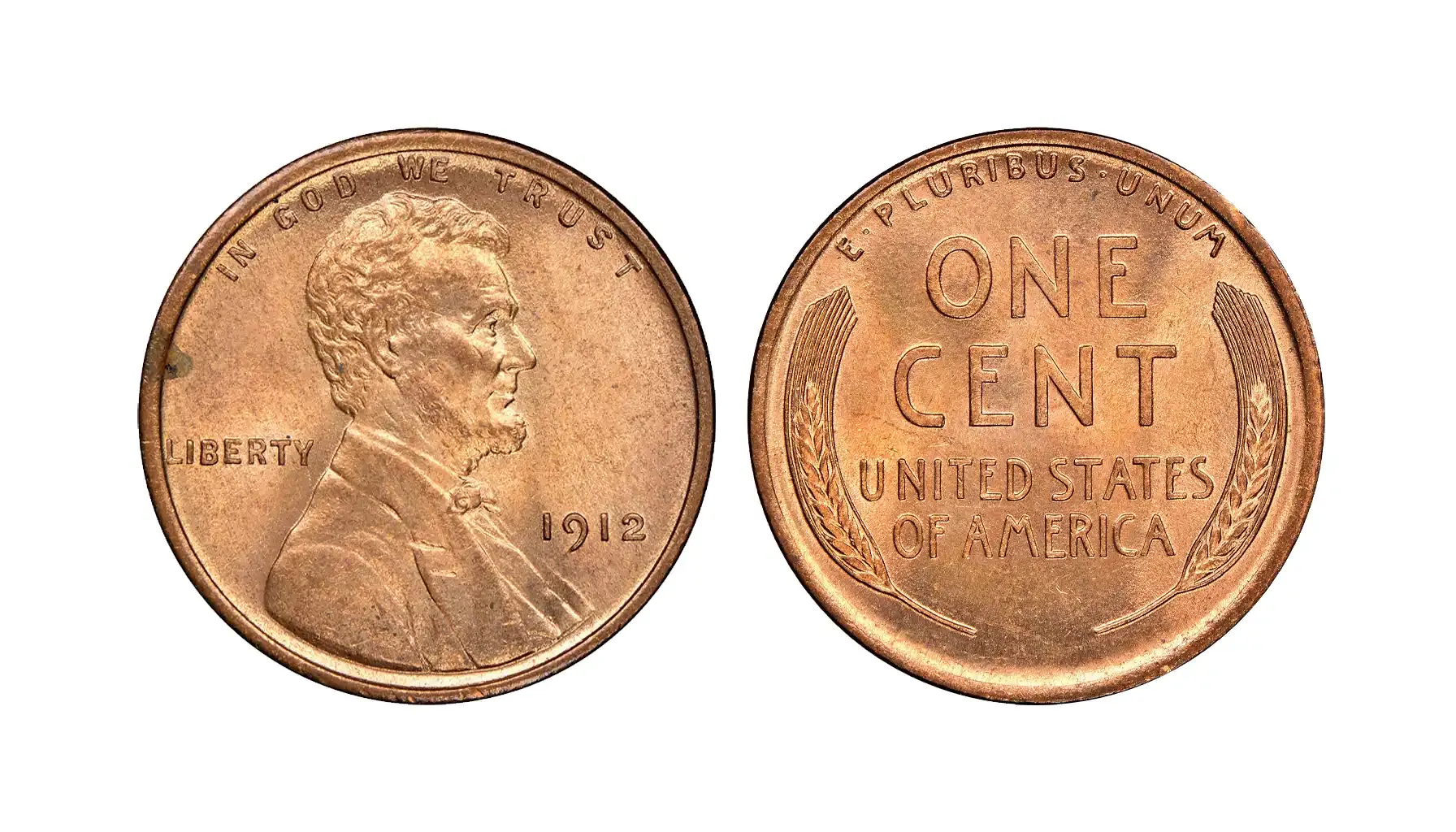
How to identify: Look for a blank spot on the obverse under the date.
Mintage: 68,153,060.
Approximate value: $1+ in circulation.
The biggest mintage came from the Philadelphia Mint. Reportedly, a large number of their coins “survived”. i.e., stayed in a great condition.
1912 D Penny Value
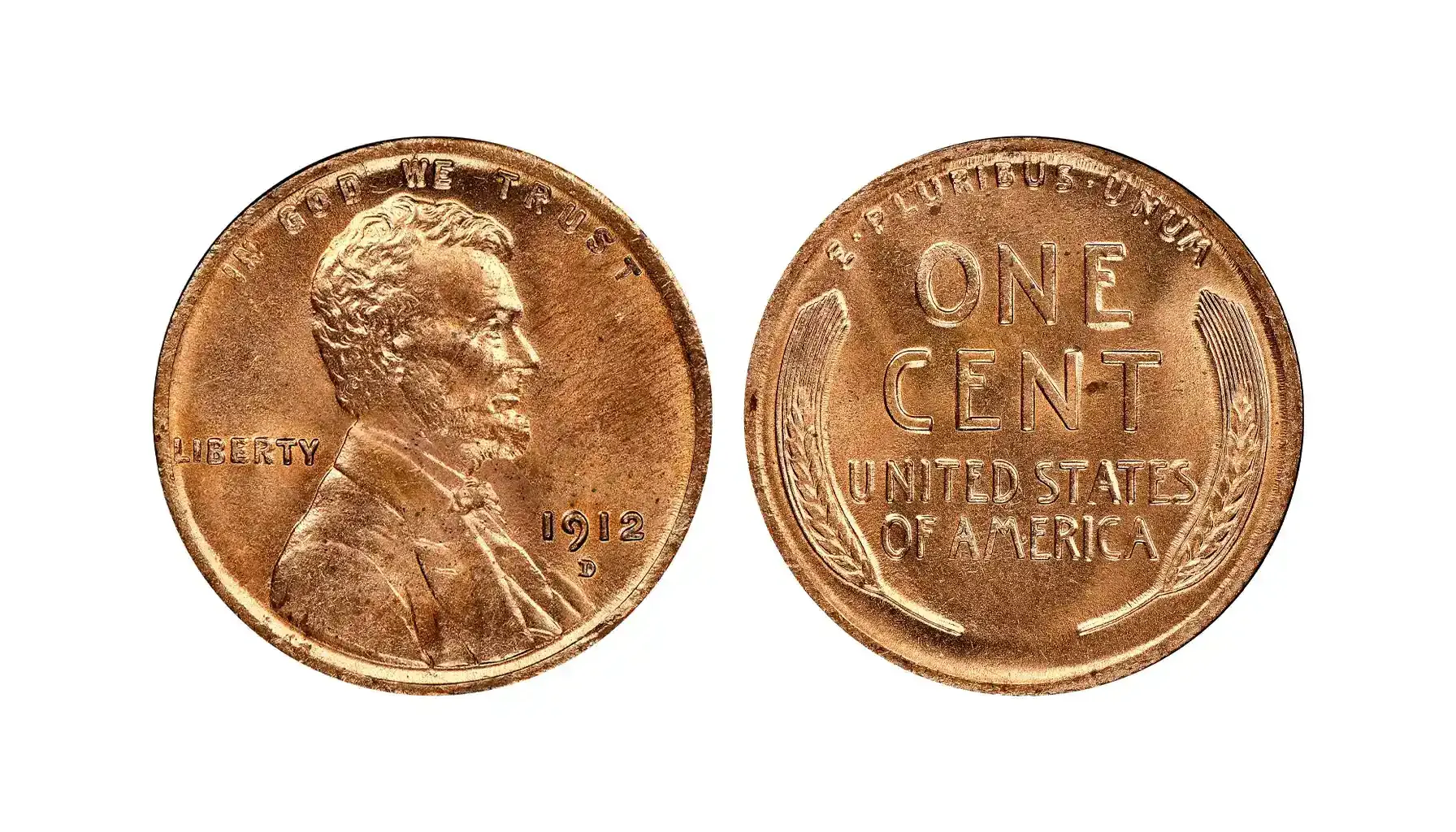
How to identify: Look for a “D” letter on the obverse under the date.
Mintage: 10,411,000.
Approximate value: $6+ in circulation.
The second biggest mintage. Some sources reported that many Denver pieces nowadays are strongly eroded, with only a few in good condition.
1912 S Penny Value
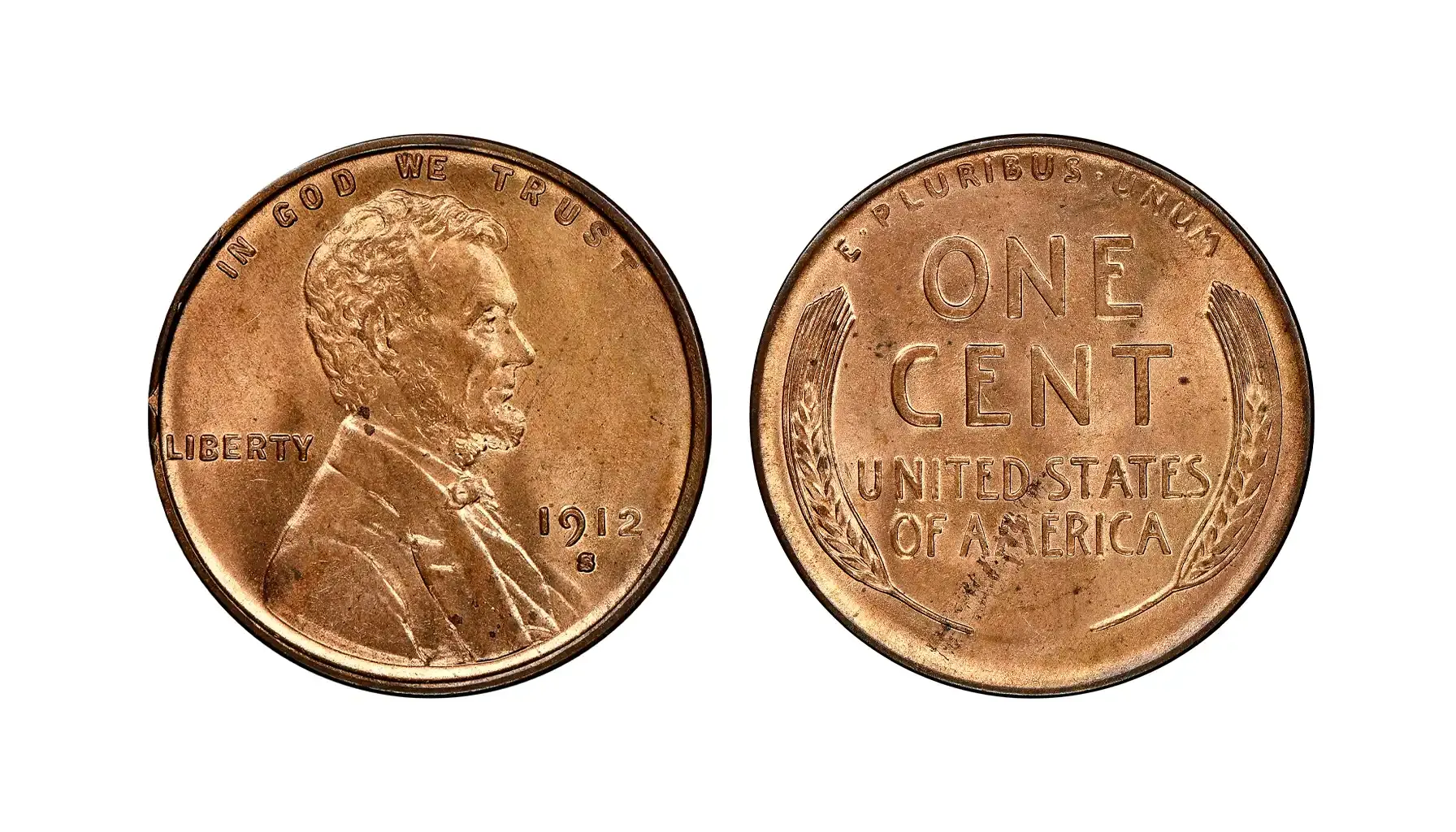
How to identify: Look for an “S” letter on the obverse under the date.
Mintage: 4,431,000.
Approximate value: $20+ even in circulation.
The smallest mintage. San Francisco mainly made proof coins, not intended for circulation. They were struck with defined details and overall excellent quality.
What Makes a Penny Rare?
Before we take an extensive look at the values, we need to understand 2 things. Firstly, rare coins are the valuable ones. Secondly, we need to understand rarity.
Basically, rare coins are those in small numbers. But in a more detailed way, we can say that rare pennies are those that possess one of these qualities:
Mint Mark & Mintage
1912-S (San Francisco) had the lowest mintage (among other pieces, making it much scarcer than the Philadelphia or Denver.
Condition (Grade)
Most 1912 cents saw heavy circulation.
Uncirculated (Mint State) coins, especially those with sharp details and original luster, are rare.
Color
Copper pieces start red but lose colour and turn brown due to rough handling.
BN (Brown) is the most common coloration.
RB (Red-Brown is rarer, more valuable. Such a piece was stored quite well.
RD (Full Red) is the hardest to find. Red Penny values are many times higher than Brown coins.
Eye Appeal
Even within the same grade, coins with sharper details, fewer spots, and strong strike are rarer and bring premiums.
Errors & Varieties
Sometimes there’s not a signal error in a million.
Error coins are desired and rare, especially if the error doesn't ruin the eye appeal.
Let’s stop at the errors and observe some of them.
1912 Wheat Penny Errors
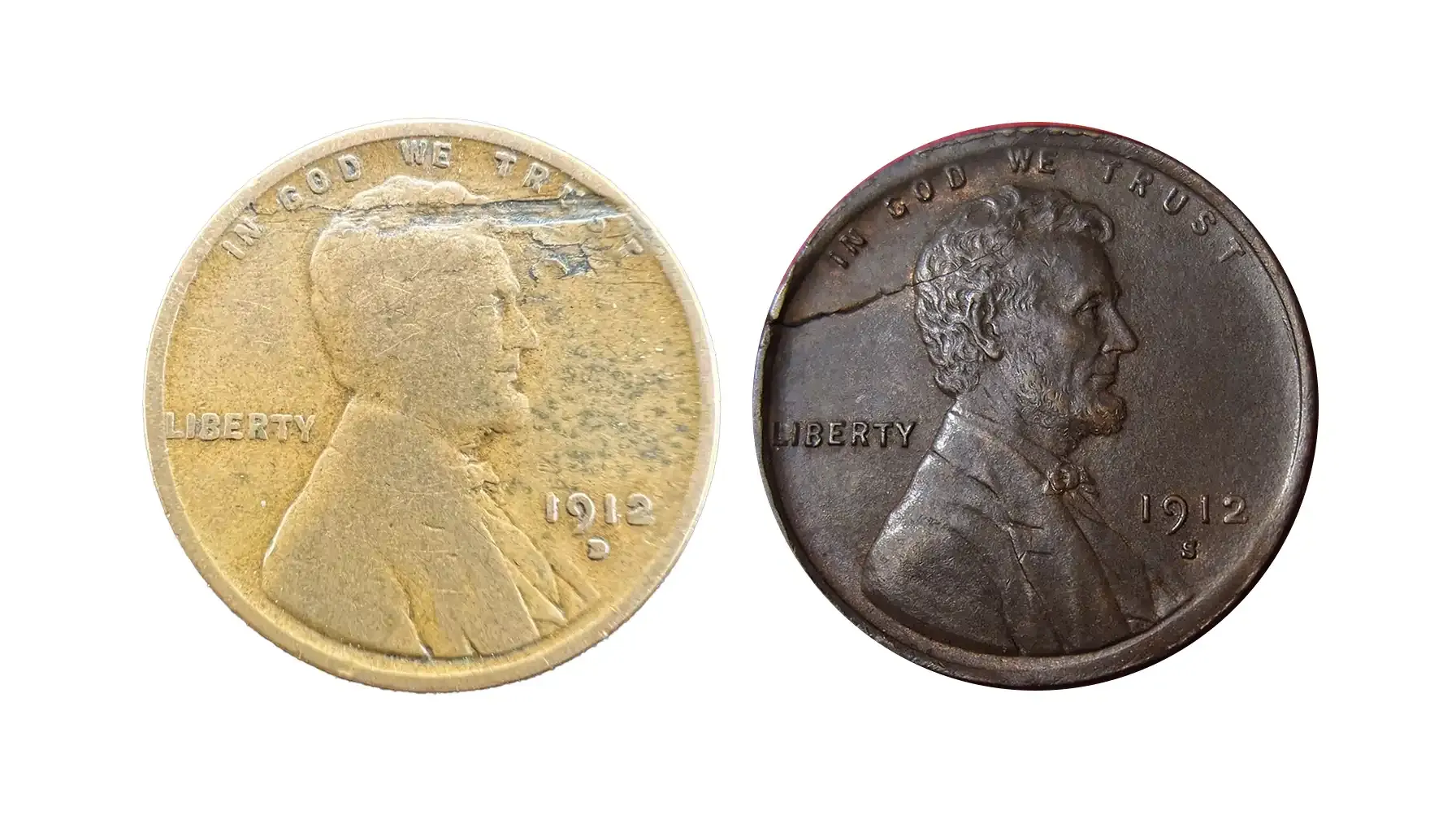
These coins have some known errors and varieties that collectors look for. Errors can make your coin much more valuable.
Here are the main errors you should look for:
1. Off-Center Strike
Part of the design is missing because the coin was struck outside the center.
Value depends on how far off-center it is — 5–10% off-center might bring a small premium, while 40–60% off-center with a full date showing can be worth hundreds.
2. Die Cracks / Cuds
These happen when the coin dies (the stamping tool) cracks or breaks.
Die cracks appear as raised lines, often on Lincoln’s portrait or near the wheat stalks.
Cuds are larger blobs of raised metal, usually near the rim.
Value is $20–$200+, depending on size and location.
3. Repunched Mint Marks (RPM)
Found only on 1912-D and 1912-S coins (since Philadelphia coins had no mint mark).
You may see a faint second “D” or “S” under or next to the main one.
Value is $25–$150,+ depending on the state.
4. Double Die Errors
A very scarce error that shows up as doubled elements in the definition.
Look for doubling in the date, “LIBERTY,” or “IN GOD WE TRUST.”
Value is $50–$500. Depends on the grade.
5. Striking Errors
Broadstrikes (coin spread out wider than normal).
Clipped planchets (part of the coin missing, like a bite mark).
Lamination errors (flaking or peeling of metal due to impurities). This error is common for copper pieces like the Wheat penny.
Values vary widely, from a few dollars to hundreds, depending on severity and eye appeal.
1912 Wheat Penny Value
Now that we have had our look at general prices, it's time to see the full list.
We cannot categorize all errors in a price table because their price varies greatly each time, but we can categorize piercing according to the coin’s state.
Mint & Mintage | Good (G-4) | Fine (F-12) | Extremely Fine (XF-40) | Uncirculated (MS-60) | Gem (MS-65 RD) |
1912 (Philadelphia, no mint mark) | $0.50 – $1 | $1 – $3 | $5 – $10 | $20 – $75 | $400+ |
1912-D (Denver) | $6 – $10 | $10 – $20 | $40 – $75 | $100 – $250 | $600+ |
1912-S (San Francisco) | $20 – $25 | $40 – $60 | $100 – $175 | $300 – $600 | $1,000+ |
What can we say? The 1912 penny is a very valuable asset. In fact, it even deserves a spot in the top 100 pennies worth money. Perhaps it’s not made of precious silver, but it is fairly rare and full of history, everything that a great coin needs.
Scan More Coins
Hopefully, this article helped you learn what is a 1912 penny worth. Now, our last recommendation is an app for any collector.
Coin ID Scanner
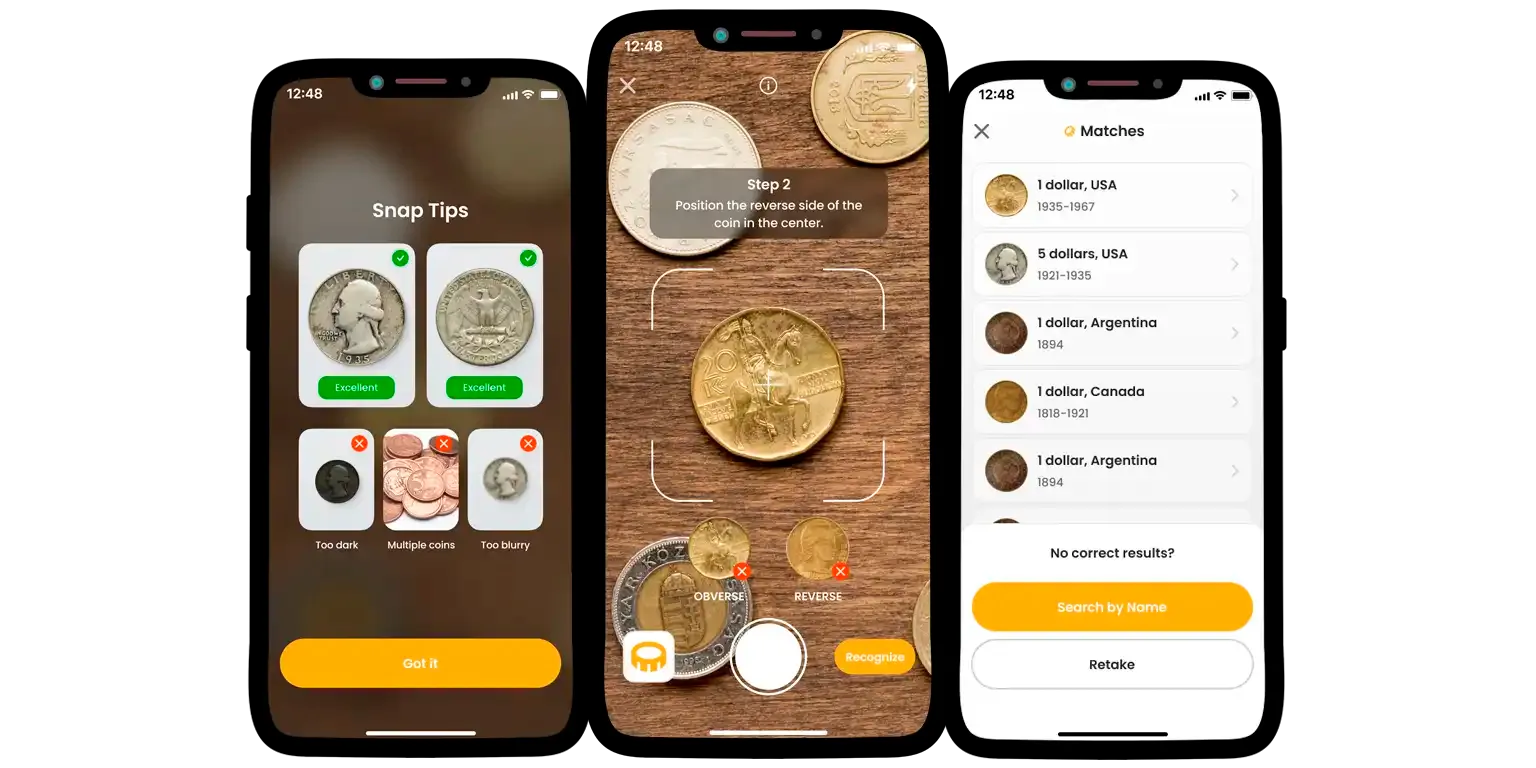
The Coin ID Scanner is a mobile app that uses photo recognition to help collectors identify and value coins.
You take or upload a photo of a coin, and the app compares it to its database (over 150,000 coins). It then provides details such as the coin’s country, denomination, year, mint mark, history, and estimated market value.
With an app like that, you can save much time and use it instead of finding new pieces and trading.
Would you like to step up as a collector? We recommend downloading Coin ID Scanner. The app is free, available on iOS and Android.

 Facebook
  X (Twitter)
  Pinterest
  LinkedIn