Contents:
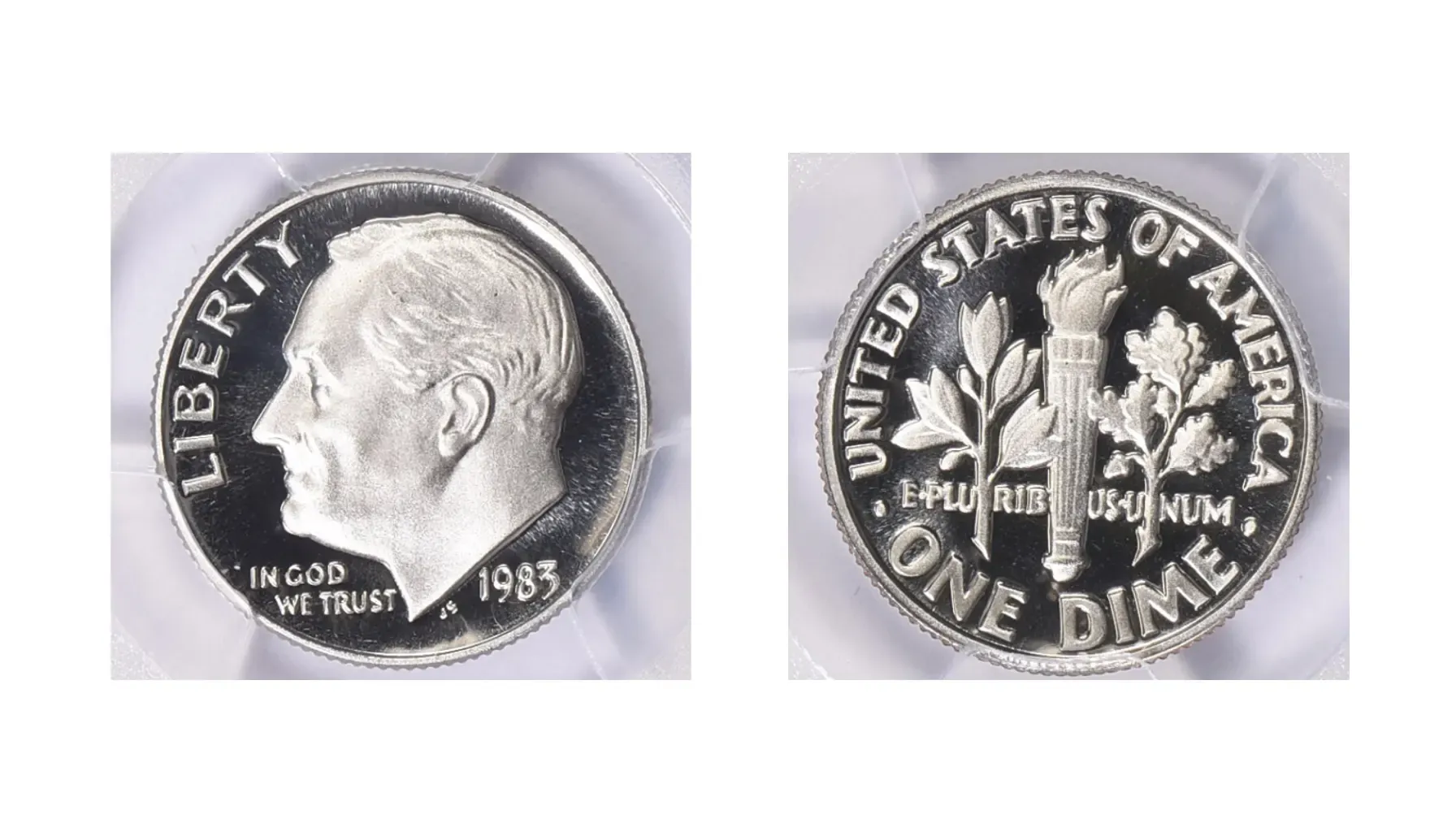
“In 1946, the U.S. memorialized President Franklin Delano Roosevelt by creating a Dime in his honor, a design that has remained until today. 1964 was the last year in which 90% silver Dimes were produced...thereafter, Dimes were made of a "clad" composition consisting of alloys of Copper and Nickel over a pure copper center.”
— Ron Guth, a licensed Certified Public Accountant, author, and PCGS expert
PCGS CoinFacts
The US coins usually bear the portraits of real historical figures, and this tradition started in 1909, when the first Lincoln Cent was introduced (it is also known as the 1909 VDB penny). No matter how vivid and diverse these units of currency can be, one would probably notice the dime, another numismatic creation featuring a prominent president whose contributions should have been perpetuated in metal from the very start.
So, which president is on the dime now, which design attributes identified the coins of the previous series, and why exactly was this person chosen to be honored?
Who Is On the Dime As Of Now?
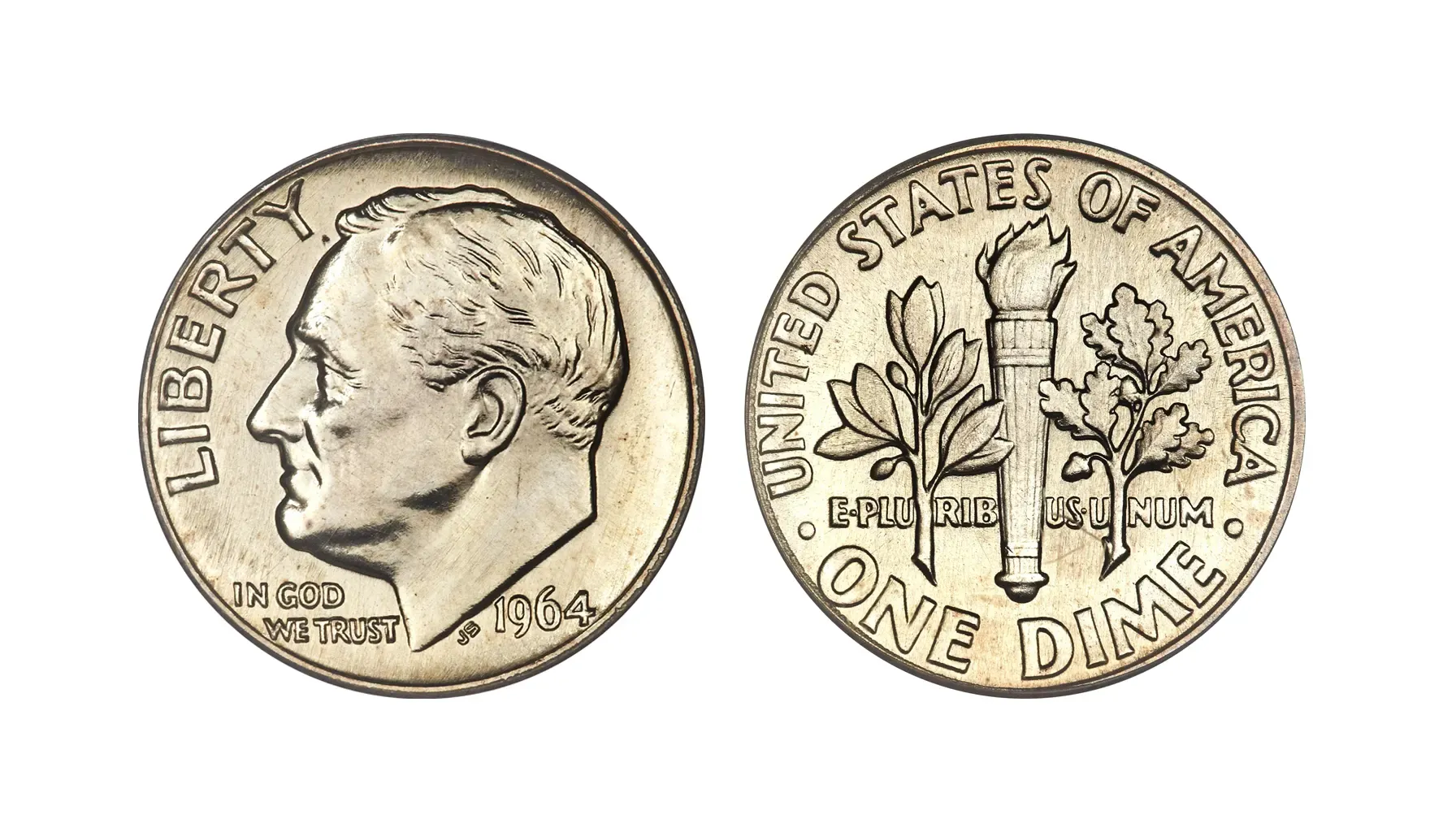
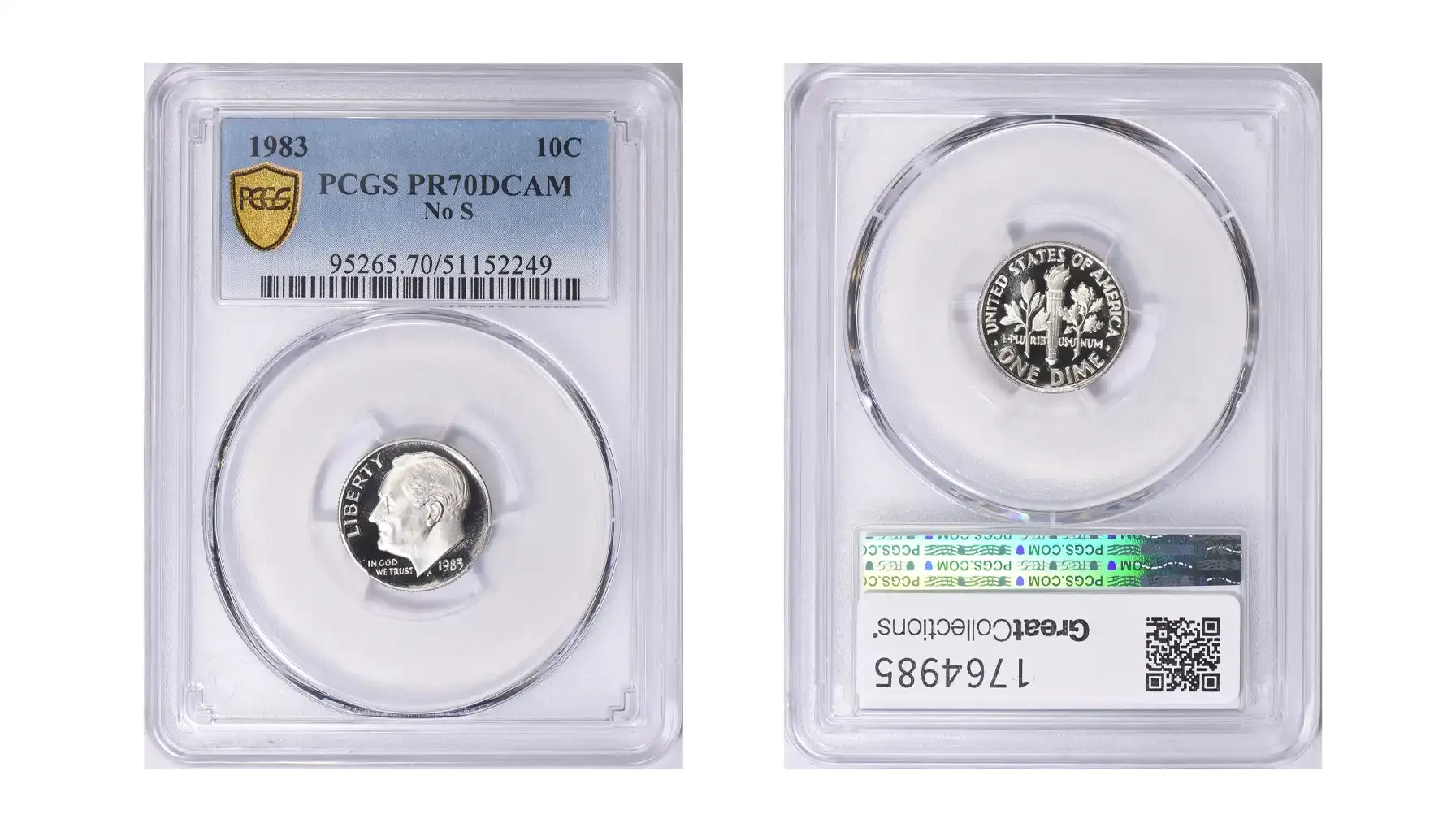
First of all, let us answer the titled question: who is the president on the dime? Well, the current response will be obvious, for the face on this coin belongs to Franklin D. Roosevelt, the 32nd President of the United States of America.
To put it simply, the work of Roosevelt has something tied to the concept of dimes themselves, yet this is going to be covered further. Anyway, so as to commemorate the contributions of such a powerful (and compassionate, as we might assume) person, in 1946, the US Mint released a new dime with a portrait of this fine president on it (1946 Roosevelt dime value). Nonetheless, there were earlier iterations that are also worth mentioning.
Who Appeared on the Dimes Before?
Draped Bust (1796 to 1807)
The most prominent issue: 1796 MS
Auction record: $881,250
The first official dime of the United States Mint that featured the Draped Bust of Liberty by Robert Scot. The reverse, on its part, demonstrated an eagle surrounded by a wreath. The mintages were limited, which is why their worth climbs day by day.
Capped Bust (1809 to 1837)

The most prominent issue: 1822 PR
Auction record: $440,625
A refined, neoclassical design by John Reich, who pictured Liberty with a soft cap. The reverse is quite traditional, for it depicts an eagle with arrows and an olive branch.
Seated Liberty (1837 to 1891)
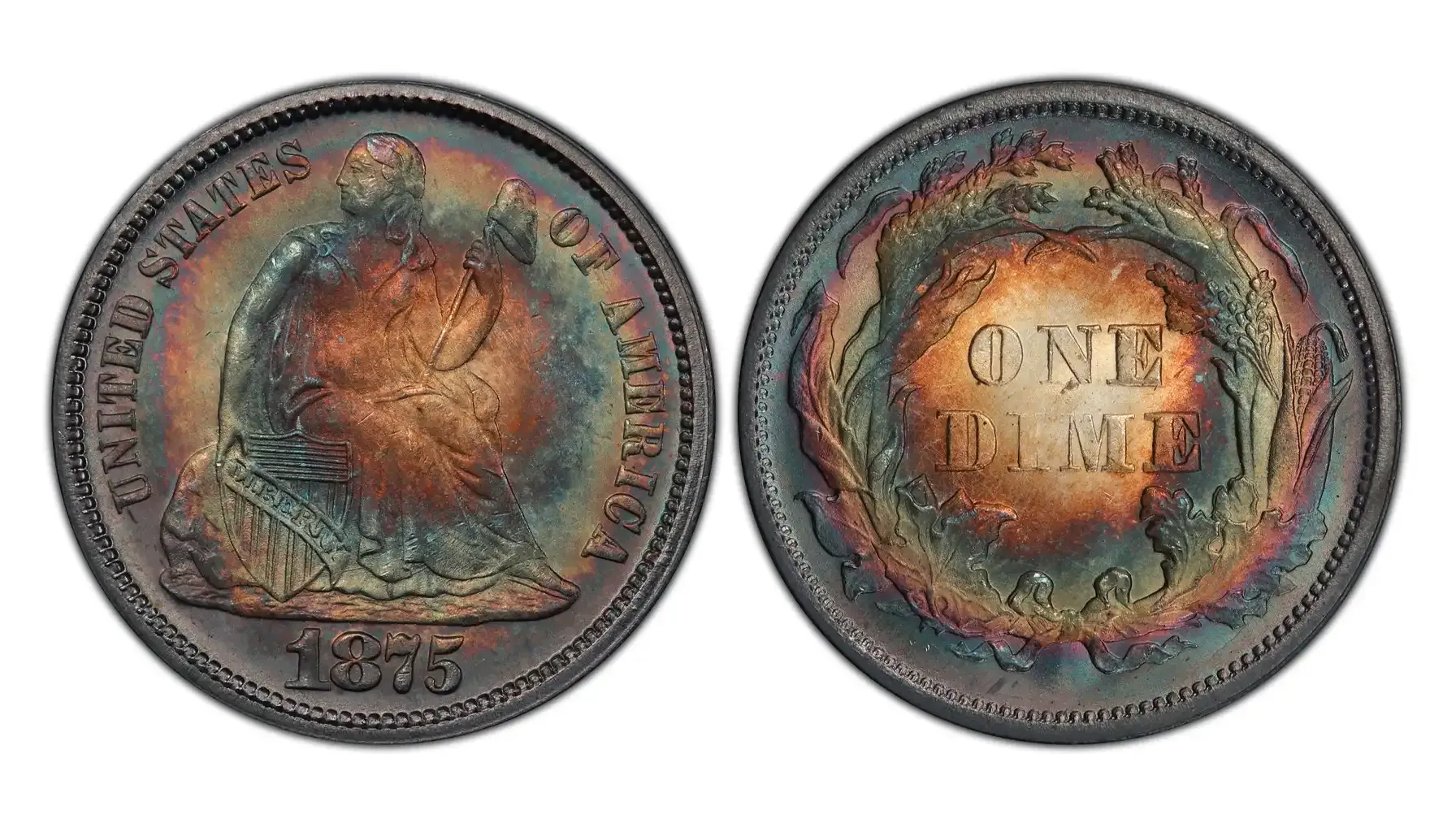
The most prominent issue: 1875 MS
Auction record: $3,600,000
Christian Gobrecht’s Seated Liberty design showed Liberty seated on a rock with a shield and pole topped by a liberty cap. This depiction is rather famous, for it clearly demonstrated the spirit of the nation, going through the Civil War.
Barber (1892 to 1916)
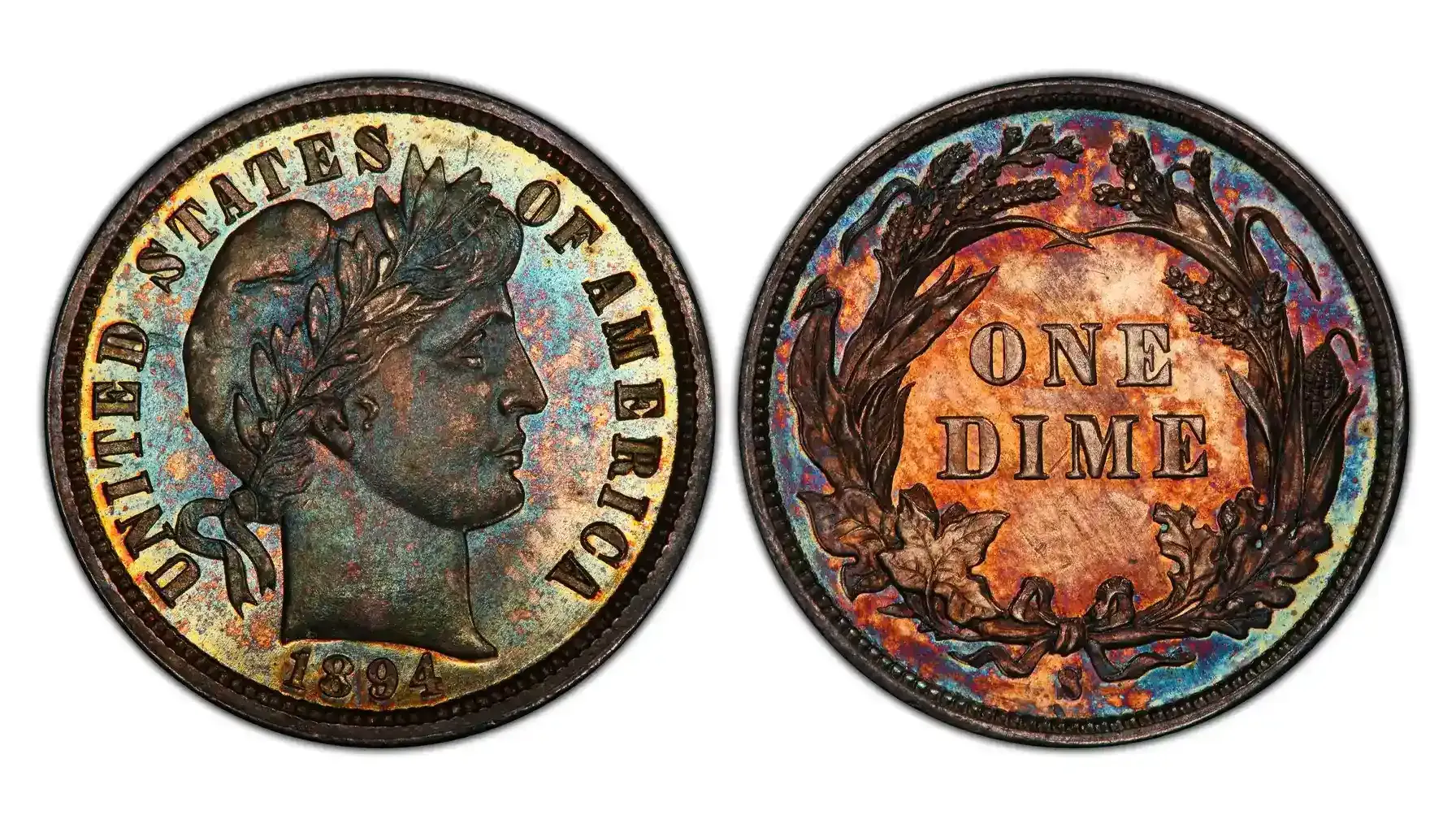
The most prominent issue: 1894-S PR
Auction record: $2,160,000
The exquisite iteration developed by Charles E. Barber, who displayed Liberty with a Phrygian cap and laurel wreath. One of the greatest numismatic treasures, and its price cannot prove it wrong.
Winged Liberty Head (1916 to 1945)
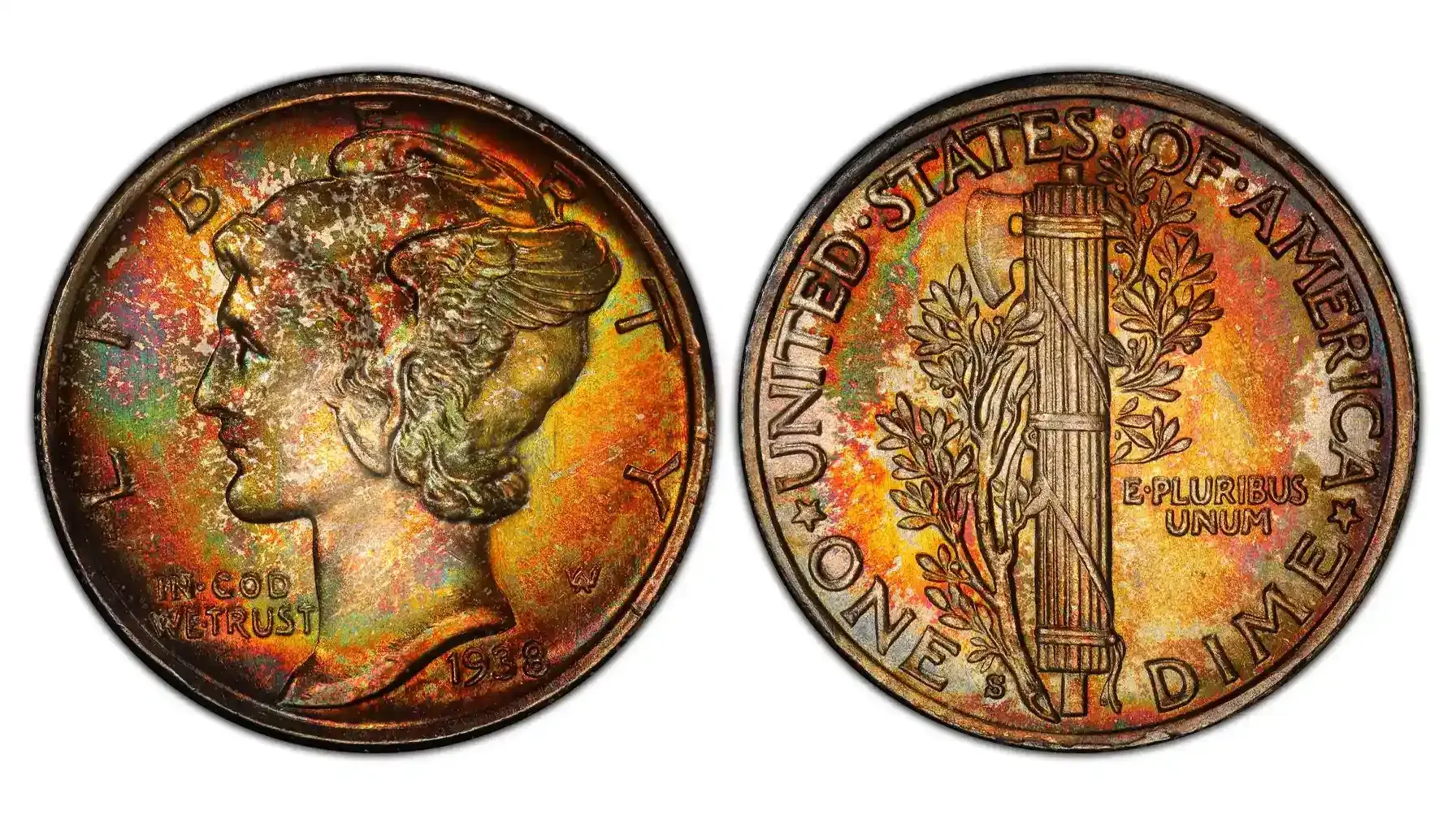
The most prominent issue: 1938-S MS
Auction record: $364,250
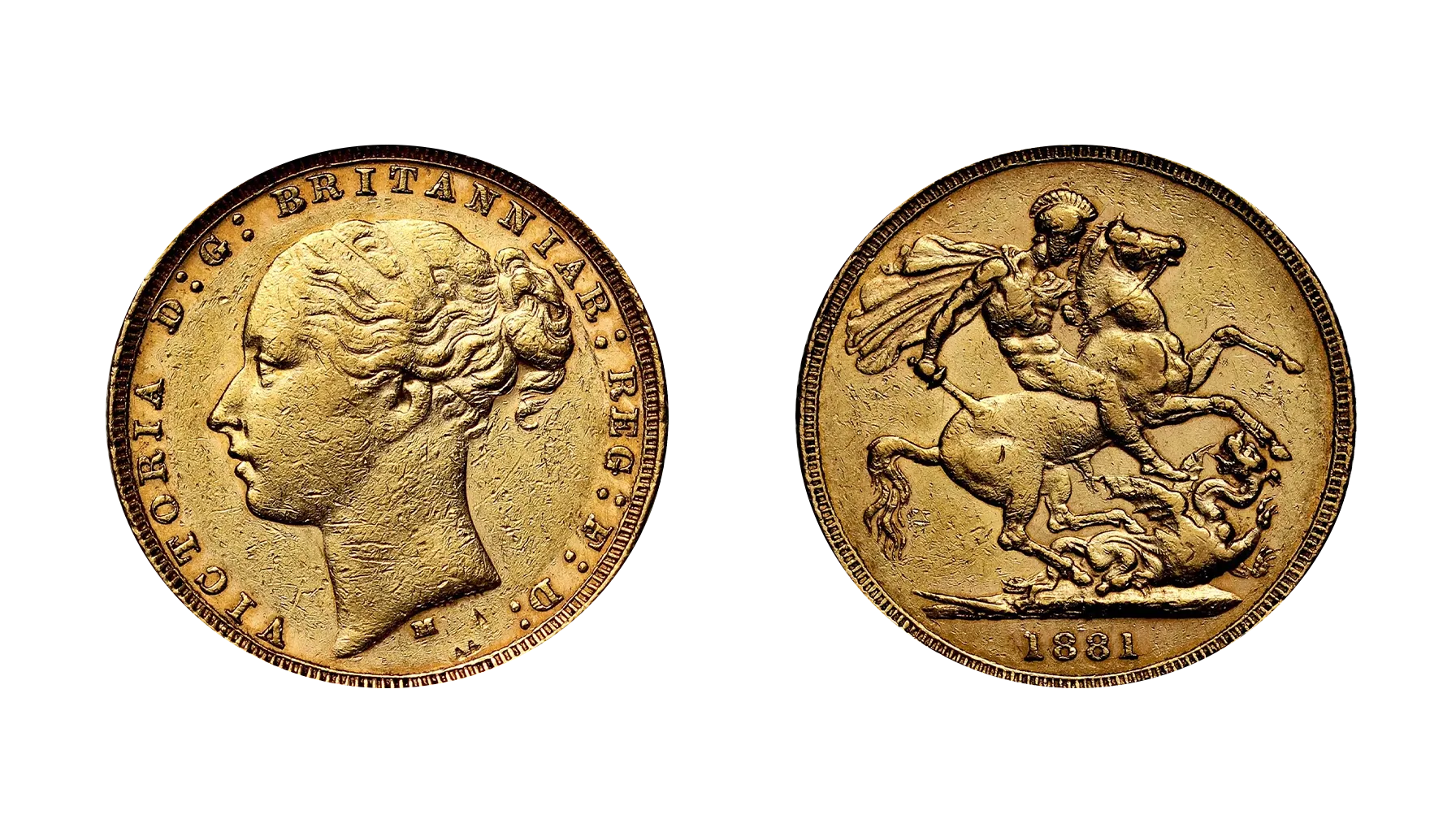
In 1916, there was released one more iteration by Adolph A. Weinman, who portrayed Liberty wearing a winged cap on the obverse and a fasces and olive branch on the reverse. This made the resemblance to Mercury quite obvious and natural, though it is not particularly true.
Mintage Period | Design Name | Figure Depicted |
1796–1807 | Draped Bust | Liberty with flowing hair and draped bust |
1809–1837 | Liberty wearing a soft cap (Phrygian style) | |
1837–1891 | Seated Liberty | Liberty seated on a rock holding a shield and a cap |
1892–1916 | Barber Dime | Liberty with a laurel wreath and a Phrygian cap |
1916–1945 | Winged Liberty Head/Mercury | Liberty with a winged cap |
Here Comes the Roosevelt Dime
The Choice of the President
The appearance of Franklin D. Roosevelt on the dime was not surprising. The first and foremost reason was mentioned above – it comes down to the fact that he led the nation through two major events of the 20th century, namely the Great Depression and World War II.
However, his connection to the dimes is far stronger than one may think. In fact, Roosevelt was a big supporter of the March of Dimes, a campaign meant to combat polio, which he himself fought after having received a diagnosis in 1921. As a result of this great initiative, there was developed a polio vaccine, which encouraged Americans to pay dimes to support research and treatments.
In the end, it was him to be placed on the surface of this coin. 1946 was the year when this design was distributed for the first time.
The Date Selection Explained
The answer would be as simple as possible. 1946 meant the right time to honor President Roosevelt, who had passed away less than a year before. The Treasury wasted no time in redesigning the coin. By 1946, the new version was finally struck and distributed all over the country. This is how the Winged Liberty Head design was replaced and the legacy of a beloved president was immortalized.
If you wish to study a more comprehensive description, you are always free to appeal to apps like Coin ID Scanner, designed specifically for insatiably curious numismatists. Coin ID Scanner may provide you with information about any coin in the world, as it is connected to a large international database and may gain data from other coin enthusiasts, too.
Try now, and let your exploration begin.
Frequently Asked Questions
Which president is on a nickel?
Thomas Jefferson, the third President of the United States, whose portrait has been featured since 1938.
What president is on a quarter?
George Washington, the first US President, whose profile has been employed since 1932. The reverse, though, changed.
Who is on the $2 bill?
It is Thomas Jefferson once again. The reverse of the note, at the same time, showcases an image of the signing of the Declaration of Independence.
What president is on a penny?
Abraham Lincoln, i.e., the 16th President of the United States (since 1909). This was the first time that a real person was featured on a US coin.
What is the thinnest US coin?
This should be a dime, for it is only 1.35 millimeters thick.

 Facebook
  X (Twitter)
  Pinterest
  LinkedIn