Contents:
- What Is the Value of a 2000 Quarter Today?
- 2000 Quarter Types and Designs
- 2000 State Quarters Value Chart
- 2000 Quarter Errors List
- Rare 2000 Quarter Errors That Increase Value
- What Is a 2000 Gold Quarter and How Much Is It Worth?
- 2000 Silver Quarter Set in U.S. Proof Sets Explained
- How to Tell If Your 2000 Quarter Is Valuable
- FAQ
The items are unique units of currency that celebrate the legacy of certain states and their cultural past. The value starts from $0.25 and goes up to $1,000 or more dollars.
What Is the Value of a 2000 Quarter Today?
The 2000 quarter value may vary based on its origin, condition, designations, and distinctive features, such as mistakes. Yes, as the rule states, the majority of coins in circulation are worth 25 cents only, but some can get even more:
Circulation Coins (Philadelphia and Denver Mints): $0.50 to $2, depending on grade.
Clad Proofs: $3.50+
Silver Proofs: $10+
Error Coins: Up to $1,000+
Mind that auction records may present completely different figures (higher than you may even believe). This depends on a number of factors taken simultaneously. As for us, we have provided the most generalized information for one to understand how much these would cost on average.
"While mintages remained in the billions, the technical challenges of striking five diverse designs led to a fascinating array of errors."
– Bill Fivaz and J.T. Stanton, authors
The Cherrypickers' Guide to Rare Die Varieties
2000 Quarter Types and Designs
Released in the order the states ratified the Constitution, each reverse design was chosen to represent local history and pride.
Massachusetts Item (The Bay State)
Features a Revolutionary War "Minuteman" soldier in front of an outline of the state. It honors the state’s role in the fight for American independence.
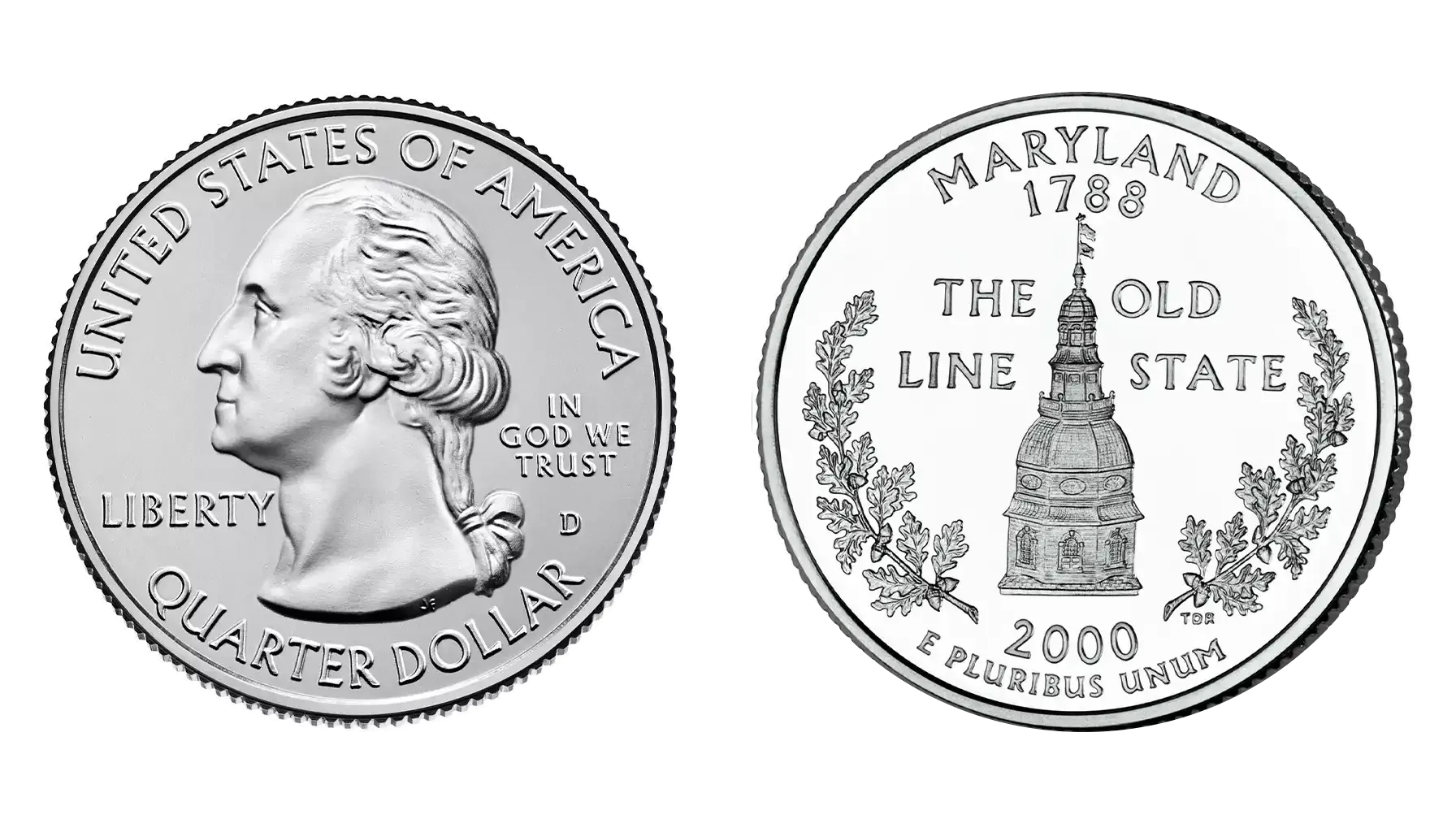
Maryland 1788 quarter 2000 value (The Old Line State)
Depicts the dome of the Maryland State House, surrounded by White Oak leaf clusters. It was the first state item to feature a prominent building.
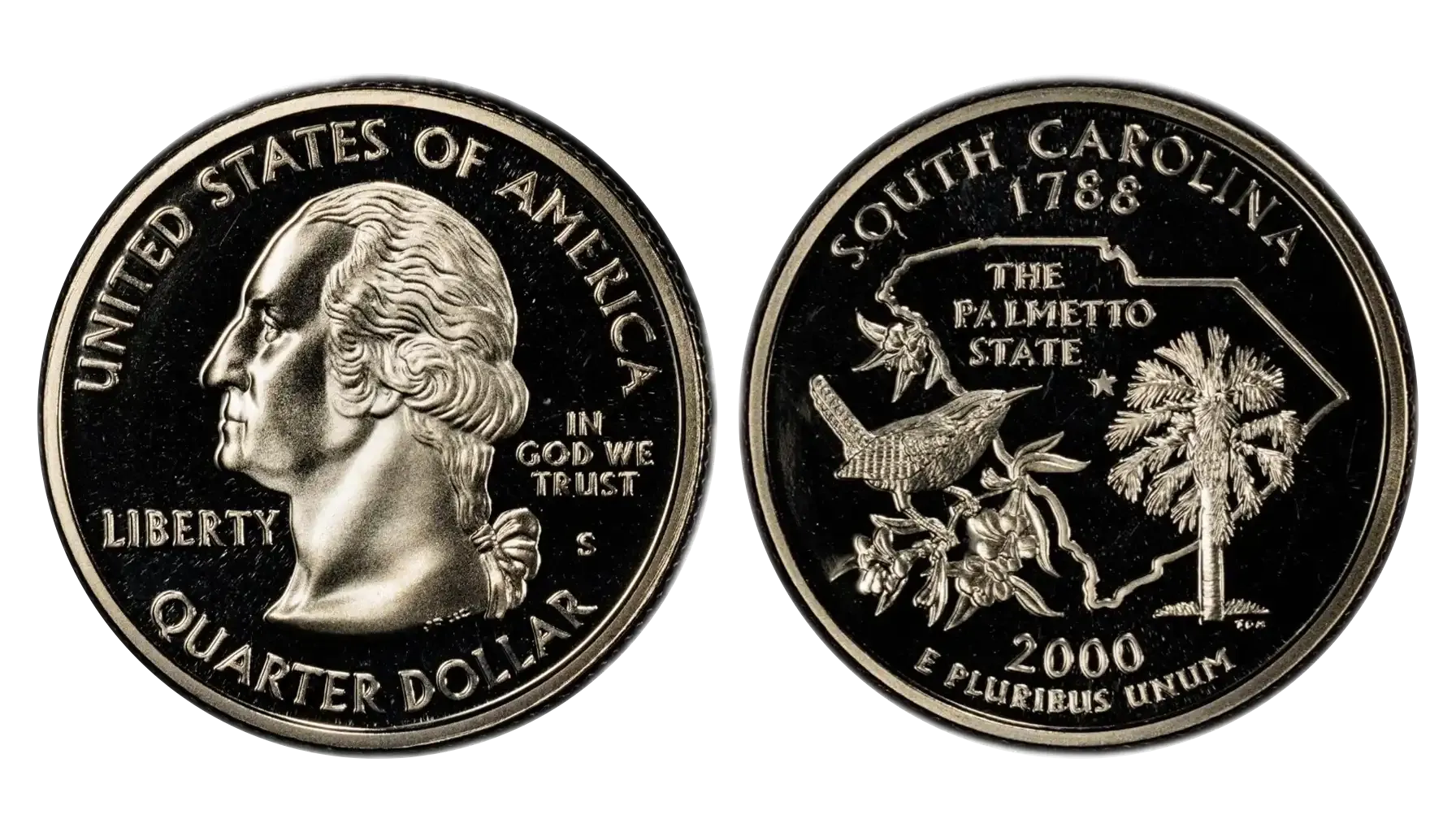
South Carolina (The Palmetto State)
Showcases the state’s symbols—the Palmetto Tree, the Carolina Wren (state bird), and the Yellow Jessamine (state flower)—set against the state's outline.
New Hampshire (The Granite State)
Highlights the "Old Man of the Mountain" rock formation. This is a bittersweet design, as the formation collapsed just three years later in 2003.
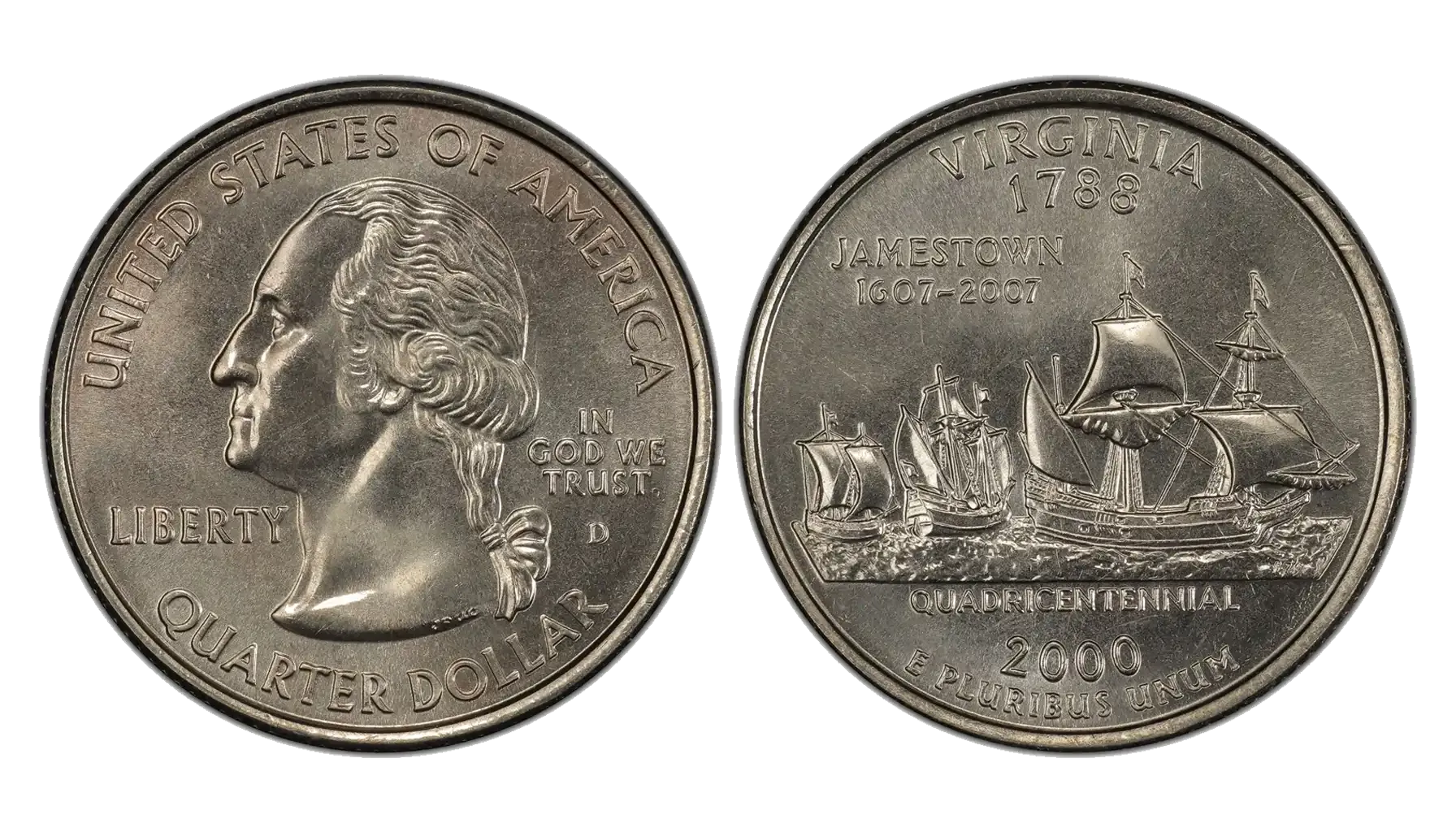
Virginia (The Old Dominion)
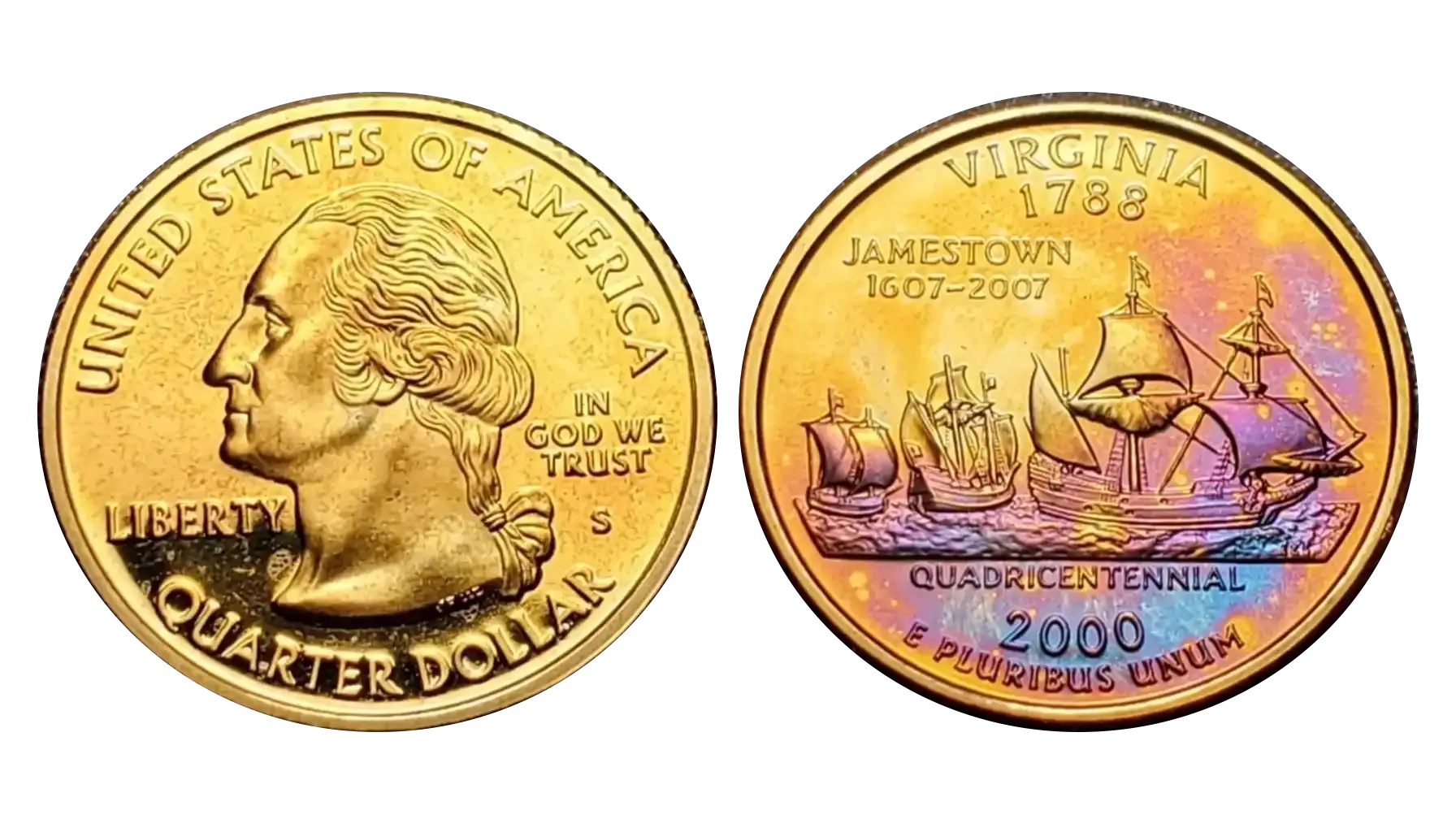
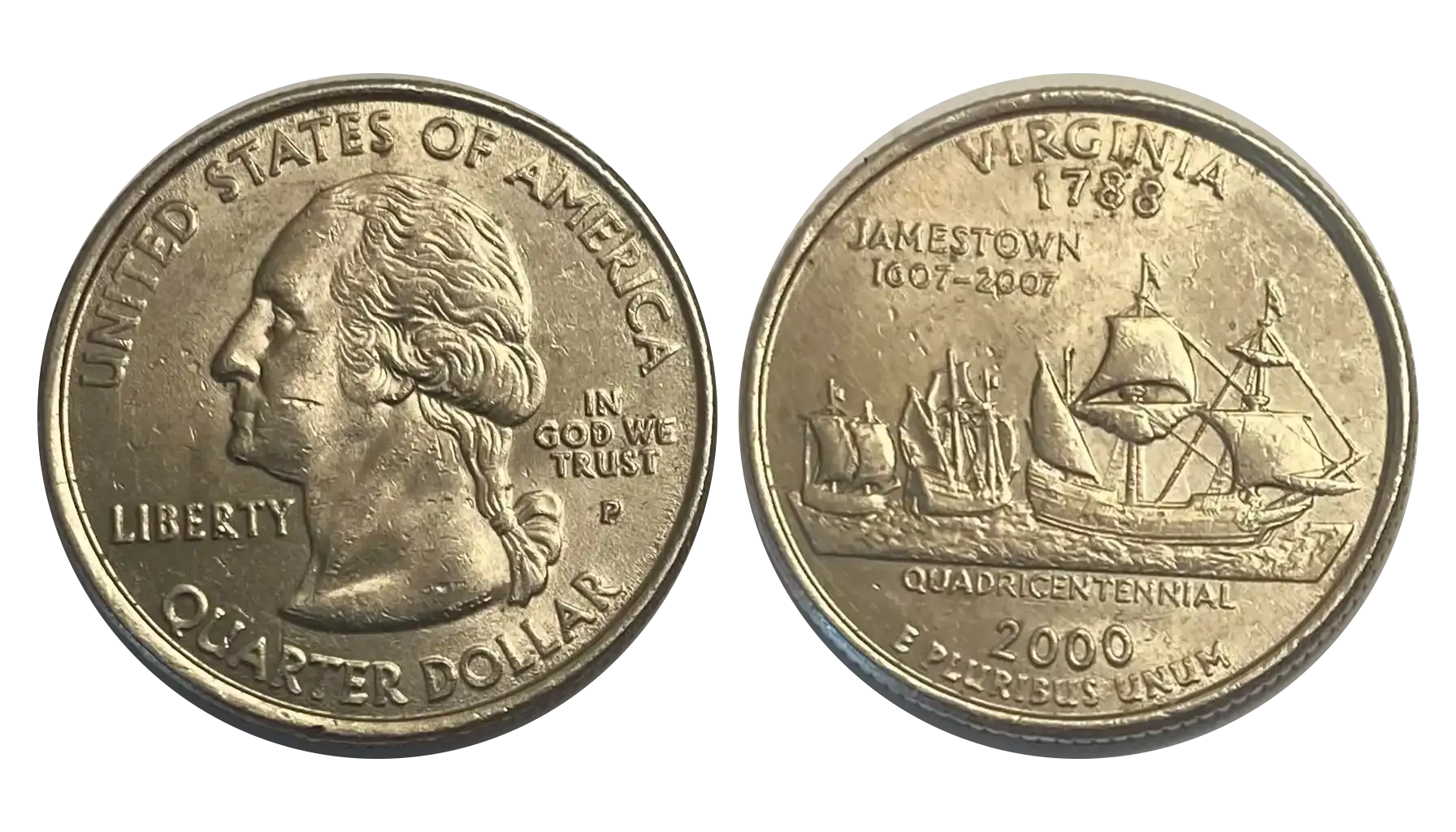
Commemorates the 400th anniversary of Jamestown with a depiction of the three ships (Susan Constant, Godspeed, and Discovery) that brought the first English settlers in 1607.
Item Overview
Designer | John Flanagan |
Diameter | 24.26 mm |
Weight | 5.67 grams |
Thickness | 1.75 mm |
Composition | 91.67 % copper, 8.33 % nickel |
Edge | Reeded |
Although regular coins are more common than others, unique variations and issues can be found that consistently attract coins. These include proof coins and mint errors, too. Let us start with the proofs.
Proofs and Their Designations
In the case of the pieces, there were two types of proof coins issued, i.e., clad proofs (the same copper-nickel-clad composition) and silver proofs (struck on 90% silver planchets). Silver and clad versions both bear the San Francisco Mint "S" mint mark to be easily identified by collectors and the rest.
Besides, coins can be further categorized based on their finish and the attribute assigned by the Mint:
Cameo (CAM): Proof coins with a slightly frosted appearance on the design elements and a reflective background.
Deep Cameo (DCAM): Proof pieces with a strong, frosted contrast between the design elements and the reflective fields.
In general, DCAM versions are considered more valuable, yet current market trends may not reflect the same.
2000 State Quarters Value Chart
The table below presents the average prices for all five items. Rare defects can be worth more dollars on the market for customers. How much is a 2000 quarter worth in the modern market?
Grade | Value |
Circulated | $0.25 |
MS-65 | $1–$3 |
MS-67 | $18–65 |
MS-68 | $120–$650+ |
2000 Virginia Quarter
Released in October, the design celebrates the 400th Anniversary of the Jamestown settlement, featuring the three ships – the Susan Constant, Godspeed, and Discovery.
P (Philly): 943,000,000
D (Denver): 651,616,000
Auction Records – D $940 and P MS-68 2000 Virginia quarter value $400
2000 Maryland Quarter
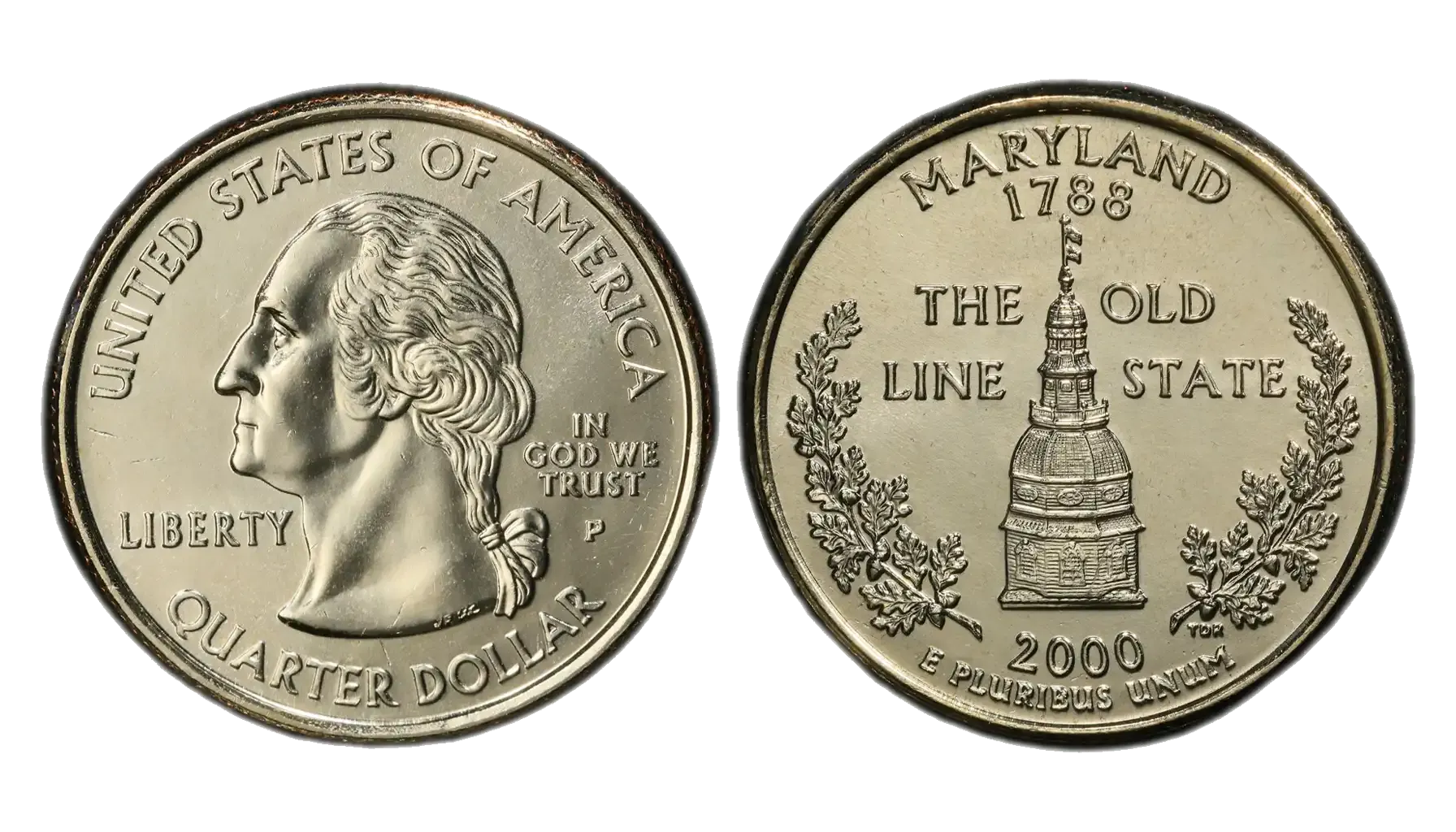
Released in March, the design features the Maryland State House, the largest wooden-domed state house in the U.S., built without nails, surrounded by White Oak sprigs.
P (Philly): 678,200,000
D (Denver): 556,532,000
Auction Records of the Maryland Item – D MS-68 $304 and P MS-68 $1,495
2000 Massachusetts Quarter
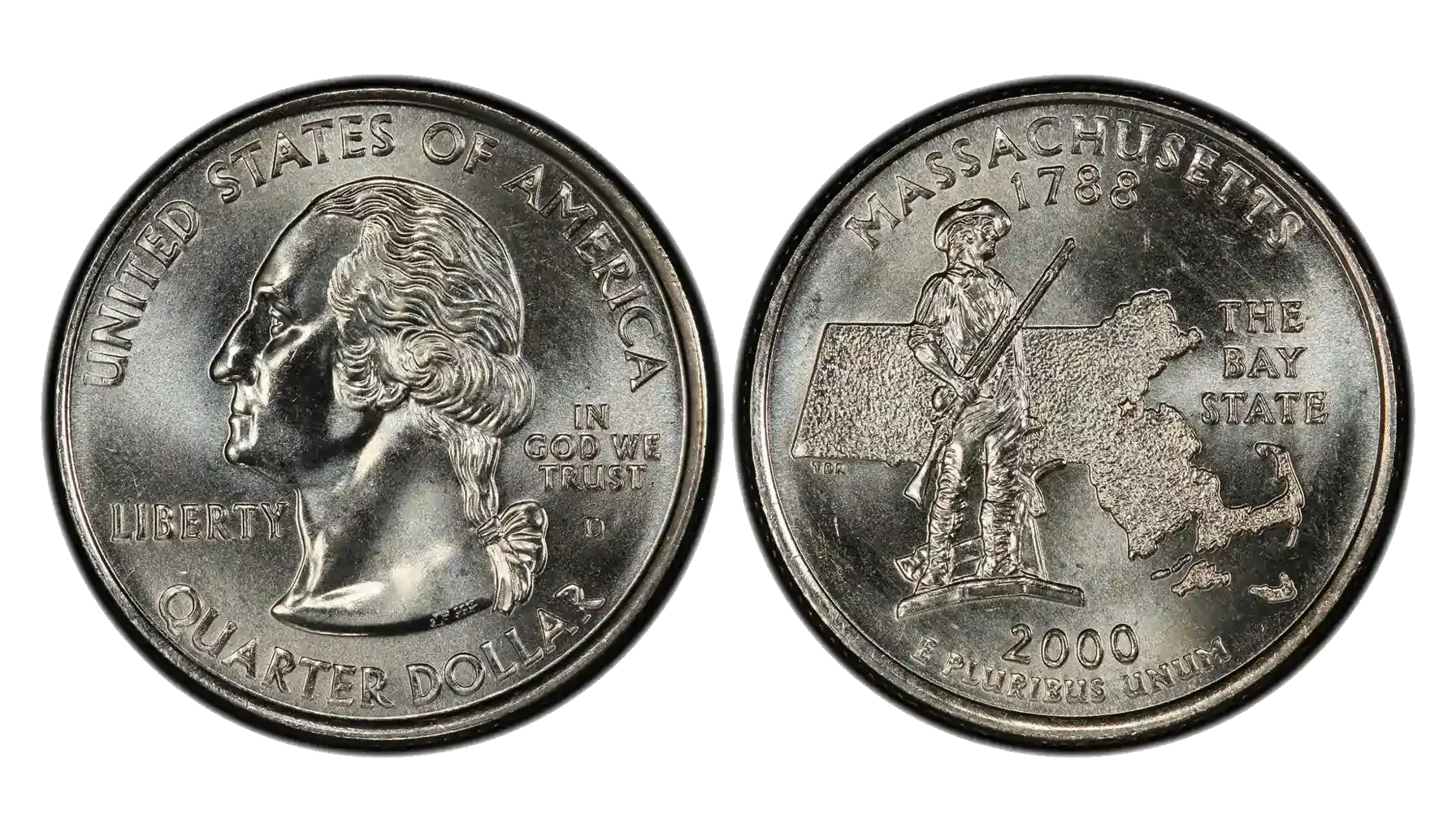
Released on January 3, this was the first item of the new millennium. The Massachusetts 2000 quarter design features a Revolutionary War “Minuteman" soldier against an outline of the state.
P (Philly): 628,600,000
(Denver): 535,184,000
S (Clad Proof): 4,027,239
(Silver Proof): 965,421
Auction Records P MS-69 Massachusetts 1788 quarter 2000 value $1,001
2000 South Carolina Quarter
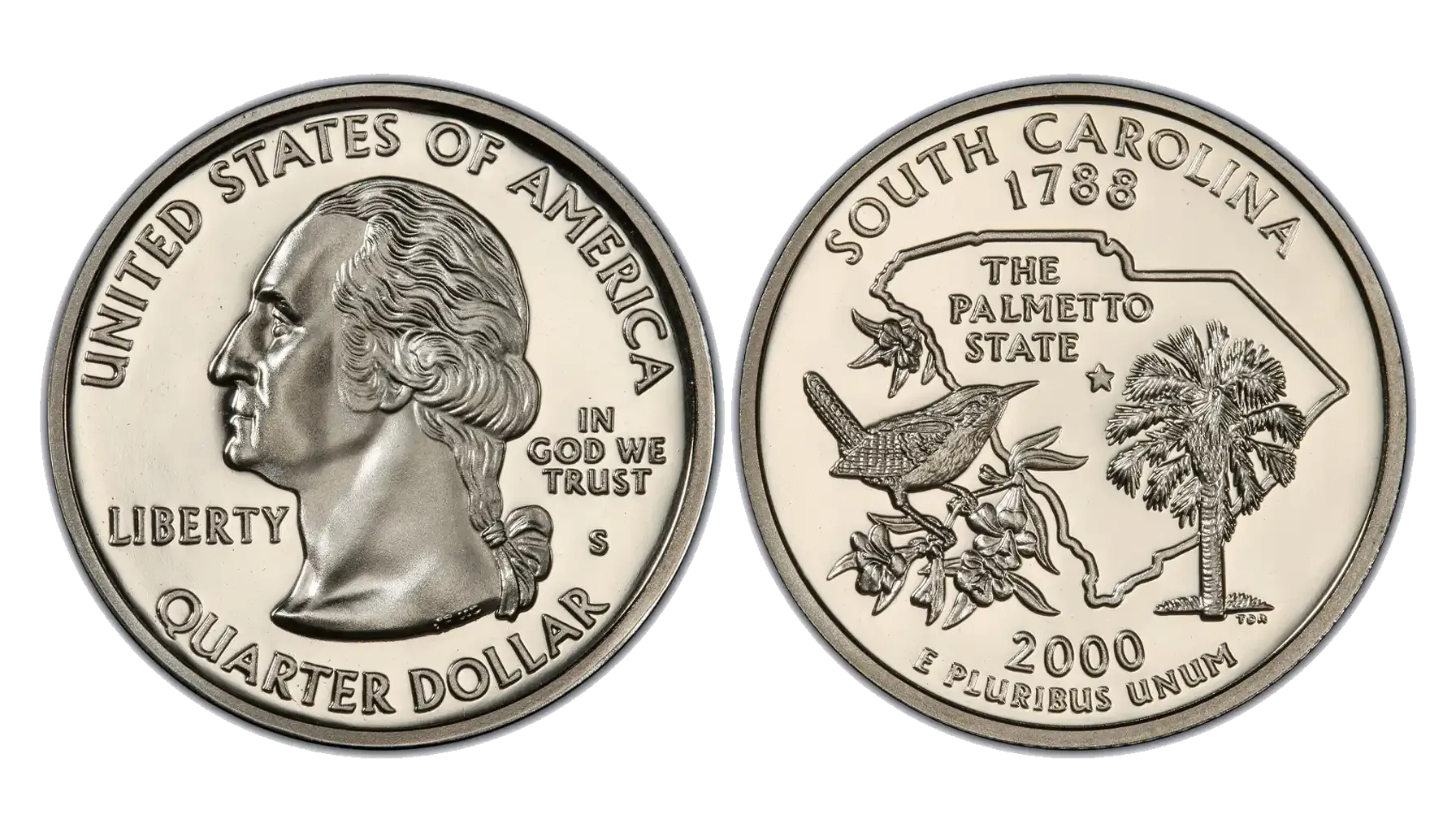
Released in May, the reverse features a Palmetto Tree (the state tree), the Carolina Wren (state bird), and the Yellow Jessamine (state flower) over an outline of the state.
P (Philly): 742,200,000
D (Denver): 566,208,000
Auction Records P MS-69 $3,525 and D 2000 South Carolina quarter value MS-68 $100–$150
2000 New Hampshire Quarter
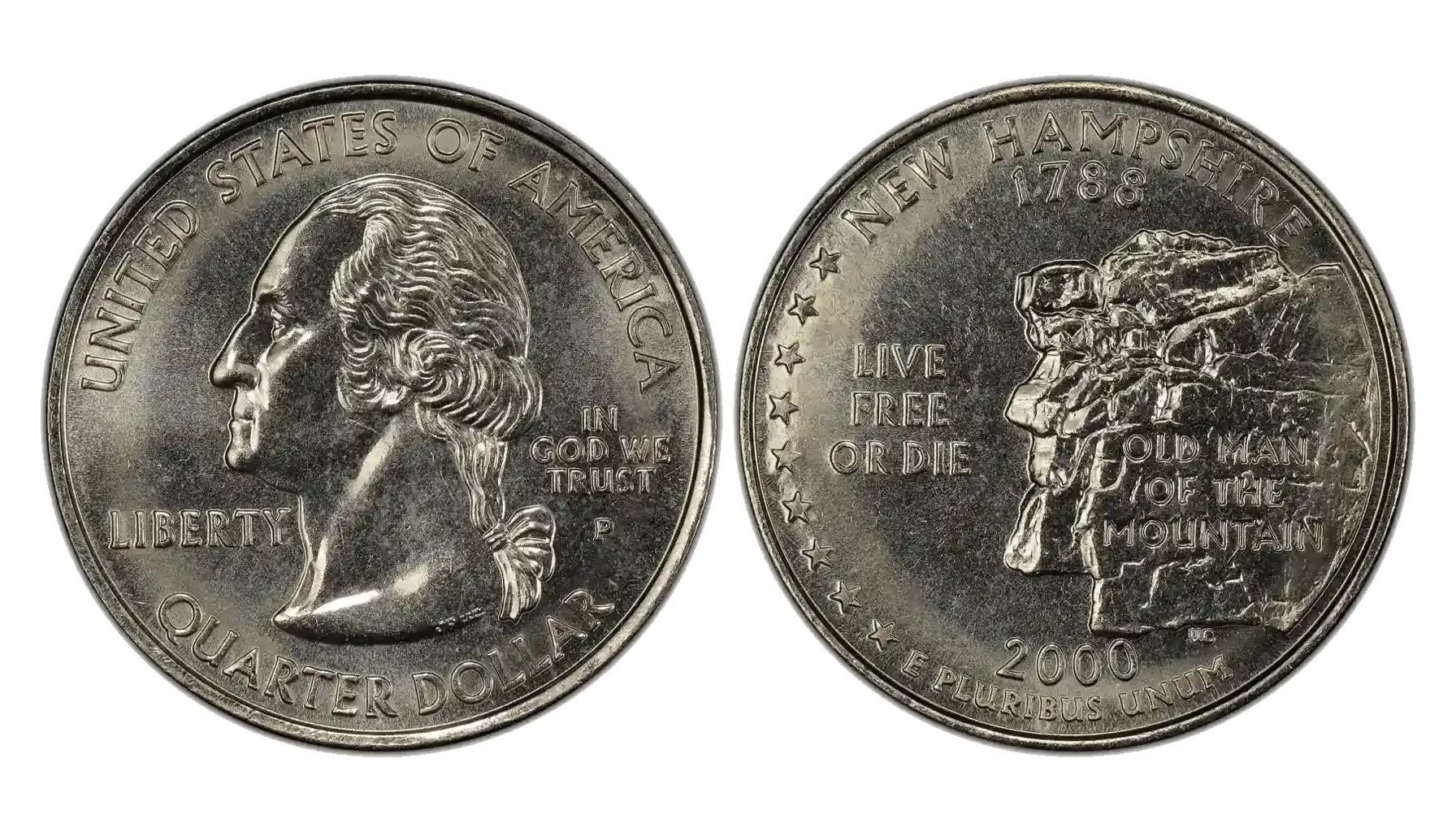
Released in August 2000, this design is historically poignant because it features the "Old Man of the Mountain" rock formation, which unfortunately collapsed in 2003.
P (Philly): 676,400,000
D (Denver): 493,132,000
Auction Records P MS-68 $530 and D MS-68 2000 New Hampshire quarter value $400+
2000 Quarter Errors List
The "Mule" Error P
This is not just a piece error; it is one of the most famous mistakes in U.S. Mint history. A "mule" occurs when two dies that were never intended to be together are paired. Always check the 2000 quarter error list with pictures.
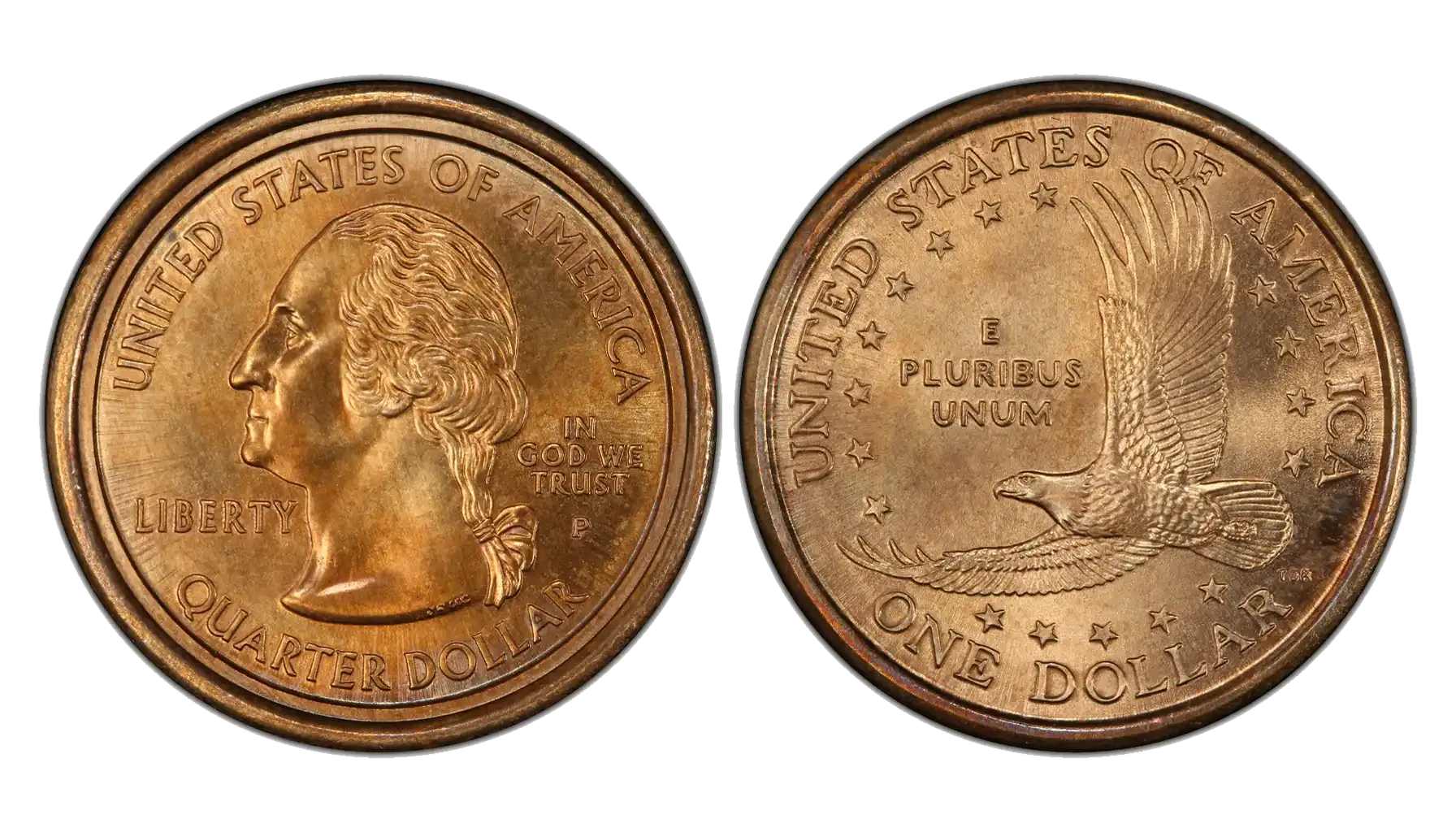
A P Sacagawea Dollar reverse (the eagle) struck with a State item obverse (Washington's head). The coin is golden in color (manganese-brass), like a dollar, but has Washington on the front.
$140,000–$155,000+
Missing Clad Layer
Pieces are made of a copper core between nickel layers. Occasionally, one of those nickel layers fails to bond. One side of the coin looks like a normal silver issue, but the other side is bright red copper.
$150–$400
Struck on a Nickel Planchet
A die accidentally strikes a blank intended for a Jefferson Nickel. The coin is smaller than an item (21.2mm vs 24.3mm), slightly thicker, and weighs 5.0 grams instead of 5.67g. Parts of the outer legend will be cut off.
$800–$1,200+
P Maryland "Black Beauty"
While many dark coins are just dirty, some 2000 Maryland quarter values were left in the annealing furnace too long, causing the copper to migrate to the surface. The coin has a deep, gunmetal black or charcoal finish but still retains its original mint luster (it shines like a new coin despite being dark).
$50–$250
P New Hampshire "Spiked Head" Die Crack
A die crack developed on some New Hampshire dies, running from the top of Washington's head to the rim. A raised line of metal that looks like a spike coming off the top of Washington’s head.
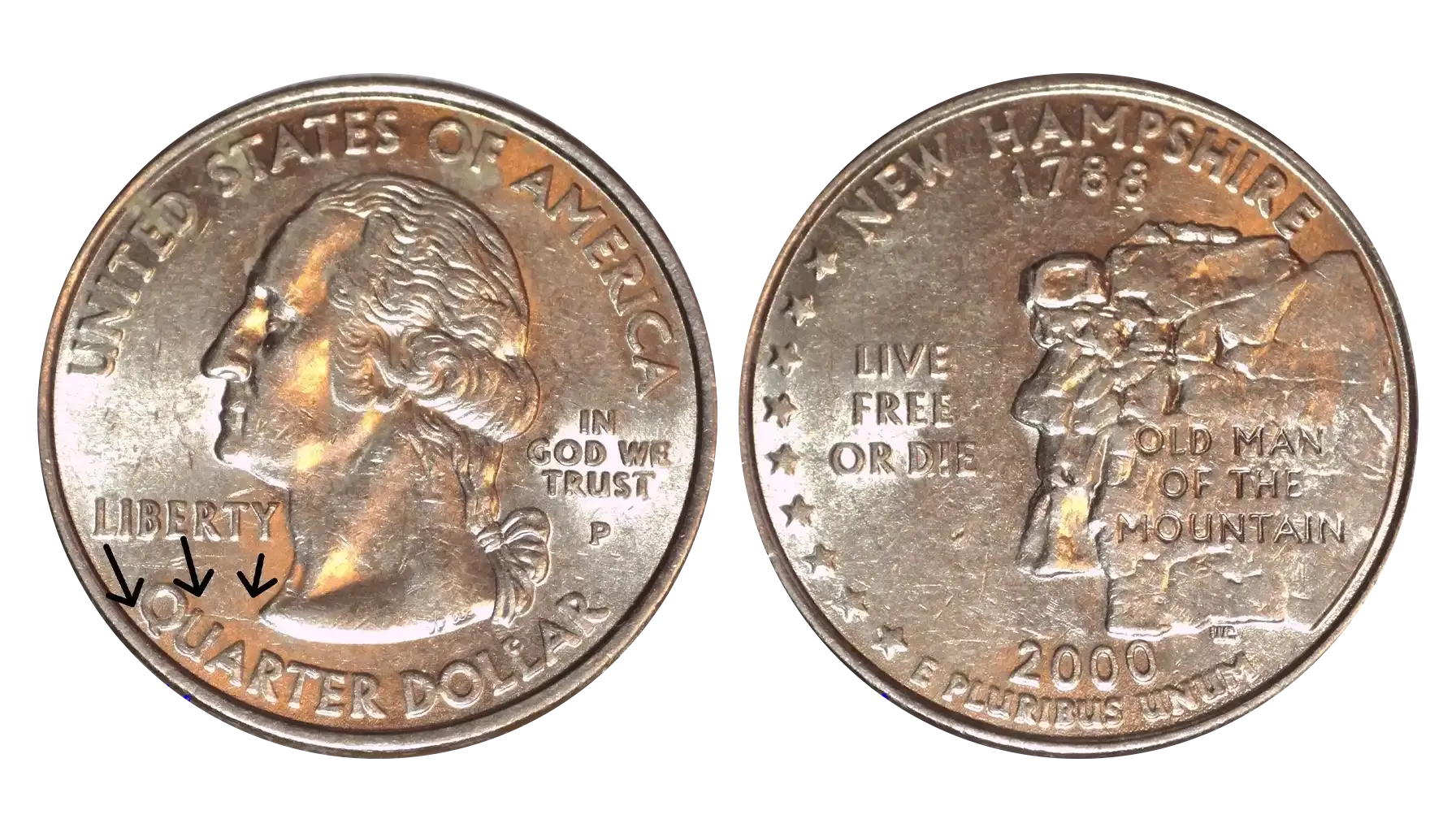
New Hampshire 1788 quarter 2000 value $10–$50
2000 South Carolina quarter error "Stinger Tail" (Die Chip)
A small piece of the die broke off near the palmetto tree on the reverse of the South Carolina issue. An extra lump of metal near the bottom of the palmetto tree or the bird's tail that makes it look like a stinger.
$2–$20
Rare 2000 Quarter Errors That Increase Value
State | Defect | Value |
New Hampshire | Spiked Head | $50–$100 |
South Carolina | Stinger Tail | $2–$20 |
Maryland | Black Beauty | $50–$250 |
2000 Virginia Quarter Error | Double Ear | $50–$200 |
Massachusetts | Double Die Reverse | $20–$100 |
Do you know any valuable quarters after 2000 in the U.S.?
Collector’s Check
If you are evaluating an item, use this 2026 checklist to see if it has 2000 P quarter value add potential:
Check the Color: Is it bright red (Missing Clad) or gunmetal black (Annealing Error)?
Check the Weight: Does it feel light? A standard item is 5.67g; anything else is an error.
Check the "Spikes": Look for raised lines of metal (Die Cracks) on the 2000 quarter New Hampshire and Virginia issues.
Check for Doubling: Use a loupe to look for extra thickness in the words "LIBERTY" or "QUARTER DOLLAR."
Beware of the gold quarter 2000. These were altered by private companies after they left the Mint; while they look fancy, they generally 2000 gold quarter value only sell for $1 to $5 as novelties and are not true Mint errors.
What Is a 2000 Gold Quarter and How Much Is It Worth?
How much is a 2000 gold quarter worth in the numismatic field? If you have found a gold 2000 quarter from the year, it is important to distinguish between a minted treasure and a private novelty. The United States Mint has never produced a solid gold state item for circulation.
Gold-Plated Companies Issues
During the early 2000s, many private companies took standard items (Massachusetts, Maryland, South Carolina, 2000 New Hampshire quarter error, and Virginia) and coated them in a micro-thin layer of 24-karat gold. These were sold on television and in magazines as limited edition collectibles.
Composition – a standard copper-nickel item with a layer of gold only a few microns thick.
Gold Content – the amount of gold is so small that it has zero melt value. It cannot be practically recovered.
The Rule: In the eyes of serious numismatists, plating a coin is considered damage because it covers the original mint surfaces.
Environmental Toning Issues
Sometimes, an issue can develop a golden or yellowish hue because of exposure to certain chemicals, moisture, or heat while in circulation. Value is $0.25 because this is simply environmental damage and does not indicate any gold content.
2000 Silver Quarter Set in U.S. Proof Sets Explained
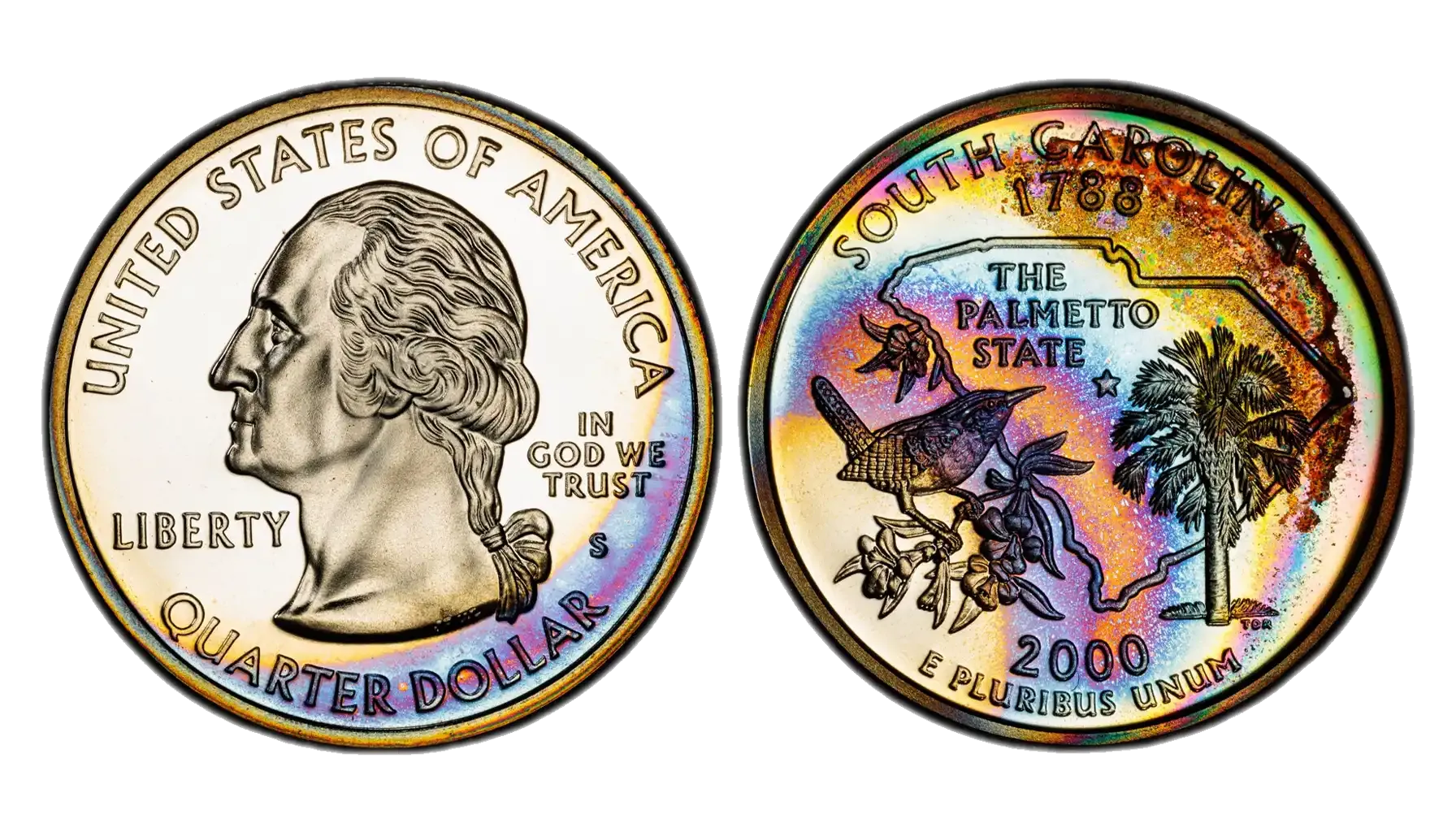
Individual Silver Issue – depends on the specific state and condition. $15–$25
Full 10-Coin Silver Proof Set – includes the 5 items, dime, half dollar, etc. $115–$145
Silver Melt Value in 2000 silver quarter set in US coin proof sets – the baseline value based on 2026 silver spot prices. ~$14.40
The primary distinction of the silver set is its metal content. In contrast to the copper-nickel clad issues, these pieces are composed of 90 % silver and 10 % copper. Look at the edge of the coin. A silver item will have a solid silver-colored edge, whereas a clad item shows a distinct copper-red stripe.
Silver is denser than nickel. A silver issue weighs 6.25 grams, while a standard clad item weighs 5.67 grams.
The Proof Minting Process
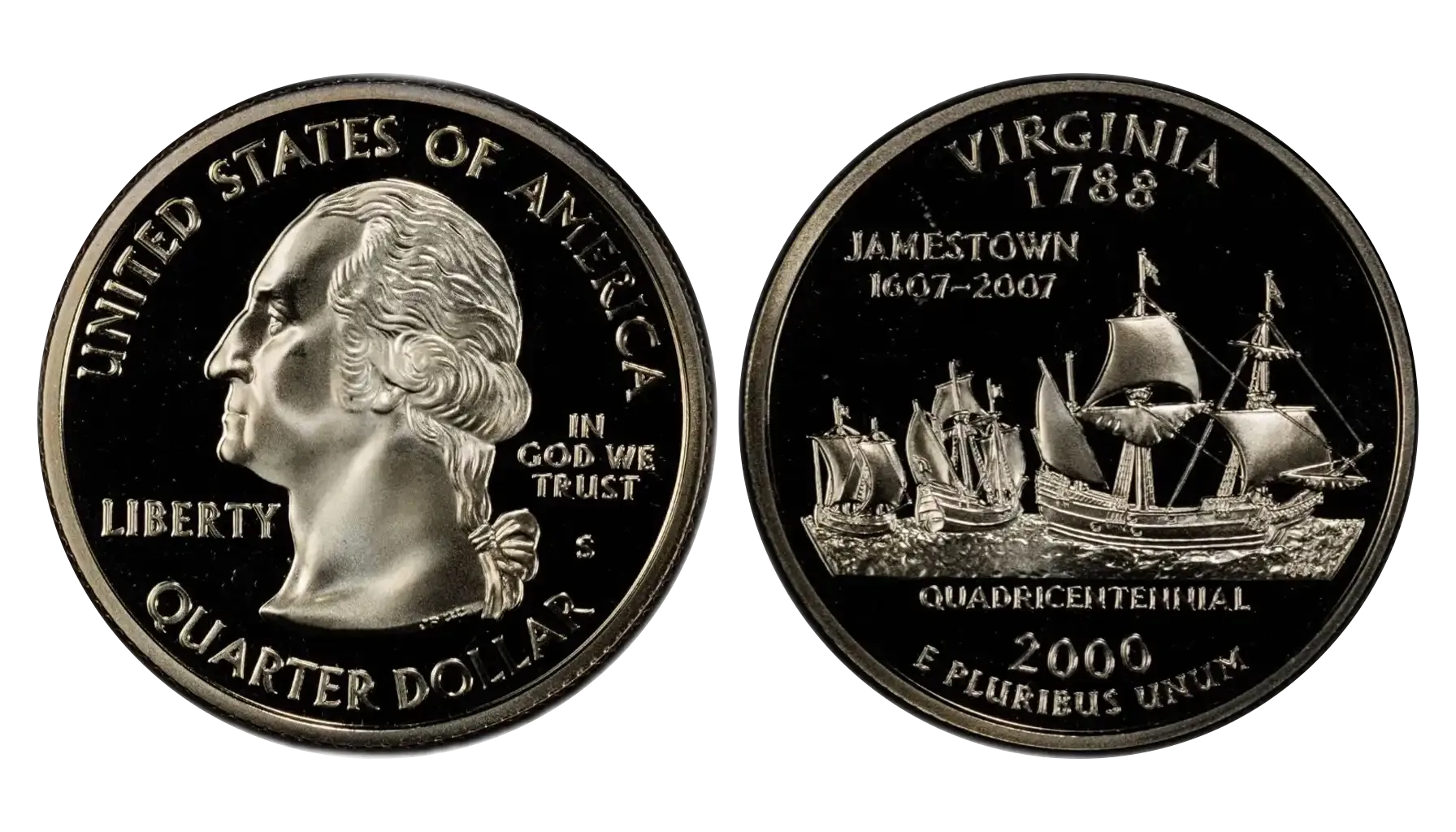
"Proof" refers to the method of manufacture, not the condition. These coins were struck at the San Francisco Mint (marked with an "S" mint mark). Look for the mirrored backgrounds – the flat fields of the coin are polished to a high-gloss, mirror-like finish.
The raised parts of the design, Washington’s portrait, and the state symbols have a soft, matte "frosted" appearance. Do not remember Deep Cameo (DCAM). The most desirable sets have a sharp contrast between the mirrors and the frosting, known as Deep Cameo.
How to Tell If Your 2000 Quarter Is Valuable
If you have a coin, you should take several steps to determine if your coin is valuable:
Check the mint mark
Check the coin weight
Check the unique anomalies
Why a Set Is Valuable on the Market?
The Silver Proof Set was sold in a red-themed box and actually contains 10 coins in two separate protective lenses:
Lens 1: The five 90 % silver State Quarters.
Lens 2: The 90 % silver Roosevelt Dime and Kennedy Half Dollar, along with the Lincoln Cent, Jefferson Nickel, and Sacagawea Dollar (which are not silver).
The year is particularly popular because it features the 2000 Maryland quarter error and Virginia designs, which have historically high demand. Additionally, the Sacagawea Dollar included in these sets is the First Year of Issue. The process makes the complete 10-coin set a cornerstone for modern collectors.
Note: Always keep these coins in their original plastic lenses. Removing them exposes the silver to air, which can cause black tarnish (oxidation) and significantly lower the resale 2000 D quarter value.
FAQ
What 2000 quarter is worth money?
High MS and unique defects are worth a lot of money, such as MS-68 and M-69.
How many different 2000 quarters are there?
The five main designs exist, including clad and silver varieties.
What is the error on a 2000 quarter?
Despite the traditional defects, there are rare anomalies, for example, the Black Beauty and Spiked Head.
What makes the 2000 South Carolina quarter rare?
MS-68+ condition makes an item rare.
Is the New Hampshire 2000 quarter worth anything?
Look for the Spiked Head defect, which is worth $10–$50.
Which 2000 quarter is valuable?
The five designs have different minting varieties, which raise the market prices.
Is a 2000-D Virginia quarter worth anything?
The MS-68 condition Virginia 2000 quarter value is up to $1,000+ dollars, before purchasing, search the 2000 Virginia quarter error list with pictures.
What is the error on the 2000 P Virginia quarter?
Look at the Virginia 1788 quarter 2000 value portrait, and you can see the Double Ear doubled die variety.
Is a Maryland 2000 quarter worth anything?
The Black Beauty defect is worth 2000 quarters worth money $50–$250 dollars on the online and local numismatic shops.
Is a 2000 Massachusetts quarter worth anything?
You should check uncirculated rolls and 2000 Massachusetts quarter errors, which can worth to $15 to $30 dollars.

 Facebook
  X (Twitter)
  Pinterest
  LinkedIn